Best Supplements for Night Shift Workers

Night shifts make almost every supplement work harder, because the real problem is not a single nutrient — it is a circadian rhythm that no longer matches the clock. The best-supported options for night shift workers are low-dose melatonin (timed to your sleep window), magnesium for muscle relaxation and sleep quality, and vitamin D to replace what missed daylight no longer provides. What matters just as much is when you take them.
Key takeaways
- Shift work disrupts circadian rhythm first; supplements second. Timing beats dosage.
- Low-dose melatonin taken at your daytime bedtime is the most studied option for shift workers.
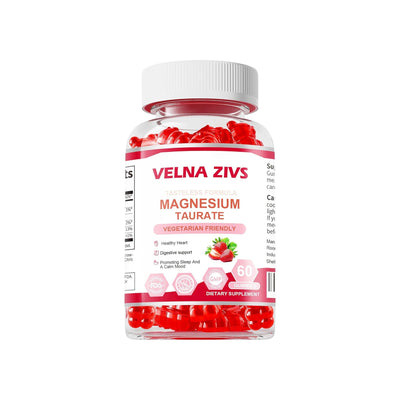
- Magnesium (taurate or glycinate forms) supports relaxation without a strong sedative effect.
- Vitamin D deficiency is common in night shift workers because sunlight exposure drops.
- Caffeine has a half-life of roughly five hours — cut it off six hours before your daytime sleep.
Why night shift work disrupts the body in the first place
Your circadian rhythm is the internal 24-hour schedule that tells your body when to be alert and when to wind down. It is set primarily by light exposure, and a rotating shift or fixed overnight shift overrides that signal completely. Your eyes tell the brain it is midday, while your calendar says it is time to sleep. The mismatch shows up as fragmented daytime sleep, low energy during the shift, appetite changes, and a shift schedule that never quite feels stable — even after years of practice.
This is why a shelf of supplements alone rarely fixes how a night shift feels. They work best as a support layer on top of the fundamentals: a consistent dark, cool sleep environment; blackout curtains; and a wind-down routine that you keep even on days off, within reason.
Melatonin: the most studied option for shift workers
Melatonin is the hormone your brain releases in darkness to signal bedtime. For shift workers, the research interest is obvious: if your sleep window is upside down, supplemental melatonin can act as a darkness signal at the right time. Trials in night shift workers generally use low doses — 0.5 to 3 mg — taken shortly before the daytime sleep attempt. Reviews of shift work research suggest modest improvements in sleep length and quality, with less benefit for alertness during the shift itself.
Two practical notes. First, higher is not better: multi-milligram doses have not shown a clear advantage over low doses and are more often linked to grogginess. Second, timing is everything — taking melatonin in the evening before a night shift works against you by pushing drowsiness earlier.
Magnesium: relaxation support without heavy sedation
Magnesium supports normal muscle and nerve function, and deficiency is plausible in people with irregular eating patterns. The taurate and glycinate forms are popular choices for a wind-down routine because they are gentle on the stomach and commonly taken at bedtime. Evidence for magnesium as a standalone sleep aid is mixed — stronger in people with low magnesium intake than in everyone — but as part of a consistent pre-sleep ritual it is a reasonable, low-risk pick.
Vitamin D: the daylight nutrient night shift workers miss
Sunlight on skin is the main driver of vitamin D status, and overnight shift workers spend the brightest hours asleep. Observational studies of shift workers repeatedly find lower average vitamin D levels than day workers. Because vitamin D also supports immune function and bone health, a simple blood test and a standard supplement dose — typically 1000 to 2000 IU daily, or as your doctor advises — is one of the most defensible additions for this group.
Other options worth knowing about
Caffeine is a tool, not a villain: used early in the shift it measurably improves alertness, but its long half-life means a 2 a.m. coffee is still working at 7 a.m., right when you want to fall asleep. B vitamins and iron matter when bloodwork shows a gap — fatigue has many causes, and blindly supplementing iron is not advisable. Caregivers and people juggling frequent travel on top of shift work often benefit more from fixing sleep timing than from adding more products.
Timing rules that make the supplements worth taking
Take melatonin within 30 minutes of your daytime bedtime, keep magnesium with your wind-down routine, and take vitamin D in the morning with food — the exact hour matters less than consistency. Protect the first 90 minutes after your shift ends from bright light and errands; that single habit often does more than any capsule.
Sleep hygiene basics that multiply the effect
A few environment details decide whether the supplements get a fair test. Blackout curtains or a sleep mask keep the midday sun from fragmenting sleep; a cool room compensates for the body temperature dip your rhythm expects at night; and white noise mutes the daytime household that night workers sleep through. Keep the same wake time on days off within an hour or two — a full weekend flip back to day living re-creates the jet lag you just escaped. None of this is glamorous, but it is the difference between supplements that seem useless and supplements that quietly do their job.
When to talk to a doctor
Persistent insomnia despite good habits, snoring with unrefreshing sleep, or overwhelming sleepiness on the drive home all deserve medical attention. Shift work disorder is a recognized condition, and a clinician can help separate it from ordinary schedule friction.

Frequently asked questions
What supplements are best for night shift workers?
Low-dose melatonin timed to your daytime bedtime, magnesium for relaxation support, and vitamin D to replace missed sunlight are the three with the most relevant evidence. Timing each one matters more than the brand or dose.
When should night shift workers take melatonin?
Within about 30 minutes of your daytime sleep attempt, at a low dose of 0.5 to 3 mg. Taking it in the evening before your shift works against you by pushing drowsiness in the wrong direction.
Do night shift workers need more vitamin D?
Many have lower vitamin D because they sleep through peak sunlight. A blood test is the honest check; standard maintenance doses of 1000 to 2000 IU daily are common when levels are low.
How long before daytime sleep should caffeine stop?
Roughly six hours. Caffeine has a half-life near five hours, so a late-shift coffee is still active when you are trying to fall asleep in the morning.
Related supplements
If you want to explore this area, the Health Benefits and Vitamins collections cover the relevant supplements and formats.
These statements have not been evaluated by the Food and Drug Administration. This product is not intended to diagnose, treat, cure, or prevent any disease. Talk to a healthcare professional before starting any new supplement, especially if you are pregnant, nursing, taking medication, or managing a health condition.
These statements have not been evaluated by the Food and Drug Administration. This product is not intended to diagnose, treat, cure, or prevent any disease.