Why You Bloat After Every Meal: 7 Common Culprits

Bloating after every meal is most often caused by swallowed air, the gas produced when gut bacteria ferment certain foods, or a slower-than-average gut transit — not by a single "toxic" food you must eliminate. Pinpointing which of the common triggers applies to you is far more useful than a blanket detox.
Bloating is typically a gas-and-timing problem in the gut, not a sign that food is "rotting." The fix is usually specific, not drastic.
When bloating is a sign to slow down
Not every bloat needs a supplement. The fastest wins are often behavioral: eating slowly, not talking over a full mouth, and skipping the carbonated drink with lunch. These reduce the air you swallow, which is a larger contributor than most people expect. If a food-specific trigger is the issue, a short structured test beats permanent restriction — you want to know your personal culprits, not eliminate half your diet on suspicion.
What bloating actually is
Bloating is the subjective feeling of fullness or pressure, often with a visibly distended belly. It is usually excess gas trapped in the intestines, or fluid shifts, or simply the normal post-meal expansion of the stomach and intestines. Understanding that it is gas-and-motility, not "poison," changes how you address it.
7 common culprits
1. Eating too fast
Speedy eating means more swallowed air and less chewing, both of which feed bloating. Slowing down and chewing thoroughly is the single most underrated fix.
2. Carbonated drinks
Sparkling water and soda deliver gas directly into the stomach. For sensitive people, cutting fizz alone resolves afternoon bloat.
3. Fermentable carbs (FODMAPs)
Onions, garlic, beans, certain fruits and wheat feed gut bacteria that produce gas. A short, structured low-FODMAP trial — not a permanent restriction — can reveal your personal triggers.
4. Artificial sweeteners
Sorbitol, xylitol and erythritol are poorly absorbed and ferment readily, causing gas and loose stools in many people. "Sugar-free" gum and candies are common unseen sources.
5. Too much sodium
High salt pulls water into tissues, including the gut lining, which reads as puffiness and bloating. Restaurant and packaged foods are the usual culprits.
6. Lactose
Lactase enzyme declines in many adults. If milk, ice cream or soft cheese reliably bloat you, lactose is a prime suspect — hard cheeses and lactose-free options are often fine.
7. A shifting gut microbiome
After antibiotics, travel, or a stretch of poor diet, the bacterial mix changes and gas production rises. This usually rebalances over weeks.
When to check with a clinician
Occasional bloating is normal. See a clinician for persistent change, weight loss, blood in stool, severe pain, or bloating that comes with vomiting or inability to pass stool — those deserve proper evaluation rather than self-experimentation.
What tends to help
- Eat slowly and without screens.
- Cut carbonated and artificially sweetened drinks for two weeks as a test.
- Keep a simple food-symptom note to spot patterns.
- Support digestion with gentle, traditional botanicals when a meal feels heavy.
A simple two-week experiment
Rather than guessing, run a short elimination test: for two weeks remove carbonated drinks, artificial sweeteners and your most-suspected fermentable food (often onion, garlic or beans). Reintroduce one at a time and note the response. This reveals personal triggers far faster than any generic list, and it avoids permanent unnecessary restriction.
Hydration and bloating
Mild dehydration slows digestion and concentrates gas, so inadequate water can worsen the very symptom it seems unrelated to. Spreading fluid intake across the day — rather than a large volume at one meal — tends to sit better and reduce that heavy feeling.
Key takeaways
- Bloating is usually gas and gut motility, not "bad" food.
- Eating speed and swallowed air are underrated drivers.
- FODMAPs, artificial sweeteners, salt and lactose cover most cases.
- A short structured elimination test beats permanent restriction.
- Persistent or severe symptoms warrant a clinician's input.
What to try this week
Pick one suspect and test it; do not overhaul everything at once. Remove carbonated drinks for a week, or swap your biggest FODMAP (often onion or beans) and watch the difference. Keep a one-line daily note of bloating on a 1-10 scale. Patterns appear faster than you expect, and you avoid the trap of restricting foods you actually tolerate fine.
Frequently asked questions
Is bloating a sign of poor gut health?
Not necessarily. Nearly everyone bloats sometimes. It becomes worth investigating when it is frequent, painful, or paired with other changes like weight loss or blood in stool.
Do probiotics stop bloating?
Sometimes. Certain strains help some people, while others feel worse at first. Effects are strain-specific, so a generic "probiotic" claim is weak evidence on its own.
Why am I bloated even when I eat healthy?
Healthy foods like beans, onions, cruciferous vegetables and sparkling water are common gas sources. The trigger is fermentation, not nutritional quality.
How quickly should changes show?
Removing a clear trigger like carbonation or artificial sweeteners often brings relief within days. Microbiome rebalancing after disruption can take a few weeks.
Related supplements
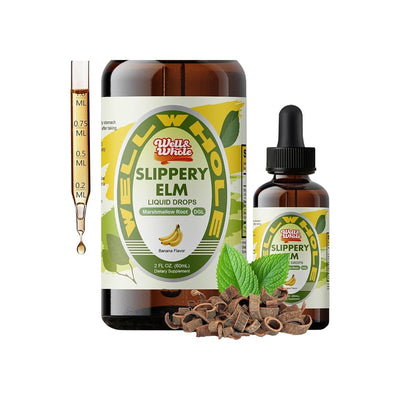
If you'd like to try it, Slippery Elm Liquid Drops, Marshmallow Root, Slippery Elm Bark Drops for Women, DGL Licorice Extract, Digestive Health, and Kids’ Black Walnut Digestive Support Drops, 14-in-1 Herbal Formula, Mixed Berry, Ages 1+, 2 fl oz are the closest match to what we've covered here. Browse Digestive Support and Health Benefits to see how the alternatives compare.
These statements have not been evaluated by the Food and Drug Administration. This product is not intended to diagnose, treat, cure, or prevent any disease. Talk to a healthcare professional before starting any new supplement, especially if you are pregnant, nursing, taking medication, or managing a health condition.
These statements have not been evaluated by the Food and Drug Administration. This product is not intended to diagnose, treat, cure, or prevent any disease.