Why Melatonin-Free Works: The Science of Apigenin as a Natural Sleep Modulator
Scientific analysis of why melatonin-free sleep support—using apigenin's GABA-A receptor modulation—may be superior to melatonin supplementation for certain sleep challenges without circadian disruption.

Melatonin has become the default over-the-counter sleep aid, with annual U.S. sales exceeding $1 billion. The logic seems straightforward: melatonin is the "sleep hormone," so supplementing it should improve sleep. However, sleep neurobiology is significantly more complex than this single-hormone model suggests. Melatonin is primarily a circadian timing signal—a "darkness messenger" that tells the brain when nighttime has arrived—rather than a direct sleep-promoting agent.
For many individuals with sleep difficulties, the underlying issue is not a circadian timing deficit but rather insufficient GABAergic tone—the brain's inability to "switch off" the arousal systems that maintain wakefulness. This is where apigenin, a flavonoid that acts as a positive allosteric modulator at GABA-A receptors, offers a mechanistically distinct approach to sleep support that may be better suited to certain sleep challenges.
Melatonin's Actual Role: Circadian Timing, Not Sleep Promotion
The Circadian Signal
Melatonin is synthesized and released by the pineal gland in response to darkness, driven by the suprachiasmatic nucleus (SCN)—the brain's master circadian clock. Plasma melatonin levels begin rising approximately 2 hours before habitual sleep onset (the dim light melatonin onset, or DLMO), peak in the middle of the night, and decline toward morning.
A 2014 review by Zisapel in the British Journal of Pharmacology clarified melatonin's functional role: "Melatonin does not act as a direct soporific but rather as an endogenous synchronizer that reinforces circadian rhythms." It opens the "sleep gate"—the circadian window during which sleep is physiologically facilitated—but it does not directly induce sleep.
When Melatonin Supplementation Helps
Exogenous melatonin is most effective when:
1. Circadian phase is misaligned: Jet lag, shift work, delayed sleep phase disorder
2. Melatonin production is insufficient: Age-related pineal calcification (melatonin production declines approximately 10% per decade after age 40), certain medications that suppress melatonin
3. The sleep environment lacks adequate darkness cues
A 2013 meta-analysis by Ferracioli-Oda et al. in PLoS ONE found that melatonin reduced sleep onset latency by an average of only 7 minutes and increased total sleep time by 8 minutes—effects that were statistically significant but clinically modest.
When Melatonin May Not Help
Melatonin is often ineffective when:
4. The primary issue is hyperarousal: Racing thoughts, anxiety-driven insomnia, inability to "turn off the brain"
5. Circadian timing is normal: The individual becomes sleepy at an appropriate time but cannot fall asleep or stay asleep
6. The problem is sleep maintenance: Melatonin's half-life is only 20-50 minutes, making it more useful for sleep onset than sleep maintenance (except in extended-release formulations)
A 2017 clinical practice guideline from the American Academy of Sleep Medicine recommended against the use of melatonin for chronic insomnia, citing insufficient evidence of efficacy. The guideline noted that melatonin's primary evidence base is for circadian rhythm disorders, not general insomnia.
---
Apigenin's GABAergic Mechanism: Addressing Hyperarousal
GABA-A Receptor Modulation
Apigenin (4',5,7-trihydroxyflavone) is a flavonoid that binds to the benzodiazepine recognition site on GABA-A receptors. Unlike melatonin, which signals the circadian system, apigenin directly modulates the neurotransmitter system responsible for reducing neuronal excitability.
The GABA-A receptor is a pentameric chloride channel. When GABA binds, the channel opens, chloride ions flow into the neuron, and the membrane hyperpolarizes—making the neuron less likely to fire. This is the fundamental inhibitory mechanism of the central nervous system.
Apigenin enhances this process by binding to an allosteric site distinct from the GABA binding site. A 2006 study by Viola et al. in Planta Medica demonstrated that apigenin's binding to the benzodiazepine site (Ki = 4.5 μM) produces receptor potentiation—when GABA binds, the channel stays open longer, producing greater inhibition per GABA molecule.
Key Differences from Benzodiazepines
A critical advantage of apigenin over benzodiazepine drugs:
| Property | Apigenin | Diazepam (Benzodiazepine) |
| Receptor affinity | Low (Ki ~4.5 μM) | High (Ki ~5 nM) |
| Allosteric efficacy | Moderate | High |
| Tolerance development | Not reported | Significant (weeks-months) |
| Withdrawal syndrome | Not reported | Well-documented |
| Sleep architecture effects | Minimal | Reduced slow-wave sleep |
| Next-day sedation | Minimal | Common |
| Physiological effect profile | Modulates endogenous GABA | Overrides endogenous regulation |
The low affinity and moderate efficacy mean apigenin supports the brain's natural GABAergic tone rather than imposing an artificial level of inhibition. This is pharmacologically more appropriate for nightly use than high-affinity, high-efficacy modulators.
Why Melatonin-Free Sleep Support Makes Sense
Circadian Respect
Consistent, high-dose melatonin supplementation (especially at the widely available 3-10mg doses, which produce supraphysiological plasma levels 10-50× higher than endogenous peaks) can theoretically desensitize melatonin receptors or suppress endogenous pineal melatonin production through negative feedback, though the clinical significance of this in humans is debated.
A 2018 review by Erland and Saxena in the Journal of Clinical Sleep Medicine highlighted concerns about the unregulated melatonin supplement market, noting that actual melatonin content varied from -83% to +478% of labeled amounts across products, and that long-term safety data for high-dose supplementation is sparse.
Melatonin-free sleep support using GABAergic compounds (apigenin, glycine, magnesium) avoids these concerns while targeting the more common sleep challenge: hyperarousal and insufficient inhibition of wake-promoting systems.
The Hyperarousal Model of Insomnia
The hyperarousal model—the dominant neurobiological framework for understanding chronic insomnia—posits that insomnia is characterized by heightened activation of arousal systems (noradrenergic, orexinergic, histaminergic) that fails to downregulate during the sleep transition. This is a GABAergic challenge, not a melatonin challenge.
A 2018 neuroimaging study by Wassing et al. in Sleep demonstrated that individuals with insomnia show reduced GABA concentration in the anterior cingulate cortex, a region involved in the default mode network—the brain system responsible for self-referential thought, which becomes hyperactive during the pre-sleep period in individuals who "can't shut off their mind."
For these individuals—the most common insomnia phenotype—GABAergic support through apigenin is mechanistically more targeted than melatonin, which addresses circadian timing but not the hyperarousal itself.
---
The well&whole Melatonin-Free Formulation
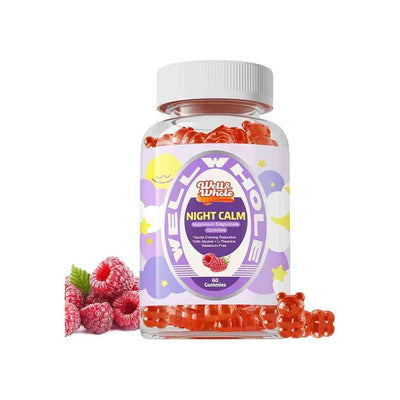
well&whole's Magnesium Bisglycinate Gummies with Apigenin & B6 are deliberately melatonin-free, addressing sleep through GABAergic enhancement rather than circadian signaling:
| Component | Mechanism | Sleep Relevance |
| Magnesium | NMDA receptor blockade, parasympathetic support | Reduces excitatory neurotransmission |
| Glycine (from bisglycinate) | GlyR activation, inhibitory tone | Direct neuronal inhibition |
| Apigenin | GABA-A receptor PAM (benzodiazepine site) | Enhances natural GABA signaling |
| Vitamin B6 | GAD cofactor → GABA synthesis | Supports GABA production |
This multi-mechanism approach targets the hyperarousal that drives most sleep difficulties while preserving the circadian timing system that melatonin supplementation may disrupt.

FAQ
Q: Is melatonin or apigenin better for sleep?
A: It depends on the cause of your sleep difficulty. If you have a circadian rhythm disruption (jet lag, shift work), melatonin may be more appropriate. If your primary issue is "can't turn off my brain" (hyperarousal), apigenin's GABAergic mechanism may be more effective. They address different aspects of sleep neurobiology.
Q: Can I take melatonin AND apigenin together?
A: They target different systems (circadian timing vs. GABAergic inhibition), so there's no direct pharmacological conflict. However, combining multiple sleep-supporting supplements can produce additive sedation. If you're transitioning from melatonin to melatonin-free support, consider discontinuing melatonin for 3-5 days before starting apigenin to clearly evaluate its effect.
Q: Will apigenin build tolerance like sleep medications?
A: A 2016 long-term study of chamomile extract (standardized to apigenin) for generalized anxiety disorder by Mao et al. in Phytomedicine found sustained efficacy over 38 weeks without tolerance development—consistent with apigenin's low-affinity, low-efficacy binding profile.
Q: Does melatonin have any advantages over apigenin for sleep?
A: For jet lag specifically, melatonin has a robust evidence base. For shift workers attempting to sleep during daylight hours, melatonin's circadian phase-shifting properties may be beneficial. These are timing disorders, not hyperarousal disorders.
Q: Is it safe to switch from melatonin to magnesium bisglycinate gummies?
A: Yes, you can discontinue melatonin at any time without withdrawal effects. Begin the magnesium bisglycinate + apigenin gummies on your first night without melatonin. The effects may feel different—less "knockout" and more "natural transition to sleep."

Q: Why are so many sleep supplements melatonin-based if GABAergic support is often more appropriate?
A: Melatonin is cheap to manufacture, has an established market presence, and addresses a mechanism (circadian timing) that the public understands via the "darkness hormone" narrative. GABAergic sleep support is biochemically more complex and has been slower to reach consumer awareness despite strong scientific rationale.
Q: Can I take these gummies on an as-needed basis or only nightly?
A: Both approaches work. The GABAergic mechanism functions acutely (same-night benefit), unlike melatonin, which is primarily effective when used consistently for circadian entrainment. Occasional use for high-stress nights is reasonable; nightly use for ongoing sleep support is also appropriate.
---
Conclusion
Melatonin and apigenin are fundamentally different tools for fundamentally different sleep challenges. Melatonin tells your brain's clock that it's nighttime—crucial for circadian disorders but often insufficient for the hyperarousal that drives most insomnia. Apigenin, by enhancing GABA-A receptor function, directly supports the neurochemical transition from wakefulness to sleep—addressing the "can't turn off my brain" experience that defines the most common sleep complaint.
well&whole's Magnesium Bisglycinate Gummies with Apigenin & B6 embrace the melatonin-free approach, targeting hyperarousal through complementary GABAergic mechanisms: magnesium for NMDA receptor blockade, glycine for direct inhibition, apigenin for GABA-A receptor enhancement, and vitamin B6 for GABA synthesis capacity.
Experience melatonin-free sleep support at wellwholeshop.com.
Related supplements
If you're ready to put this into practice, our Magnesium Bisglycinate Gummies with Apigenin & B6, Melatonin Free, 60 Ct | Gentle on Stomach, Chelated with Glycine, Night Calm Routine and Sleep & Calm Support Bundle are formulated with this in mind. You can also compare the Sleep Support and Magnesium ranges to find the format that suits you.
These statements have not been evaluated by the Food and Drug Administration. This product is not intended to diagnose, treat, cure, or prevent any disease.