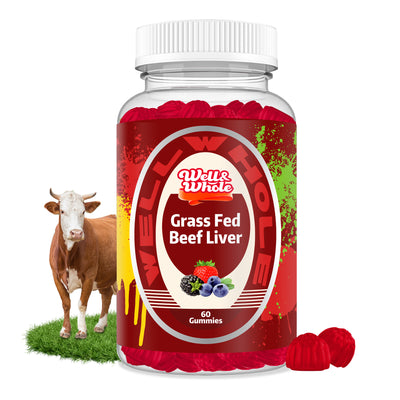
Why Grass-Fed Beef Liver Is a Nutritional Powerhouse

H1: Grass-Fed Beef Liver Supplements – Why They Deserve a Spot in Your Daily Routine
When most people think about liver, they picture a strong, metallic taste or a texture they just can’t get past. But here’s the thing: grass-fed beef liver supplements have quietly become one of the most nutrient-dense whole food concentrates you can add to your daily regimen. Unlike synthetic vitamins, these capsules deliver a complete matrix of vitamins, minerals, and cofactors that your body actually recognizes and uses. For anyone looking to support energy levels, iron status, or even skin health, this is not just another trendy supplement—it’s a return to ancestral eating patterns that modern nutrition science is finally catching up with.
Let’s break down what makes these supplements stand out, how they differ from conventional options, and why well&whole is a brand you can trust if you’re thinking about adding them to your stack.
Why Grass-Fed Beef Liver Is a Nutritional Powerhouse
Liver is often called nature’s multivitamin, and for good reason. A single ounce of grass-fed beef liver contains more vitamin A, B12, copper, and riboflavin than most people get from a whole day of eating. According to the USDA FoodData Central, 100 grams of beef liver provides approximately 6,582 mcg of vitamin A (retinol) —that’s over 700% of the daily recommended intake. It also supplies 83 mcg of vitamin B12, which is crucial for nerve function and red blood cell formation.
But the real magic lies in the grass-fed factor. Animals raised on pasture have higher levels of conjugated linoleic acid (CLA) and omega-3 fatty acids compared to grain-fed livestock. A 2010 study in the Journal of Animal Science found that grass-fed beef liver contains up to 2–3 times more omega-3s than its grain-fed counterpart. These fatty acids are essential for brain health and reducing inflammation. When you choose grass-fed, you’re not just getting more vitamins—you’re getting a better fatty acid profile that supports heart and cognitive function.
Summary: Grass-fed beef liver supplements provide a concentration of bioavailable vitamin A, B12, iron, and omega-3s that synthetic multivitamins rarely match. The pasture-raised origin directly improves the nutrient density and overall quality.
Grass-Fed vs. Grain-Fed: What the Label Actually Means
Many people assume “grass-fed” is just a marketing term. In reality, it defines a fundamental difference in the animal’s diet and, consequently, the nutrient composition of its organs. Grain-fed cattle typically spend the last months of their lives on a corn- or soy-based diet, which alters the fat profile and can reduce certain fat-soluble vitamins. Grass-fed beef liver comes from animals that graze on pasture their entire lives—no confinement, no grain finishing.
One key distinction is the vitamin K2 content. Grass-fed liver contains MK-4, a form of vitamin K2 that is particularly effective at directing calcium into bones and teeth rather than arteries. A 2015 review in Nutrients highlighted that pasture-raised animals consistently produce higher levels of K2 than grain-fed ones. Additionally, the copper-to-zinc ratio in grass-fed liver is more balanced, which can help with immune regulation. For anyone using grass-fed beef liver capsules as part of a targeted protocol—say, for anemia or adrenal fatigue—these subtle but meaningful differences matter.
Summary: Choosing grass-fed over grain-fed ensures higher levels of vitamin K2, balanced minerals, and a healthier omega-6 to omega-3 ratio. Not all beef liver supplements are equal, and the animal’s diet is the deciding factor.
Bioavailability: Why Whole Food Supplements Outperform Isolated Nutrients
Synthetic supplements often contain isolated vitamins like retinyl palmitate (vitamin A) or cyanocobalamin (B12). These forms require enzymatic conversion in the liver before the body can use them. Grass-fed beef liver supplements deliver these nutrients in their natural forms—retinol, methylcobalamin, and heme iron—all of which are already active and ready for absorption.
Heme iron, found only in animal products, is absorbed 2–3 times more efficiently than non-heme iron from plants or synthetic iron supplements. A 2020 study in the European Journal of Nutrition confirmed that heme iron bypasses many absorption inhibitors (like phytates found in grains) and is less likely to cause gastrointestinal side effects. This makes beef liver supplements for energy a practical option for anyone with iron deficiency anemia or simply low stamina.
Moreover, because liver is a whole food, it contains synergists like copper and vitamin C (naturally present in small amounts) that further aid iron absorption. You can’t get that kind of cooperation from a pill that isolates each nutrient.
Summary: The nutrients in grass-fed beef liver are in their most bioavailable forms. Heme iron, natural retinol, and methylated B12 work together for superior absorption and fewer side effects compared to synthetic isolates.
How to Choose a High-Quality Grass-Fed Beef Liver Supplement
Not all products on the shelf live up to the label. When shopping for a supplement, look for three things: source transparency, low-temperature processing, and third-party testing. Grass-fed claims should be backed by clear sourcing—ideally from New Zealand or Argentina, where pasture-raising is the standard. well&whole takes this seriously by sourcing from verified grass-fed herds and using a gentle freeze-drying process that preserves heat-sensitive enzymes and fat-soluble vitamins.
Avoid products that are “defatted” or extracted with chemical solvents. The fat portion of liver contains the vitamin A and K2. Many mass-market brands remove the fat to extend shelf life, which strips the supplement of key nutrients. Instead, seek out pure, whole-organ, freeze-dried capsules that retain the natural lipid profile.
Dosage also matters. A typical serving is 3–6 capsules per day, which provides roughly 3,000–6,000 mcg of vitamin A. While that’s safe for most adults, pregnant women should consult a healthcare professional because excessive preformed vitamin A can be teratogenic. Best grass-fed beef liver supplement choices will include clear usage guidelines and batch-specific lab reports.
Summary: Prioritize brands that freeze-dry whole liver, source from grass-fed pasture animals, and provide transparent testing. well&whole meets these criteria and offers a product that is both potent and gentle on digestion.
Practical Ways to Incorporate Beef Liver Supplements into Your Day
One of the biggest hurdles with whole liver is taste. Even desiccated capsules can cause a slight “liver burp” if taken on an empty stomach. To avoid that, take your grass-fed beef liver capsules with a meal—especially one that contains healthy fats like avocado or olive oil—since the fat-soluble vitamins require dietary fat for optimal absorption.
If you are new to liver supplements, start with one capsule per day for a week, then gradually increase to the recommended dose. This allows your body to adjust to the high vitamin A and copper load. Many users report a noticeable boost in energy within two weeks, along with clearer skin and stronger nails. For athletes, taking the supplement post-workout can aid recovery because of the rich B12 and iron content.
How to take beef liver supplements successfully is largely about consistency. Pair them with a vitamin C source (like a squeeze of lemon in water) if you are specifically targeting iron absorption. And remember: because liver is a storage organ for toxins, the animal’s diet determines the quality. By sticking with a trusted brand like well&whole, you minimize any risk of heavy metals or contaminants.
Summary: Take liver supplements with food, start low and go slow, and be consistent. The benefits for energy, skin, and iron status usually appear within the first weeks of regular use.
Frequently Asked Questions (FAQ)
1. Can grass-fed beef liver supplements replace a daily multivitamin?
For most people, yes. Because liver provides a wide spectrum of B vitamins, vitamin A, iron, copper, and zinc, it can serve as a whole-food alternative to synthetic multivitamins. However, it does not contain significant amounts of vitamin C or vitamin E, so you may still need to get those from foods or a separate supplement if your diet is lacking.
2. Are there any side effects from taking beef liver capsules?
It is generally well-tolerated, but some people experience mild digestive upset or a “liver taste” if taken on an empty stomach. The biggest concern is vitamin A toxicity if you exceed recommended doses over a long period. Stick to the dosage on the label—typically 3–6 capsules per day—and avoid combining with high-dose vitamin A supplements unless directed by a doctor.
3. Is well&whole’s product tested for purity and potency?
Yes. Every batch of well&whole grass-fed beef liver supplements undergoes third-party testing for heavy metals, pesticides, and microbial contaminants. The results are available upon request, and the freeze-drying process ensures that nutrient levels remain close to what you would find in fresh liver.
References:
- USDA FoodData Central: Beef liver, raw (accessed 2023).
- Daley, C. A., et al. (2010). “A review of fatty acid profiles and antioxidant content in grass-fed and grain-fed beef.” Journal of Animal Science.
- Schurgers, L. J., et al. (2015). “Vitamin K2 in pasture-raised animal products.” Nutrients.
- Zimmermann, M. B., et al. (2020). “Heme iron bioavailability and absorption enhancers.” European Journal of Nutrition.
These statements have not been evaluated by the Food and Drug Administration. This product is not intended to diagnose, treat, cure, or prevent any disease.