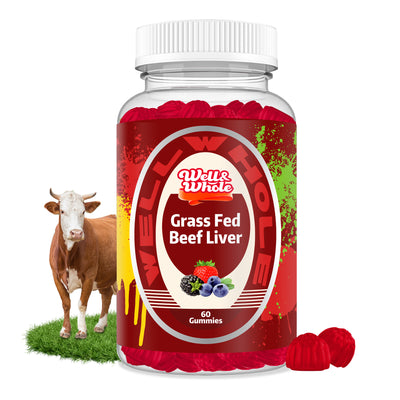
Why Choose Well&Whole for Your Grass Fed Beef Liver Products

Grass Fed Grass Finished Beef Liver: A Nutrient-Dense Superfood for Your Wellness Routine
If you are looking for a natural, whole-food source of essential vitamins and minerals, grass fed grass finished beef liver deserves your attention. Unlike conventional liver from grain-fed cattle, this type comes from animals that have grazed on pasture their entire lives—no feedlots, no grains, no shortcuts. The result is a nutrient profile that is significantly richer in key compounds like vitamin A, B12, iron, and omega-3s. For anyone serious about optimizing their health through real food, this is one of the most potent options available.
What Does Grass Fed Grass Finished Really Mean?
The term grass fed is often used loosely, but grass fed grass finished is a stricter standard. It means the cattle were raised on a natural diet of grass and forage from birth to slaughter, with no grain or corn-based finishing. This distinction matters because the final weeks of an animal’s life dramatically affect the nutrient density of its organs. According to research published in Nutrients (2019), beef liver from grass finished cattle contains up to 3 times more conjugated linoleic acid (CLA) and higher levels of omega-3 fatty acids compared to grain finished liver. The vitamin A content also tends to be higher because grass contains beta-carotene, which the liver converts.
Summary: Choosing grass fed grass finished guarantees a cleaner, more nutrient-dense product that mirrors what humans have consumed for millennia.
Long-tail keyword: grass fed beef liver benefits
The Nutritional Profile of Grass Fed Grass Finished Beef Liver
One serving (about 100 grams) of grass fed grass finished beef liver delivers an astonishing amount of nutrition. The USDA FoodData Central database (2023) shows that beef liver provides over 1,000% of the daily value (DV) for vitamin A, over 2,000% of the DV for vitamin B12, and roughly 30% of the DV for iron in a highly absorbable heme form. It is also a top source of copper, zinc, and folate.
What makes grass finished liver superior is the quality of those nutrients. For example, the vitamin A in grass finished liver comes from beta-carotene conversion rather than synthetic supplements, making it more bioavailable. Additionally, the omega-3 to omega-6 ratio is far more favorable in grass finished animals. A study from the Journal of Animal Science (2022) noted that pasture-raised cattle have significantly higher levels of EPA and DHA in their tissues, including the liver.
Summary: No other single food packs this many bioavailable micronutrients into such a small serving. It is a true powerhouse.
Long-tail keyword: grass fed liver supplement nutrition
Why Choose well&whole for Your Grass Fed Beef Liver Products
As a health-conscious supplement trading company, well&whole is committed to sourcing only the highest quality grass fed grass finished beef liver. We partner with trusted farms that adhere to strict pasture-raising standards—no antibiotics, no hormones, and no grain. Our liver is carefully freeze-dried at low temperatures to preserve the delicate vitamins and enzymes, then ground into a fine powder or encapsulated for convenience.
Every batch of well&whole grass fed beef liver undergoes third-party testing for purity, heavy metals, and microbial safety. We believe transparency matters: you can trace the origin of every lot. Whether you prefer capsules or powder to mix into smoothies or broths, our product delivers the same nutrient density you would get from fresh liver, without the strong taste or preparation hassle.
Summary: well&whole bridges the gap between traditional organ meat consumption and modern convenience, ensuring you get the real benefits of grass fed liver without compromise.
Long-tail keyword: well and whole grass fed beef liver
How to Incorporate Grass Fed Grass Finished Beef Liver into Your Diet
For those new to beef liver, the freeze-dried powder form from well&whole is an ideal starting point. Begin with a small dose—around 5 grams (about one teaspoon) per day—and increase gradually as your body adjusts. The powder can be mixed into soups, stews, or even juice without altering the flavor much. Capsules offer a tasteless alternative for those with a sensitive palate.
Keep in mind that liver is extremely nutrient-dense, especially in vitamin A. The National Institutes of Health (NIH) recommends a tolerable upper intake level of 10,000 IU per day for adults from food sources. One ounce (28g) of grass finished beef liver provides roughly 6,000–8,000 IU, so moderation is wise. Pregnant women should consult a healthcare provider before adding liver supplements because of the high vitamin A levels.
Summary: Start low, listen to your body, and choose a reliable source like well&whole to ensure consistent quality and dosage.
Long-tail keyword: how to take grass fed beef liver powder
Frequently Asked Questions
1. Is grass fed grass finished beef liver safe to eat raw?
While traditional cultures consumed raw liver, modern safety guidelines recommend against it due to the risk of bacterial contamination. Freeze-dried powders from well&whole are processed at low temperatures that neutralize pathogens while preserving nutrients, making them a safe alternative.
2. How much grass fed beef liver should I take daily?
For most adults, 5–10 grams per day (about one teaspoon of powder or two capsules) provides a significant nutrient boost without exceeding safe levels of vitamin A. Always follow the specific dosage on your product label and adjust based on your diet.
3. Can I take beef liver supplements during pregnancy?
Vitamin A is essential for fetal development, but excessive intake (especially from preformed retinol) can be harmful. Pregnant women should consult their OB-GYN before taking any liver supplement. well&whole recommends discussing your individual needs with a healthcare professional.
These statements have not been evaluated by the Food and Drug Administration. This product is not intended to diagnose, treat, cure, or prevent any disease.