What Nutrients Are in Beef Liver? Complete Vitamin & Mineral Breakdown
What nutrients are in beef liver? Complete vitamin and mineral breakdown, % daily values per serving, and what a liver supplement actually delivers.

We had a customer message us after a doctor's visit: "My blood work showed low B12 and low ferritin. My doctor said eat liver. I hate liver. What can a liver supplement actually give me?"
It's the perfect framing for this article. "Eat liver" is excellent advice — but the follow-up question is always: what's actually in it? Knowing the precise nutrient content of beef liver — and how a supplement serving maps to a real portion — turns vague advice into a usable plan.
This is the complete breakdown: every major vitamin and mineral in beef liver, the amounts per 100 g, what they do, and what your supplement serving realistically delivers.
The Headline Nutrients (Per 100 g Cooked Beef Liver)
The Big Three
| Nutrient | Amount per 100 g | % Daily Value | What it does |
| Vitamin B12 (cobalamin) | ~60–70 µg | ~2,500–2,900% | Red blood cell formation, nerve health, DNA synthesis |
| Vitamin A (retinol) | ~7,000–10,000 µg RAE | ~700–1,000% | Vision, immune function, skin, reproduction |
| Copper | ~9–10 mg | ~1,000%+ | Iron transport, enzyme function, connective tissue |
The Supporting Cast
| Nutrient | Amount per 100 g | % DV (approx.) | Role |
| Riboflavin (B2) | ~2.5–3.5 mg | 190–270% | Energy metabolism |
| Iron (heme) | ~4–7 mg | 22–39% | Oxygen transport |
| Folate | ~200–250 µg | 50–60% | Cell division, red cells |
| Vitamin B6 | ~0.7–1 mg | 40–60% | Amino acid metabolism |
| Niacin (B3) | ~13–17 mg | 80–100% | Energy, DNA repair |
| Vitamin B5 | ~5–7 mg | 100–140% | CoA synthesis |
| Zinc | ~4–6 mg | 35–50% | Immunity, healing |
| Selenium | ~20–35 µg | 35–65% | Antioxidant enzymes |
| Phosphorus | ~350–400 mg | 30–40% | Bones, ATP |
| Choline | ~300–400 mg | 55–70% (AI) | Cell membranes, liver fat export |
| CoQ10 | ~1–4 mg | — | Mitochondrial energy |
Expert Insight: USDA FoodData Central lists beef liver among the single richest dietary sources of preformed vitamin A (retinol), vitamin B12, and riboflavin. Its micronutrient density per calorie is among the highest of any whole food — the basis for liver's historical nickname, "nature's multivitamin."
What Beef Liver Does NOT Contain
The Honest Gaps
| Nutrient | In beef liver? | Note |
| Vitamin C | ❌ Essentially none | Pair with C-rich foods for iron absorption |
| Vitamin D | ❌ Negligible | Get it from sun, fish, fortified foods |
| Fiber | ❌ None | Animal food — no fiber |
| Calcium | ⚠️ Low (~10–20 mg) | Not a calcium source |
| Omega-3s | ⚠️ Low | Grass-fed beef has some; liver is not the main source |
Why This Matters
"Nature's multivitamin" is a fair nickname — but it's a fat-soluble + B-vitamin + trace-mineral multivitamin. It does not replace fruits, vegetables, dairy, or sunlight. The complete diet still needs the missing pieces.
Supplement Reality Check: What a Serving Delivers
The Conversion Math
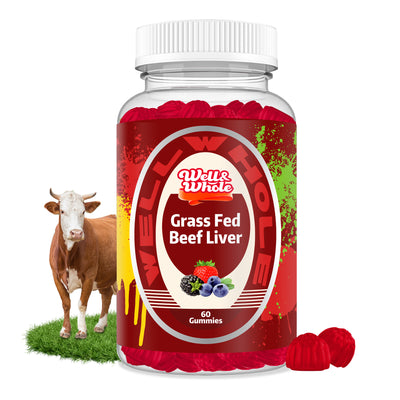
Beef liver supplements use desiccated (freeze-dried) liver — about 4–5 g of fresh liver ≈ 1 g of desiccated liver. A typical supplement serving (2 capsules or 1–2 gummies, such as Grass-Fed Beef Liver Gummies) delivers roughly 0.8–2 g of dried liver.

| Full 100 g liver | Typical supplement serving |
| ~60–70 µg B12 | ~5–15 µg B12 (depends on serving) |
| ~7,000–10,000 µg retinol | ~500–2,000 µg retinol |
| ~9–10 mg copper | ~0.5–2 mg copper |
| ~4–7 mg iron | ~0.5–2 mg iron |
| Full day of "everything" | "Some of the good stuff, consistently" |
The Takeaway
· B12: a quality liver supplement serving can still exceed 100% DV — meaningful
· Retinol: varies by serving; respect totals
· Copper/iron: useful additions, but food + diet remain the base
Nutrient Interactions & Absorption Notes
Copper–Zinc Tug of War
Copper and zinc compete for absorption. High-dose zinc (50 mg+ daily) can drive copper deficiency — relevant if you stack minerals.
Iron–Vitamin C / Iron–Tea
Heme iron absorbs well, but tannins (tea/coffee) still reduce it. Vitamin C enhances it.
Retinol–Fat
Vitamin A needs dietary fat for absorption — take liver supplements with meals.
B12–Intrinsic Factor
Food-bound B12 requires intrinsic factor; supplement B12 mostly bypasses this — another reason supplements are a reliable B12 route for older adults.
Who Benefits Most From Beef Liver Nutrients?
| Group | Why liver nutrients help |
| Vegans/vegetarians (with provider guidance) | B12 is only in animal foods — but note: liver supplements are animal products; vegans may prefer B12-fortified options |
| Older adults (60+) | B12 absorption declines with age (atrophic gastritis affects ~10–30% of older adults) |
| Menstruating women | Iron and B12 demands are higher |
| Athletes | B12, iron, and CoQ10 support oxygen transport and energy |
| Low appetite / restricted eaters | Dense micronutrients in small volume |
The Counter-Question
Are you actually deficient? Blood work (B12, ferritin, copper) beats guesswork. Supplementing when replete adds no benefit — for iron and vitamin A, it can do harm.
FAQ
Q: What is the most abundant nutrient in beef liver?
A: Vitamin B12 and copper are the standouts per 100 g — roughly 2,500–2,900% DV and over 1,000% DV respectively. Retinol and riboflavin follow.
Q: Is beef liver a good source of iron?
A: Yes — heme iron at ~4–7 mg per 100 g, absorbed ~2–3x better than plant iron. It's a legitimate iron food, though not the highest.
Q: Does a liver gummy give me the same nutrients as eating liver?
A: The same nutrients, in smaller amounts — a serving of supplement equals a fraction of a 100 g portion. Consistent daily use is the supplement's advantage.
Q: Is beef liver safe to eat every week?
A: For most adults, 1–2 servings (100 g) per week is a common dietary guideline because of the retinol density. During pregnancy, avoid liver unless a provider approves.
Q: Can beef liver nutrients help with anemia?
A: B12, folate, iron, and copper all support red blood cell health. Diagnosed anemia (iron-deficiency or B12-deficiency) should be treated under medical care with lab monitoring.
Q: Which nutrient in liver is easiest to overdo?
A: Vitamin A (retinol) and copper. Respect servings, avoid stacking multiple organ/retinol sources, and never take extra "just in case."
References
1. USDA FoodData Central. "Beef, variety meats and by-products, liver, cooked" — complete nutrient reference (accessed 2026).
2. Green, R., et al. (2017). "Vitamin B12 deficiency." Nature Reviews Disease Primers, 3: 17040.
3. Hurrell, R., & Egli, I. (2010). "Iron bioavailability and dietary reference values." The American Journal of Clinical Nutrition, 91(5): 1461S–1467S.
4. NIH Office of Dietary Supplements. "Vitamin A, Vitamin B12, Copper, Iron – Fact Sheets for Health Professionals" (accessed 2026).
5. Daley, C. A., et al. (2010). "A review of fatty acid profiles and antioxidant content in grass-fed and grain-fed beef." Nutrition Journal, 9: 10.
Safety & Trust
· Retinol upper limit: 3,000 µg RAE/day for adults; liver + cod liver oil + retinol multivitamins stack quickly.
· Pregnancy: Liver products are generally avoided in pregnancy (retinol teratogenicity) — provider approval required.
· Iron/copper disorders: Hemochromatosis, Wilson's disease, and related conditions = avoid.
· Gout: High purine content; consult a doctor.
· Blood-work-guided use: Baseline and follow-up labs (B12, ferritin, copper) make supplementation measurable and safe.
FDA Disclaimer: These statements have not been evaluated by the Food and Drug Administration. This product is not intended to diagnose, treat, cure, or prevent any disease. Always consult your healthcare provider before beginning any supplement regimen, especially if you are pregnant, nursing, taking medication, or have a medical condition. The information in this article is for educational purposes only.
Related supplements
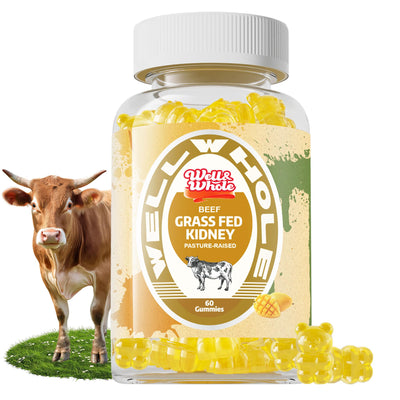
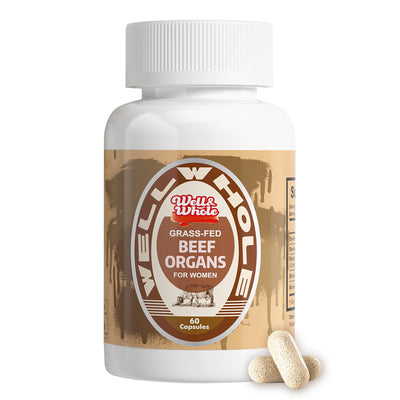
Should you decide to supplement, Grass Fed Beef Liver Supplement Gummies with 60 Count for Full Wellness and Grassfed Beef Organ Supplement Capsules, Grass Fed & Pasture Raised, Total Body Wellness Support are our formulation for this purpose. For a broader comparison, see the Vitamin A and Health Benefits collections.