What Makes EAA + Liver Support a Dual-Action Amino Acid Formula?
What actually makes an EAA + liver support supplement "dual-action"? We explain the ingredient logic, the science links, and the label standards to check.

The phrase "dual-action formula" gets thrown around in supplement marketing so often that it's lost most of its meaning. It shows up on everything from collagen creams to hair vitamins. So when we launched EAA Liquid Drops & Liver Support, we committed to a definition that actually holds up: dual-action means two ingredient sets, each with independent, evidence-based roles, engineered into one product.
This article answers the question behind the label: What, exactly, makes a formula dual-action? We'll walk through the ingredient logic, the metabolic connections that make the pairing legitimate as EAA with liver support, and the red flags that separate real formulas from marketing fluff.

Defining "Dual-Action": The Two Pillars of a Dual-Action Amino Acid
Pillar 1: Essential Amino Acids (Muscle & Protein)
The first action targets muscle protein synthesis and general amino acid status:
· All 9 EAAs — histidine, isoleucine, leucine, lysine, methionine, phenylalanine, threonine, tryptophan, valine
· Leucine is the dose-critical trigger — research consistently shows ~2–3 g of leucine per dose is the reliable threshold for stimulating MPS in adults
· Practical serving: 5–10 g total EAAs per serving is the meaningful range; under ~3 g, the "EAA" claim is marketing
Pillar 2: Liver-Support Nutrients (Amino Acid Liver Support)
The second action targets liver metabolism and antioxidant status:
| Compound | Known role | Typical dual-action dose |
| Silymarin (milk thistle) | Antioxidant support in hepatocytes | 70–420 mg standardized |
| Choline | Fat export from liver (VLDL formation) | 50–550 mg |
| Taurine | Bile acid conjugation, antioxidant | 500–2000 mg (in some blends) |
| Methionine | Methyl donor → SAM-e → glutathione | Part of EAA dose |
| Glycine | Phase II conjugation, glutathione synthesis | 1–3 g |
| Artichoke/other botanicals | Bile flow support | variable |
Why the Two Actions Are Biologically Linked (EAA and Liver Support Together)
The Liver Is Your Amino Acid Hub
The pairing isn't arbitrary. Here's the metabolic connection:
1. First-pass metabolism: After you ingest protein or amino acids, the liver extracts ~50–60% before they reach circulation
2. Urea cycle: The liver clears ammonia (a byproduct of amino acid breakdown) via the urea cycle — with arginine as a key intermediate
3. Albumin & transport: The liver produces albumin and transport proteins that carry amino acids and other nutrients around the body
4. Glutathione factory: The liver synthesizes glutathione — the body's primary intracellular antioxidant — using glycine, cysteine (from methionine), and glutamate
The Methionine–Choline Axis: Amino Acid Liver Support
This is the single best example of "dual-action" logic:
· Methionine (an EAA, so it's in the muscle pillar) is a methyl donor
· Choline (liver pillar) is also a methyl donor
· Both are needed to synthesize phosphatidylcholine — the molecule the liver uses to export fat
· Deficiency in either is independently linked to fat accumulation in the liver
In other words, the same dose of methionine that supports muscle protein is also contributing to liver fat export. One molecule, two actions. That's the honest definition of dual-action amino acid supplementation.
Expert Insight: A 2012 review in Current Opinion in Gastroenterology (Corbin & Zeisel) described how choline and methionine deficiency each contribute to hepatic fat accumulation through impaired phosphatidylcholine synthesis. This is direct evidence that amino-acid-family nutrients shape liver fat metabolism — the mechanistic basis for EAA + liver-support formulas.
Anatomy of a Proper Dual-Action Amino Acid Formula
What the Label Should Show
| Label element | Good | Red flag |
| EAA total per serving | 5–10 g, all 9 listed | "Proprietary blend" hiding amounts; <3 g total |
| Leucine per serving | 1.5–3 g | Not listed at all |
| Silymarin/milk thistle | Standardized (70–80% silymarin), 70–420 mg | "Milk thistle extract" with no standardization |
| Choline | 50–550 mg listed | Choline absent (common!) |
| Taurine/glycine | Listed amounts | Only trace doses |
| Serving size | Clear, practical | Requires 4+ servings daily |
What "Dual-Action" Should NOT Mean
· Two actions that fight each other (e.g., stimulant energy + sleep formula)
· A full EAA dose and a full liver blend that together cost more than buying both separately — the whole point is value and simplicity
· "Detox" claims. Liver support ≠ cleansing. If the label says "cleanses" or "flushes," treat claims skeptically — no supplement "flushes" the liver, and the liver doesn't need flushing
Comparing Real-World Product Categories
| Product | Muscle support | Liver support | Convenience | Typical cost/serving |
| Plain EAA powder | ✅ Full | ❌ None | Medium (mix) | $0.50–0.90 |
| BCAA powder | ⚠️ Signal only | ❌ None | Medium | $0.30–0.60 |
| Liver-support capsules | ❌ | ✅ | High | $0.30–0.80 |
| EAA Liquid + Liver Support | ✅ Full | ✅ | High (liquid, no mixing) | ~$0.50 |
| EAA powder + separate liver caps | ✅ | ✅ | Low (two products) | $0.80–1.70 |
Why One Product Often Wins: EAA Liquid Drops Review

· Cost: combining two categories usually beats buying two products
· Compliance: one routine = fewer missed doses
· Timing: liver support works on a daily basis; EAAs on training days — a single liquid lets you dose both together
How Our EAA Liquid + Liver Support Formula Maps to This Framework
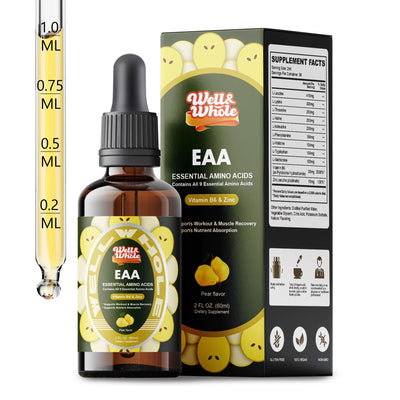
The EAA Liquid Drops & Liver Support ($19.99) was built around this exact structure:
5. Muscle pillar: full 9-EAA profile in a liquid that peaks in plasma in ~20–40 minutes
6. Liver pillar: silymarin (standardized milk thistle) + choline + taurine + glycine-family support
7. Format: liquid drops = fast absorption + flexible dosing, mixed into water or taken sublingually for maximum bioavailability
8. Framing: positioned as support, never as detox or treatment — the honest dual-action standard
People Also Ask
Do liquid amino acids absorb faster than pills?
Yes. Liquid amino acid absorption reaches peak plasma levels in roughly 20–40 minutes versus 45–90 minutes for capsules. Sublingual liquid dosing can be faster still. This is why a dual-action amino acid formula in liquid form is the preferred format for fasted training and post-workout recovery.
Can EAA support liver health?
Yes — EAA and liver support together is biologically sound because the liver metabolizes 50–60% of dietary amino acids on first pass. Methionine, glycine, and taurine all participate in hepatic pathways including glutathione synthesis, bile acid conjugation, and fat export. Combined with silymarin and choline, EAAs support both organs.
What's the difference between EAA liquid and gummies?
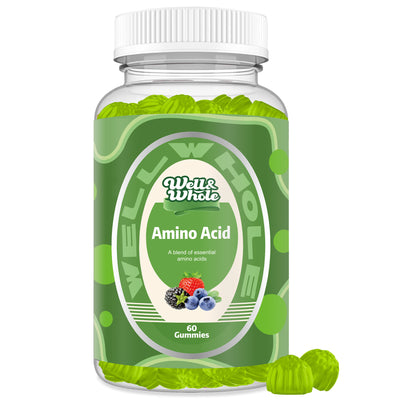
EAA liquid vs gummies differs mainly in absorption speed and convenience. Liquid reaches peak plasma in ~20–40 minutes (sublingual option available) but requires mixing and has a medicinal taste. Gummies take 40–70 minutes but are portable, pre-dosed, and better-tasting. Liquids win for fasted training windows.
Should I take EAA liquid on an empty stomach?
Yes — taking EAA liquid on an empty stomach is generally well tolerated and improves absorption rate. Without food competing for uptake, amino acids reach peak plasma levels quickly. This is the standard protocol for fasted training and post-workout use.
Internal Linking Suggestions
· EAA Liquid Drops & Liver Support Product Page — primary product, anchor text: "dual-action amino acid" or "EAA liquid"
· EAA Gummies 60 ct — format comparison, anchor text: "EAA with liver support"
· Article 33 (Best Liquid Amino Acid with Liver Support) — review, anchor text: "best liquid amino acid supplement"
· Article 34 (How EAA Liquid Supports Muscle and Liver) — mechanism, anchor text: "EAA and liver support together"
· Beef Liver Gummies — related liver-support product, anchor text: "amino acid liver support"
References
9. Corbin, K. D., & Zeisel, S. H. (2012). "Choline metabolism provides novel insights into nonalcoholic fatty liver disease and its progression." Current Opinion in Gastroenterology, 28(2): 159–165.
10. de Avelar, C. R., et al. (2016). "Silymarin and liver disease: a meta-analysis of randomized controlled trials." World Journal of Hepatology, 8(6): 336–344.
11. Dasarathy, S. (2018). "Protein metabolism in liver disease." Nutrients, 10(3): 338.
12. NIH Office of Dietary Supplements. "Choline – Fact Sheet for Health Professionals" (accessed 2026).
13. Wolfe, R. R. (2017). "Branched-chain amino acids and muscle protein synthesis in humans: myth or reality?" Journal of the International Society of Sports Nutrition, 14: 30.
Safety & Trust
· Dose hygiene: Keep total EAAs under ~15 g/day from supplements unless advised otherwise; choline under 3,500 mg/day; silymarin under ~600 mg/day.
· Interactions: Silymarin may change drug metabolism (warfarin, statins, some diabetes and psychiatric medications). Choline and taurine have minimal known interactions at label doses.
· Medical conditions: Anyone with cirrhosis, hepatitis, NAFLD, gallstones, or kidney disease should get professional sign-off before starting.
· Pregnancy/nursing: Avoid concentrated amino acid + botanical blends in pregnancy unless explicitly approved by your provider.
· Realistic expectations: Supplements support nutrient status; they do not treat disease, lower cholesterol, or reverse alcohol damage.
FDA Disclaimer: These statements have not been evaluated by the Food and Drug Administration. This product is not intended to diagnose, treat, cure, or prevent any disease. Always consult your healthcare provider before beginning any supplement regimen, especially if you are pregnant, nursing, taking medication, or have a medical condition. The information in this article is for educational purposes only.
Related supplements
If you'd like to try it, EAA Gummie 60 counts Essential Amino Acids Supplement Gummies for Men and Women and Essential Amino Acid (EAA) Liquid Drops & Liver Support Liquid Supplement are the closest match to what we've covered here. Browse Amino Acids and Muscle Support to see how the alternatives compare.