What is TUDCA? How is it different from ordinary bile acids?
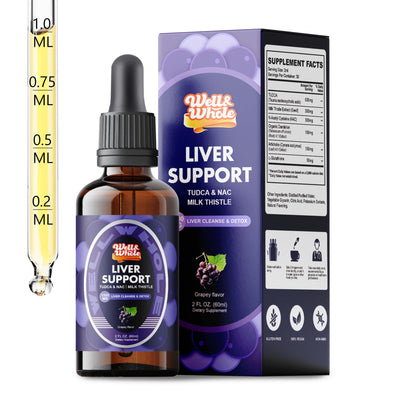
Want to know what TUDCA is? This guide takes an in-depth look at the science behind tauroursodeoxycholic acid (TUDCA), its six major health benefits, recommended dosages, safety, and why well&whole features it as its flagship ingredient.

1. What is TUDCA? How is it different from ordinary bile acids?
At first glance, bile acids might sound like “bad things”—they’re secreted by the liver, stored in the gallbladder, and responsible for digesting fats. But in reality, bile acids are key messengers in the body’s metabolism.
The human body produces approximately 600–800 milligrams of bile acids daily. Under normal circumstances, the primary bile acids are CA (cholic acid) and CDCA (chenodeoxycholic acid). TUDCA is the taurine-conjugated form of CDCA—you can think of it as an “evolutionarily optimized, gentler version of bile acids for cells.”
Key Differences
Bile Acid Type Effect on Cells
Standard Bile Acids (CA, CDCA) Cytotoxic at high concentrations
**TUDCA** **Anti-apoptotic, antioxidant, and mitochondrial protective**
In other words, TUDCA is a “friendly” version of bile acid—it fulfills the digestive functions of bile while also providing cellular protection. This is the core reason it has garnered attention in the supplement industry.
┃ 💡 **Fun Fact:** TUDCA levels in human bile are very low (less than 1%). However, TUDCA accounts for 30–50% of bear bile—which is why “bear bile” has been revered as a precious medicinal ingredient in traditional medicine. Today’s TUDCA supplements are either chemically synthesized or produced through microbial fermentation, **involving no bears whatsoever**.
Key Takeaways
- TUDCA (tauroursodeoxycholic acid) is a bile acid naturally present in small amounts in the body, studied for liver and cellular health support.
- It is typically taken in capsule form with meals.
- Because it affects bile, consult a healthcare professional if you have gallbladder or liver conditions or take related medication.
2. What Does TUDCA Do in the Body? 6 Key Mechanisms of Action
Let’s take a look at several key actions TUDCA performs at the cellular level.
2.1 Alleviating Endoplasmic Reticulum (ER) Stress
This is TUDCA’s most important mechanism of action.
The endoplasmic reticulum is the “factory” within cells responsible for folding proteins. When this “factory” becomes overloaded (due to obesity, toxins, aging, or chronic inflammation), ER stress occurs, leading to the accumulation of misfolded proteins. Prolonged ER stress triggers apoptosis—a process closely linked to diabetes, neurodegenerative diseases, and liver disease.
TUDCA is one of the most potent ER stress inhibitors known to date. It can:
Reduce the accumulation of misfolded proteins
Stabilize the endoplasmic reticulum membrane
Inhibit caspase-mediated apoptosis
Upregulate the protective UPR (unfolded protein response) pathway
2.2 Protecting Mitochondrial Function
Mitochondria are the cell’s “power plants.” TUDCA can:
Maintain mitochondrial membrane potential
Reduce ROS (reactive oxygen species)
Promote ATP production
For middle-aged and older adults, athletes, and people with chronic fatigue, this translates to improved energy metabolism.
2.3 Anti-apoptotic Effects
TUDCA helps cells survive longer under stress by inhibiting the apoptotic cascade. This effect has been confirmed by studies on liver cells, retinal cells, and neurons.
2.4 Regulation of Bile Acid Balance
As a member of the bile acid family, TUDCA participates in the enterohepatic circulation:
Improves bile flow
Reduces bile stasis
Alleviates bile reflux
2.5 Anti-inflammatory Effects
TUDCA reduces levels of pro-inflammatory factors (TNF-α, IL-6) by inhibiting the NF-κB pathway. This is crucial for issues related to chronic inflammation.
2.6 Regulation of Autophagy
Autophagy is the cell’s “cleanup mechanism”—recycling damaged proteins and organelles. TUDCA has been shown to promote autophagy activity, which is key to longevity research.
3. Six Proven Benefits of TUDCA (Backed by Research)
✅ Benefit 1: Liver Health and Protection
This is TUDCA’s most widely recognized and best-evidenced effect.
The FDA has historically approved TUDCA (a sister compound to the brand-name drug “Ursodiol”) for the treatment of primary biliary cholangitis. Clinical studies show that TUDCA significantly reduces liver enzymes (ALT, AST, γ-GT) and improves fatty liver disease.
Key Studies:
2010 study in *BMC Gastroenterology*: After 6 months of TUDCA treatment in patients with non-alcoholic fatty liver disease, liver enzyme levels decreased by 30–50%.
2015 study in *Hepatology*: TUDCA improved hepatic insulin sensitivity in patients with insulin resistance.
Suitable for:
Individuals with elevated liver enzymes detected during a physical exam
What TUDCA is
TUDCA is a taurine-conjugated bile acid. Bile acids help the body digest dietary fats and support normal liver function. Endogenous levels are small, which is why supplemental forms exist.
Research interest centers on its roles in liver and cellular health pathways.
How TUDCA is commonly taken
Capsules with meals are the standard format. Serving sizes vary widely by product, so following the specific label is essential.
It is usually part of a broader liver-support routine that may also include diet adjustments.
Who might be interested
Adults focused on liver and metabolic wellness, and those already using other liver-support supplements, often explore TUDCA.
Anyone with gallbladder issues, bile-duct obstruction, or liver disease should consult a professional first.
How to choose a quality TUDCA product
Look for a clear TUDCA amount per serving, third-party purity testing, and transparent sourcing. Avoid products that do not state the active amount.
How to fit TUDCA into a daily routine
Consistency matters more than perfection. Most people do best by attaching a supplement to an existing habit—morning coffee, a post-workout shake, or an evening wind-down—so it becomes automatic rather than another task to remember.
Start with the labeled serving and give it a few weeks of regular use before judging how it fits. Keep a simple note of how your routine feels; that feedback helps you adjust timing or format.
What to look for when reading the label
A transparent label states the active amount per serving, the form of the ingredient, and any third-party testing or quality certifications. Avoid products that hide specifics behind proprietary blends.
Check serving size, other added ingredients, and storage instructions. If anything is unclear, a reputable brand's customer support should answer directly—and a healthcare professional can help you match a product to your needs.
This article is for general wellness education and is not intended to diagnose, treat, cure, or prevent any condition. Individual needs vary—always review product labels and consult a qualified healthcare professional before starting any new supplement.
Related supplements
Explore the full well&whole supplement collection to find formats and combinations that fit your routine.
These statements have not been evaluated by the Food and Drug Administration. This product is not intended to diagnose, treat, cure, or prevent any disease.