What Is L Lysine Supplement Benefits Uses and Side Effects
Learn what L lysine supplement is its benefits dosage side effects and uses for cold sores and immune support

What Is L Lysine?
If you’ve ever searched “what is L lysine supplement” because you keep hearing about it for cold sores, immunity, or recovery, here’s the simple breakdown.
L-lysine is an essential amino acid—meaning your body can’t make it on its own. You have to get it from food or supplements. It’s a building block for protein synthesis, which makes it key for:
- Building and repairing muscle and tissue
- Producing collagen for skin, joints, and bones
- Supporting immune function and overall recovery
L Lysine from Food vs. Supplements
You can get L-lysine naturally from high-protein foods like:
- Meat: beef, chicken, pork
- Fish: salmon, cod, tuna
- Dairy: milk, yogurt, cheese
- Legumes: beans, lentils, chickpeas, soy
Food sources are great for daily maintenance, but they’re not always enough when you’re targeting specific issues like cold sores, immune support, or athletic recovery.
That’s where an L lysine supplement comes in. A supplement gives you a measured, concentrated dose so you know exactly how much L-lysine you’re getting every day.
Who May Need L Lysine Supplements?
Not everyone needs to supplement, but it can be especially useful if you:
- Follow a vegan or vegetarian diet and don’t always hit high-lysine proteins
- Eat a low-protein or highly processed diet
- Struggle with recurrent cold sores or herpes outbreaks
- Push your body hard with intense training or heavy workloads
In my own brand, I focus on making L-lysine supplements that are clean, consistent, and easy to dose, so people who actually need that extra support can rely on what they’re taking.
How L Lysine Works in the Body
L-lysine is an essential amino acid your body uses as a building block, and an L-lysine supplement simply gives you a concentrated, predictable dose on top of what you get from food.
Collagen, Tissue Repair, and Growth
L-lysine is key for:
- Collagen production – Collagen is what keeps your skin, joints, tendons, and bones strong and flexible. No enough lysine, weaker collagen.
- Tissue repair – Your body uses L-lysine to repair muscles and tissues after workouts, minor injuries, or everyday wear and tear.
- Growth and recovery – Because it’s tied to protein synthesis, L-lysine supports muscle maintenance and overall recovery, which matters if you train hard or live an active lifestyle.
Immune Support and Viral Defense
L-lysine also supports immune function in a few ways:
- It helps your body build and repair immune cells.
- Many people use L-lysine for cold sores and L-lysine for herpes support because of how it interacts with another amino acid called arginine.
L Lysine vs Arginine: Why It Matters for Cold Sores
The herpes simplex virus (HSV) that causes cold sores uses arginine to multiply. L-lysine and arginine compete for absorption and use in the body:
- Higher L-lysine intake can help limit arginine’s availability, which may slow down viral replication.
- This is why L-lysine for cold sores is so popular: many people notice fewer outbreaks or milder symptoms when they stay consistent with an L-lysine supplement.
Why Use an L Lysine Supplement?
Food gives you L-lysine, but a supplement:
- Delivers a targeted dose (often 500–1000 mg per serving).
- Makes it easier to stay at the level studied for immune support and cold sore management.
- Helps people with low-protein diets, vegans, or busy U.S. lifestyles who might not consistently hit optimal intake from food alone.
In simple terms: L-lysine supplements pack more of this immune-supporting, collagen-building amino acid into a small, easy-to-take dose so you can aim for specific benefits like cold sore support, recovery, and overall immune health.
Key L Lysine Benefits
L lysine immune support
L lysine is one of those basic amino acids your immune system leans on every day. When I look at the research and customer feedback, I see a few clear wins:
- Supports normal antibody and immune cell function
- Helps your body manage everyday viral exposure
- Works especially well for people who don’t get enough high‑quality protein
Most studies suggest it helps your immune system stay “ready,” not overstimulated.
L lysine for cold sores & herpes
This is the #1 reason a lot of people in the U.S. buy an L lysine supplement.
How it helps cold sores (HSV‑1 / HSV‑2):
- L lysine competes with arginine, an amino acid herpes viruses use to replicate
- With enough lysine and a bit less arginine, the virus tends to be less active
What users and research generally show:
| L lysine for cold sores | What people notice* |
|---|---|
| Daily use | Fewer outbreaks |
| At first tingle | Milder, shorter sores |
| Combined with stress control & sleep | Better long‑term control |
*Results vary, but this pattern comes up often in lysine studies.
L lysine for bone health
L lysine doesn’t replace calcium or vitamin D, but it supports them:
- Helps your body absorb and use calcium more efficiently
- Supports collagen formation, which is the base structure of bone
- Makes sense for women 35+ and older adults focused on long‑term bone strength
L lysine for athletes & recovery
For active people, athletes, and heavy lifters, L lysine supplements can help fill gaps:
- Supports muscle protein synthesis (building and maintaining lean mass)
- May help with post‑workout recovery when total protein is borderline
- Pairs well with whey, plant protein, or BCAA formulas
It’s not a “performance booster” like caffeine, but it helps the foundation: repair, rebuild, recover.
L lysine, stress, and anxiety
There’s early research showing L lysine may help with stress:
- Some human studies suggest lysine (often with arginine) can reduce stress‑related markers
- May help calm the body’s response to everyday stress, especially in people low in lysine
I don’t position it as an anxiety “cure,” but as a supportive nutrient that may take the edge off when combined with sleep, nutrition, and lifestyle changes.
Why I add L lysine supplements to our lineup
From what I see with U.S. customers, L lysine hits a useful mix of benefits:
- Immune support without being harsh
- Cold sore management that feels practical and targeted
- Bone and muscle support for busy adults and athletes
- A possible calming effect that lines up with what people feel in real life
Used in the right dose, L lysine supplements are a simple, low‑friction way to cover a lot of everyday health bases.
Who Should Take L Lysine Supplements?
L lysine supplements for different lifestyles
I see L lysine supplements help most if you fall into one of these groups:
-
Vegans & vegetarians
- Plant proteins can be lower in L lysine amino acid.
- If you don’t eat much soy, beans, or lentils, an L lysine supplement can help fill the gap.
-
Athletes & active people
- Training hard increases your need for protein synthesis and recovery.
- L lysine can support muscle repair, especially if your diet isn’t always perfect.
-
People who get cold sores a lot
- If you’re prone to cold sores or have herpes simplex virus (HSV-1 or HSV-2), many people use L lysine for cold sores to help reduce how often they show up.
- It’s often paired with avoiding high-arginine foods for added support.
-
Low protein or unbalanced diets
- If you skip meals, do extreme dieting, or rely heavily on processed foods, your L lysine intake may be low.
- A simple L lysine capsule or tablet can be an easy safety net.
Health conditions that may benefit from L lysine
People sometimes use L lysine for herpes, immune support, and L lysine for bone health (because of its role in calcium use and collagen). There’s also interest in L lysine immune support for those who get frequent infections, though it’s not a cure or a substitute for medical treatment.
Talk to your doctor first
Before you start any L lysine dosage:
-
Check with your healthcare provider if you:
- Have kidney or liver issues
- Take regular meds or other supplements
- Are pregnant, breastfeeding, or have chronic health problems
L lysine is generally considered safe, but getting personal medical advice is non‑negotiable. That’s how you use L lysine supplements smartly and safely.
How to Use L Lysine Supplements Safely
L lysine dosage for adults
For most adults, common L lysine dosage ranges are:
- General immune support: 500–1,000 mg per day
- L lysine for cold sores / herpes support: 1,000–3,000 mg per day, usually split into 2–3 doses
- Athletes / recovery: 1,000–2,000 mg per day, depending on total protein intake
I always tell people: start on the low end, see how you feel, and only increase if you actually need it. And always clear higher doses with your healthcare provider, especially if you’re using L lysine for herpes or other specific conditions.
Best way to take L lysine
You can take L lysine supplements:
- With or without food: Most people tolerate it either way; if you get mild stomach upset, take it with a snack or meal.
-
Timing:
- For cold sore support, split doses (morning + evening) work well.
- For athletes, taking it around meals that are lower in protein can help balance overall amino acids.
- Stay consistent: L lysine works best when taken regularly, not just once in a while.
Why I like well&whole L lysine
With well&whole L lysine, I focus on:
- Clean, simple formula: No unnecessary fillers, just pure L lysine amino acid in a dose that actually makes sense.
- Right-strength options: Potencies that fit real-life use—immune support, L lysine for cold sores, or general wellness.
- Quality-first sourcing: Third-party tested for purity and potency so you actually get the mg of L lysine supplement the label promises.
If you care about safety and results, the brand you choose matters just as much as the dose.
L lysine safety and interactions
Even though L lysine benefits are well-known, more is not always better:
- Avoid very high doses long term unless your doctor is on board.
- Be careful if you’re taking:
- Other amino acid supplements (like high-dose arginine)
- Kidney or liver medications
- Any prescription drugs where your doctor has warned you about protein or amino acid intake
If you’re on medication, pregnant, nursing, or have kidney or liver issues, talk to your provider first. Safe, intentional use is how you actually get the most out of L lysine supplement uses without running into L lysine side effects.
L Lysine Side Effects and Safety

When we talk about L lysine supplements, they’re generally safe for most adults, but they’re not risk‑free. Here’s what you need to know before you add them to your routine.
Common L Lysine Side Effects
Most people tolerate L lysine dosage in the normal range well, but some can notice:
- Stomach upset or nausea
- Diarrhea or loose stools
- Abdominal discomfort or cramps
If you start a new L lysine supplement and get ongoing digestive issues, lower the dose or stop and talk with your doctor.
Rare but Serious Risks
At very high doses or with long‑term heavy use, there are some reported risks:
- Kidney strain or kidney issues, especially if you already have kidney disease
- Possible impact on electrolyte balance when overused
- Increased risk when combined with other high‑dose amino acid products
This is why I never recommend pushing beyond typical L lysine dosage ranges without medical supervision.
Who Should Avoid L Lysine?
You should be extra careful with L lysine supplement uses—or avoid them—if you:
- Have kidney disease or a history of kidney problems
- Have serious liver disease
- Are pregnant or breastfeeding (only use if your doctor okays it)
- Take regular prescription meds (especially for kidneys, bones, or heart)
In these cases, L lysine safety really comes down to your healthcare provider’s call.
Stay Balanced and Talk to Your Doctor
To use L lysine for cold sores, immune support, or bone health safely:
- Stick to moderate doses from trusted brands
- Don’t combine multiple high‑dose amino acid products without guidance
- Check with your primary care doctor or pharmacist before starting, especially if you have any chronic condition
L lysine can be a solid tool when used smartly, but like any supplement, it works best when it fits into a plan you’ve cleared with a professional.
L Lysine vs Other Supplements
L lysine vs arginine vs glutamine
Here’s how L lysine supplements stack up against a few other popular amino acids:
| Supplement | Main Use Case | Key Point for You |
|---|---|---|
| L Lysine | Cold sores, immune support, collagen | Great for herpes/cold sores, skin, and recovery |
| Arginine | Blood flow, pump, nitric oxide | Can feed herpes virus; often limited if you get cold sores |
| Glutamine | Gut health, muscle recovery | More for gut lining and heavy training support |
- If you struggle with cold sores or herpes, L lysine is usually preferred over arginine.
- If your focus is gut support or extreme training, glutamine might be added alongside, not instead of, L lysine.
L lysine vs multivitamins and immune boosters
L lysine supplement uses are more targeted than a basic multivitamin:
- Multivitamins: Broad coverage (vitamins/minerals), low dose of many things.
-
L lysine: One essential amino acid in a meaningful dose for:
- Cold sore support
- Immune support
- Collagen and tissue repair
- Other immune boosters (like vitamin C, zinc, elderberry) support immunity, but don’t have the same lysine vs arginine balance that matters for cold sores and herpes.
A lot of my U.S. customers pair:
- A multivitamin for baseline nutrition
- L lysine for specific support (cold sores, recovery, collagen)
Why I like well&whole L lysine
With well&whole L lysine supplements, I design the formulas to be:
- Straightforward: Clean L lysine dosage in the range people actually use.
- Purpose-driven: L lysine focused on immune support, cold sore management, and muscle recovery, not a random amino blend.
- Stack-friendly: Easy to combine with your multivitamin, vitamin D, zinc, or probiotics without overload.
If you want targeted help with L lysine for cold sores, immune support, or recovery instead of just “more of everything,” L lysine is usually the smarter, more focused pick than another generic immune supplement.
Related supplements
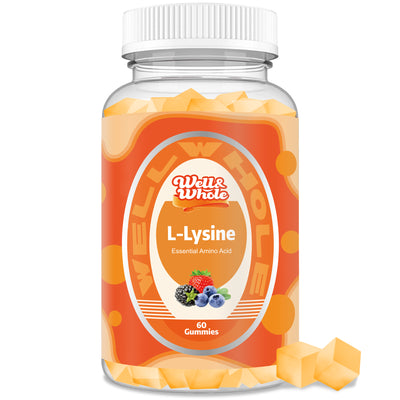
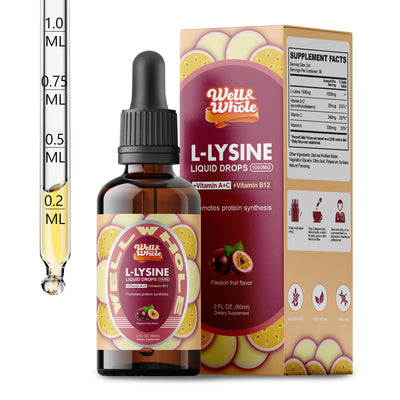
Should you decide to supplement, L-Lysine 1000mg Essential Amino Acid Supplement Gummies for Kids and Adults and L-Lysine Supplement Liquid Drops 1000mg are our formulation for this purpose. For a broader comparison, see the L-lysine and Amino Acids collections.
These statements have not been evaluated by the Food and Drug Administration. This product is not intended to diagnose, treat, cure, or prevent any disease.