What Is Apigenin and Why Is It in Sleep Formulas?

Apigenin is a plant flavonoid — the compound most associated with chamomile's traditional calming reputation — and it appears in modern sleep formulas because it acts on the same receptor region as classical calming agents, only far more gently. It is not a sedative and it is not melatonin. It is used to take the edge off a busy mind rather than to knock you out.
Apigenin is a chamomile-derived flavonoid used in melatonin-free sleep formulas for its mild calming action. It works through a different pathway than melatonin, which is why it suits people who want evening calm without supplementing a hormone.
Where apigenin comes from
Apigenin is one of the most widely distributed flavonoids in the plant kingdom. Chamomile contains it, which explains a good part of that herb's long association with evening tea. Parsley, celery and artichoke contain meaningful amounts too. In food terms you are getting milligrams rather than the concentrated doses used in supplements — but the compound itself is not exotic.
How it is thought to work
The most cited mechanism is that apigenin binds to the benzodiazepine site on GABA-A receptors. In plain terms, that is the same receptor region targeted by a class of prescription calming drugs. The qualifier matters: apigenin's binding is far weaker, and it is not in the same category as those medications.
Research here is primarily preclinical — cell and animal work — so the honest description is a plausible mild calming mechanism with limited human trial data, not a proven sleep treatment. Anyone promising more than that is overselling it.
Apigenin vs melatonin: different jobs
| Apigenin | Melatonin | |
|---|---|---|
| What it is | Plant flavonoid | Hormone your body makes |
| Main role | Mild calming, evening wind-down | Signals timing — that it is night |
| Best for | Racing mind at bedtime without hormonal dosing | Shifted body clock, jet lag, delayed sleep phase |
| Works immediately? | Subtle, cumulative | Noticeable on the night |
| Next-morning grogginess | Uncommon | Reported, especially at higher doses |
This is the distinction most shoppers miss. Melatonin is a timing signal: it tells your body when night is. It is genuinely useful for a clock that sits in the wrong position — jet lag, shift work, a schedule that has drifted later. Apigenin is not a timing signal at all. It does not move your clock; it is included for the settling effect.
How apigenin compares with other calming botanicals
Apigenin is not the only non-hormonal option, and the comparison is useful because the mechanisms genuinely differ:
- L-theanine. An amino acid from tea associated with relaxed alertness rather than drowsiness. Better suited to daytime calm than to a night-time wind-down.
- Valerian root. The most studied traditional sleep herb. Human results are inconsistent, and it has a distinctive smell some people find unpleasant.
- Lemon balm. A traditional calming herb with a small but generally positive body of human research, often used alongside valerian.
- Apigenin. The least studied of the four in humans and the mildest in reported effect — which is why it is usually stacked rather than used alone.
That last point is worth dwelling on. Apigenin's value in a formula is as one layer among several, not as a standalone fix. Expecting it to carry a sleep routine by itself is the fastest route to disappointment.
Why it is paired with magnesium bisglycinate and B6
Apigenin rarely appears alone, and the company it keeps makes sense. Magnesium bisglycinate supplies magnesium bound to glycine, an inhibitory amino acid — a second calming input arriving through a different route. Vitamin B6 is a cofactor in the conversion of tryptophan to serotonin and onward to melatonin, so it supports the body's own sleep chemistry rather than supplying the hormone.
The logic of the stack is therefore layered: a mild flavonoid for calm, magnesium for nervous and muscular ease, and B6 to support endogenous pathways. None of the three is a sedative in the pharmaceutical sense, which is precisely the point of a melatonin-free formula.
What to realistically expect
There is no honest way to promise a specific outcome. What people usually describe is a slightly easier wind-down rather than a dramatic effect — the difference between lying awake mentally busy and feeling ready for sleep. If your problem is a delayed body clock, an apigenin formula is the wrong tool; a timing approach is what fits. If your problem is being tired but wired at 11pm, this kind of formula is the more relevant experiment.
Duration matters too. Calming botanicals are usually judged over one to two weeks of consistent use rather than on a single night, and keeping the timing stable helps you read the result.
Key takeaways
- Apigenin is the chamomile flavonoid behind much of that herb's calming reputation.
- It is not melatonin and does not shift your body clock — it is used for mild evening calm.
- The mechanism, GABA-A benzodiazepine site binding, is plausible but rests mainly on preclinical research.
- It is usually stacked with magnesium bisglycinate and vitamin B6, each acting through a different route.
- Judge it over a week or two of consistent use, not on one night.
Frequently asked questions
Is apigenin the same as chamomile extract?
Not exactly. Apigenin is one specific flavonoid found in chamomile. A supplement can supply isolated apigenin, a chamomile extract standardised to it, or both — check the label to see which one you are getting.
Will apigenin make me groggy the next morning?
That is not the typical report, and it is one reason people look at melatonin-free formulas. Individual responses vary, so try it first on a night when waking early is not critical.
Can I take apigenin with melatonin?
Some products combine them. If you are considering it, keep the melatonin dose low and discuss it with a healthcare professional, particularly if you take other medication or are pregnant or nursing.
How long before bed should I take it?
Most sleep formulas are taken 30 to 60 minutes before your intended sleep time. Follow the label on your product and keep the timing consistent.
Related supplements
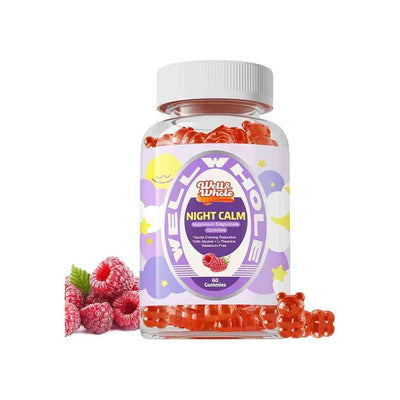
If you'd like to try it, Magnesium Bisglycinate Gummies with Apigenin & B6, Melatonin Free, 60 Ct | Gentle on Stomach, Chelated with Glycine, Night Calm Routine and Sleep & Calm Support Bundle are the closest match to what we've covered here. Browse Sleep Support and Magnesium to see how the alternatives compare.
These statements have not been evaluated by the Food and Drug Administration. This product is not intended to diagnose, treat, cure, or prevent any disease. Talk to a healthcare professional before starting any new supplement, especially if you are pregnant, nursing, taking medication, or managing a health condition.
These statements have not been evaluated by the Food and Drug Administration. This product is not intended to diagnose, treat, cure, or prevent any disease.