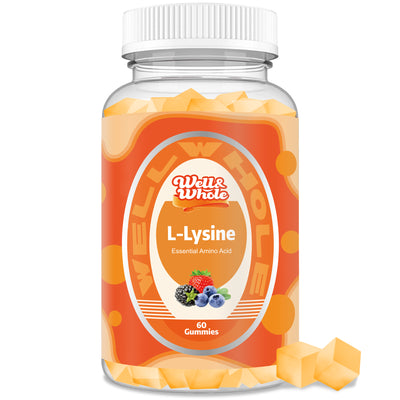
What Does L Lysine Do for You

Imagine your body as a complex construction site, constantly repairing tissues, building proteins, and defending its borders. On a site like that, you need reliable workers who show up every day without fail. L‑lysine is one of those essential workers, yet your body cannot produce it on its own. You have to bring it in through food or, when diet falls short, through carefully formulated supplements. Over the years, researchers have uncovered that L‑lysine participates in far more than just basic protein synthesis; it quietly shapes your immune resilience, skin integrity, calcium balance, and even your emotional calm. For those of us in the wellness trade, seeing a single amino acid carry so many responsibilities is a reminder that sometimes the most profound health tools are also the most fundamental.
Amino Acid Basics You Can Actually Use
Before exploring the specific benefits, it helps to understand what L‑lysine actually is. Among the twenty standard amino acids, nine are classified as essential, and lysine sits firmly in that group. The term “essential” doesn’t just mean important; it means your body has zero capacity to manufacture it from scratch. Every molecule of lysine must arrive via your diet. Once inside, it becomes a substrate for carnitine, which shuttles fatty acids into your cells’ mitochondria for energy, and it contributes directly to the cross‑linking of collagen and elastin. That’s why a shortfall doesn’t just slow down one system—it can ripple through your energy levels, your skin appearance, and your recovery from everyday exertion.
Summary: L‑lysine is a non‑negotiable building block you must obtain from food or supplementation, and its reach extends to energy metabolism and structural protein formation.
Immune Defense and Cold Sore Support
Perhaps the most talked‑about role of L‑lysine is its ability to help manage occasional cold sore outbreaks. The herpes simplex virus relies on another amino acid, arginine, to replicate. Lysine competes with arginine for absorption and utilization in cells. When lysine levels are consistently high, the environment becomes less favorable for the virus to flare up. Clinical observations have shown that individuals supplementing with 1,000–3,000 mg of L‑lysine daily during the prodromal stage—the tingling phase before a visible sore appears—often experience shorter healing times and milder symptoms. This isn’t a replacement for medical treatment, but it’s a supportive strategy that many integrative practitioners recommend. If you are searching for a reliable l lysine for cold sores dosage, starting low and adjusting under professional guidance is a sensible path.
Beyond the cold sore conversation, lysine also supports the broader immune apparatus. It helps in the production of antibodies, those Y‑shaped proteins that tag invaders for destruction. When your diet is chronically low in animal proteins, legumes, or quinoa, your lysine reserves can dip just enough to slow antibody production during seasonal challenges. Keeping lysine status optimized isn’t about chasing a quick fix; it’s about giving your immune cells the raw material they need to do their job efficiently day after day.
Summary: By moderating arginine availability and supporting antibody synthesis, L‑lysine offers a two‑pronged contribution to immune readiness and comfort during viral flare‑ups.
Skin Resilience and Collagen Formation
Your skin is a living fabric, and collagen is the thread that keeps it smooth, firm, and elastic. Lysine is integral to collagen because it undergoes a chemical modification to form hydroxylysine, which then creates stable cross‑links between collagen fibers. Without enough hydroxylysine, those fibers remain loosely woven, making the skin more prone to sagging and slower wound closure. This is one reason why nutritionists often emphasize l lysine for skin health and collagen when talking to clients about healthy aging.
What’s often overlooked is lysine’s role in wound healing beyond collagen. It supports the proliferation of fibroblasts, the cells that secrete new tissue matrix, and it aids in the formation of new blood vessels at the injury site. For someone recovering from a procedure or simply dealing with the accumulated micro‑tears that come with an active lifestyle, adequate lysine can subtly accelerate the return to normal. It’s not an overnight miracle, but it is a foundational piece of the repair machinery.
Summary: From the smoothness you see in the mirror to the healing you rely on after a cut, L‑lysine helps your skin stay structurally sound and resilient.
Calcium Absorption and Bone Architecture
Calcium metabolism is rarely as simple as eating more dairy or swallowing a mineral tablet. The mineral has to be absorbed across the intestinal lining and then either deposited into bone or excreted. Lysine improves both sides of this equation. In the gut, it appears to enhance calcium transport by gently modulating the permeability of the intestinal membrane, although the exact mechanism is still being studied. In the kidneys, lysine reduces the amount of calcium lost in urine, thereby helping the body hold onto its mineral stores. For postmenopausal women and older adults in particular, utilizing l lysine benefits for bone health alongside adequate vitamin D and calcium can be a thoughtful, multi‑angled approach to maintaining bone density.
Furthermore, lysine participates in the formation of cross‑linked collagen in the bone matrix itself. Bone is not just calcium crystals; it’s a living composite of minerals woven into a protein scaffold. That scaffold depends on lysine to keep its tensile strength. When you picture bone health, think not only of chalk but also of a flexible, resilient net—and lysine keeps that net well‑tied.
Summary: By enhancing calcium retention and reinforcing the protein matrix of bone, lysine supports a skeletal system that can absorb stress without surrendering density.
Integrating L‑Lysine with a Busy Modern Life
Food sources like chicken, turkey, fish, eggs, and legumes such as lentils are excellent lysine providers, but real‑life schedules don’t always accommodate perfectly balanced meals. Athletes, vegetarians who limit eggs and dairy, and people under high physical or emotional stress may find it challenging to hit a consistent lysine intake from diet alone. That’s where a thoughtfully formulated supplement can serve as a practical bridge.
When you look for a supplement, purity and transparency matter. At well&whole, we focus on delivering L‑lysine in a form that’s free from unnecessary fillers, so you know exactly what you’re putting into your body every morning. The typical maintenance dose for general wellness ranges from 500 to 1,000 mg per day, while targeted support, such as for cold sore management under a practitioner’s supervision, may go higher. Because amino acids compete for transporters, taking lysine on an empty stomach with a glass of water often maximizes its absorption. It’s a small habit that can fit seamlessly into your routine, right alongside your morning vitamins or post‑workout shake.
What we’ve consistently observed in our industry is that the most dedicated users aren’t chasing dramatic transformations. They’re people who view their body as a long‑term project. They understand that giving cells a steady supply of what they need—like a dependable amino acid—creates a body that bounces back faster, stands a little taller, and handles the bumps of life with more grace.
Summary: A high‑quality L‑lysine supplement from a brand like well&whole can help close dietary gaps, delivering a straightforward, research‑backed nutrient that fits easily into a health‑conscious lifestyle.
Frequently Asked Questions
1. Can I take L‑lysine every day, or should I cycle it? L‑lysine is safe for daily long‑term use for most people when taken at recommended doses. Unlike stimulants, your body readily utilizes this amino acid for continuous metabolic tasks. If you plan to take doses above 2,000 mg daily for extended periods, consult a healthcare provider, particularly if you have kidney concerns or are pregnant.
2. What is the best time of day to take L‑lysine for absorption? Taking L‑lysine on an empty stomach, roughly 30 minutes before a meal or at least two hours after eating, typically offers the best absorption. Amino acids compete for transporters, so keeping them separate from a high‑protein meal reduces that competition. Many of our customers at well&whole prefer taking it first thing in the morning with a full glass of water.
3. Are there any foods I should avoid when taking L‑lysine for cold sores? Yes, it’s often recommended to moderate foods high in arginine—such as nuts, seeds, chocolate, and oats—while increasing lysine‑rich foods. The idea is to maintain a favorable lysine‑to‑arginine ratio, giving the lysine a better chance to work at the cellular level. This dietary pairing, combined with a consistent supplement routine, offers a comprehensive approach.
These statements have not been evaluated by the Food and Drug Administration. This product is not intended to diagnose, treat, cure, or prevent any disease.