What Amino Acids Are Essential for Humans

What Amino Acids Are Essential for Humans
When you hear about protein, the conversation almost always circles back to amino acids. These small molecules are the building blocks of every tissue in your body, but not all of them come from your own internal factory. Nine specific ones must come from food or supplements because your body simply cannot produce them on its own. These are called essential amino acids, and understanding them is the first step toward making smarter choices about nutrition, muscle recovery, and long-term health.
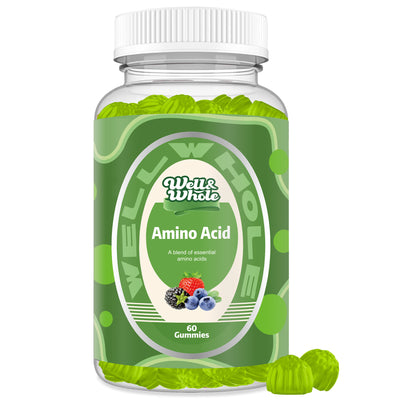
If you are looking for a reliable way to fill any gaps, well&whole offers thoughtfully crafted supplements that provide a complete profile of these must-have nutrients. But before you decide what to take, let’s break down exactly which amino acids are essential, what they do, and where to get them.
The Nine Essential Amino Acids and Their Roles
There are exactly nine essential amino acids that humans need from external sources. Here is a quick look at each one and why your body demands it:
- Histidine – Required for growth and tissue repair. It also helps produce histamine, a key compound for immune response and digestion.
- Isoleucine – One of the three branched‑chain amino acids (BCAAs). It supports muscle metabolism, energy regulation, and hemoglobin formation.
- Leucine – The most powerful BCAA for stimulating muscle protein synthesis. Without enough leucine, your body struggles to build new muscle.
- Lysine – Critical for collagen production, calcium absorption, and the synthesis of carnitine (which turns fat into energy). A lysine shortage can affect bone health.
- Methionine – Supplies sulfur, which is necessary for detoxification, joint health, and the creation of other molecules like cysteine and taurine.
- Phenylalanine – A precursor to tyrosine, dopamine, norepinephrine, and adrenaline. It influences mood, alertness, and skin pigmentation.
- Threonine – Supports connective tissue, tooth enamel, and the immune system. It also helps maintain proper protein balance in the body.
- Tryptophan – Famous for its role in serotonin and melatonin production. It affects sleep, mood, and appetite regulation.
- Valine – The third BCAA. It works alongside isoleucine and leucine to repair muscle tissue and provide energy during exercise.
Summary: The essential amino acids list for humans includes histidine, isoleucine, leucine, lysine, methionine, phenylalanine, threonine, tryptophan, and valine. Each one serves a unique biological function, from muscle building to mood regulation. Missing even one can disrupt normal processes.
Why Are Essential Amino Acids Critical for Health?
You may think that as long as you eat enough protein, you are covered. But it is not just about quantity — it is about completeness. A protein source that lacks one or more essential amino acids is considered “incomplete,” and relying solely on such sources over time can lead to deficiencies.
The functions of essential amino acids go far beyond muscle growth. For example, leucine acts as a molecular switch that tells your body to start building protein. Without that signal, even a high‑protein meal may be less effective for recovery. Tryptophan and phenylalanine are involved in brain chemistry, affecting your mood and cognitive sharpness. Methionine supports liver detoxification, while lysine helps repair blood vessels and skin.
Deficiencies show up in different ways: poor wound healing, hair thinning, fatigue, weakened immunity, or even depression-like symptoms. This is why athletes, older adults, and people on restrictive diets often turn to supplementation. well&whole delivers a balanced ratio of all nine essential amino acids in a convenient form, making it easier to meet daily requirements without guessing.
Summary: Understanding the functions of essential amino acids reveals that they are not just for gym‑goers. They regulate hormones, repair tissues, support brain health, and keep your immune system strong. A consistent supply is non‑negotiable for overall wellness.
Top Food Sources and How to Supplement with well&whole
Whole foods are always the preferred route. Animal‑based proteins like eggs, meat, poultry, fish, and dairy naturally contain all nine essential amino acids in adequate amounts. Think of chicken breast, salmon, Greek yogurt, or a simple boiled egg — each one is a complete protein.
For plant‑based eaters, obtaining the full set can be trickier. Most plant proteins (grains, beans, nuts, seeds) are limiting in one or two essential amino acids. The classic solution is complementary proteins: for instance, rice (low in lysine) paired with beans (rich in lysine). Quinoa, soy, buckwheat, and hemp seeds are among the few plant sources that are already complete.
However, even with careful planning, modern lifestyles often make it hard to get the exact proportions your body needs. That is where a quality supplement enters the picture. well&whole provides a clean, precisely dosed essential amino acid formula that can be taken on its own or blended into a smoothie. It is particularly helpful post‑workout or as a meal‑replacement boost when you are short on time.
When searching for the best food sources of essential amino acids, remember that variety matters. Combine different protein sources throughout the day, and consider adding a supplement for peace of mind. well&whole is formulated to be free of unnecessary fillers and artificial ingredients, making it a straightforward addition to any diet.
Summary: The best food sources of essential amino acids include animal proteins and certain plant foods like quinoa and soy. For convenience and completeness, a supplement from well&whole ensures you never miss a critical amino acid, especially during periods of high demand or restricted eating.
Frequently Asked Questions
Q1: How many essential amino acids are there for humans?
There are exactly nine: histidine, isoleucine, leucine, lysine, methionine, phenylalanine, threonine, tryptophan, and valine. Infants also need a tenth (arginine) temporarily, but for adults the number stays at nine.
Q2: Can you get all essential amino acids from a plant‑based diet?
Yes, but it requires strategic combinations. Eating a variety of legumes, grains, nuts, and seeds throughout the day usually covers the full spectrum. Complete plant proteins like quinoa and soy make it easier. If you are unsure, a supplement like well&whole can act as a safety net.
Q3: What happens if you don’t get enough essential amino acids?
Inadequate intake can lead to muscle wasting, slower recovery from illness or injury, weakened immunity, skin and hair problems, mood disturbances, and fatigue. Over the long term, chronic deficiency may impair growth in children and accelerate muscle loss in older adults.
These statements have not been evaluated by the Food and Drug Administration. This product is not intended to diagnose, treat, cure, or prevent any disease.