Walking for Circulation: What 30 Minutes a Day Actually Does

Thirty minutes of walking a day is one of the better-supported habits in all of preventive health. It improves circulation, modestly lowers blood pressure, helps regulate blood sugar, and reduces cardiovascular risk in a dose-dependent way. You do not need to run, you do not need a gym, and you do not need to do it all at once to get the benefit. The dose that matters is consistency, not intensity.
Key takeaways
- Thirty minutes a day, most days, is the sweet spot for circulation and cardiovascular benefit.
- Three 10-minute walks are nearly equivalent to one 30-minute walk for most measures.
- A 5 to 10 minute walk after meals meaningfully lowers post-meal blood sugar.
- Walking is supportive, not curative, for conditions like peripheral artery disease that need medical attention.
What walking does to circulation
The calf muscles act as a secondary pump that pushes venous blood back to the heart. Every step contracts them and squeezes the deep veins, which is one of the reasons long periods of sitting — even in fit people — raise the risk of blood clots and stiff arteries. Walking regularly trains that muscular pump, improves venous tone, and keeps the lining of arteries responsive.
Walking also raises endothelial nitric oxide availability, which is the signal arteries use to relax and widen in response to demand. That is why a single 30-minute walk can lower systolic blood pressure by 5 to 8 mmHg for several hours afterward, and why regular walking compounds the effect over weeks.
The dose that works
Large reviews of physical activity and cardiovascular outcomes consistently find the largest marginal benefit when inactive people move up to about 150 minutes per week of moderate activity, which works out to roughly 30 minutes a day, five days a week. The curve flattens after that, meaning the gap between zero and 30 minutes is much larger than the gap between 30 and 60 minutes.
For people who struggle to find 30 continuous minutes, three 10-minute walks are nearly as good. Studies that compared accumulated bouts with continuous walking for blood pressure and insulin sensitivity found very similar benefits, with the practical advantage that shorter walks fit into most schedules. The key is total daily time, not how it is broken up.
Why post-meal walking matters
Blood sugar rises sharply after a meal, especially one rich in refined carbohydrates. A 5 to 10 minute walk starting 30 to 60 minutes after a meal blunts that rise by 20 to 30 percent in most studies, by helping muscles take up glucose without needing as much insulin. For people with insulin resistance or prediabetes, this is one of the simplest daily interventions available, and it works independently of weight loss.
The mechanism is local. Muscles use glucose directly during contraction, and a light walk uses the glucose already in the bloodstream before it has to be stored. Heavier exercise works too but is not necessary, and intense exercise right after a meal can be uncomfortable.
When walking is not enough
Walking is supportive, not curative, for conditions that need medical care. Calf pain that begins after a fixed distance of walking and goes away with rest can signal peripheral artery disease, which warrants a clinical evaluation. Visible varicose veins with swelling, heaviness, or skin changes deserve a check. Sudden leg swelling, redness, or pain — especially on one side — is a medical urgency.
People with uncontrolled heart conditions, recent surgery, or significant joint problems should talk to a clinician before starting a routine. For most healthy adults, walking is about as close to a universal exercise as exists, with very few contraindications.
How to make it stick
The biggest predictor of whether a walking habit lasts is whether it fits the life you actually have, not the one you wish you had. A 10-minute loop after lunch, a 15-minute phone-call walk in the morning, and an evening stroll with a partner easily add up to 30 to 40 minutes without any of them feeling like a workout. The novelty of intense routines fades; boring consistency tends to outlast it.
Walking surfaces and footwear matter more than people expect. Soft asphalt, a flat dirt trail, or a treadmill are gentler on knees than concrete sidewalks. Shoes should be replaced every 500 to 800 miles; worn-out shoes are a common cause of shin splints and plantar pain that gets blamed on walking itself.
Tracking helps some people and stresses others. A simple step counter on a phone or watch is plenty. The target that correlates most strongly with health benefits is roughly 7,000 to 8,000 steps per day, which is the lower bound at which the cardiovascular curve flattens. Anything above that adds modest benefit, but the difference between 4,000 and 7,000 steps is much larger than the difference between 8,000 and 12,000.

Frequently asked questions
Is it better to walk faster or longer?
Both help, but total time matters more than speed. A 30-minute brisk walk offers more cardiovascular benefit than a 20-minute leisurely one, but a 40-minute walk at any pace is better than no walk at all.
Can I split the 30 minutes into shorter walks?
Yes. Three 10-minute walks spread across the day are nearly equivalent to one 30-minute walk for most measures of blood pressure, circulation, and blood sugar.
Do I need to walk every day?
Most guidelines suggest most days of the week. Five to seven days is ideal, but four days a week still produces most of the benefit. The most important thing is consistency over weeks and months.
Does walking after meals really help blood sugar?
Yes. A 5 to 10 minute walk starting 30 to 60 minutes after a meal has been shown in multiple trials to lower post-meal blood sugar by 20 to 30 percent compared with sitting.
These statements have not been evaluated by the Food and Drug Administration. This product is not intended to diagnose, treat, cure, or prevent any disease.
Related supplements
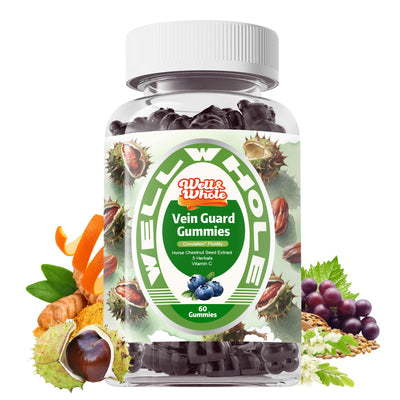
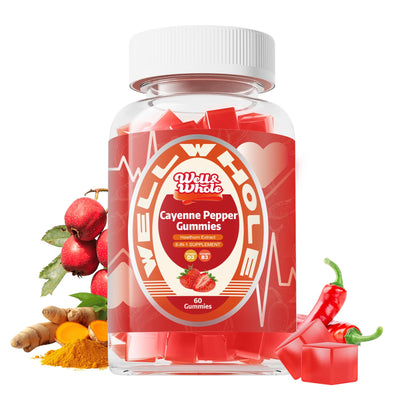
If you're ready to put this into practice, our Well&Whole Horse Chestnut Extract Gummies, Circulation Supplements for Legs and Cayenne Pepper Heart Health Gummies with Hawthorn & CoQ10 & Turmeric are formulated with this in mind. You can also compare the Heart Health and CoQ10 ranges to find the format that suits you.
These statements have not been evaluated by the Food and Drug Administration. This product is not intended to diagnose, treat, cure, or prevent any disease. Talk to a healthcare professional before starting any new supplement, especially if you are pregnant, nursing, taking medication, or managing a health condition.