Vitamin A Toxicity Risk: Calculating Safe Daily Intake from Beef Liver Supplements
Evidence-based analysis of vitamin A safety from beef liver supplements. Calculating safe dosage ranges, understanding hypervitaminosis A risk factors, and comparing liver supplement vitamin A to tolerable upper intake levels for different populations.

Vitamin A (retinol) is simultaneously one of the most essential and most scrutinized nutrients in organ-based supplementation. Beef liver is the richest dietary source of preformed vitamin A, containing approximately 16,898 IU (5,070 μg RAE) per 100g. This concentration — far exceeding any plant food — has raised legitimate questions about the safety of regular liver consumption and liver supplementation, particularly regarding hypervitaminosis A (vitamin A toxicity).
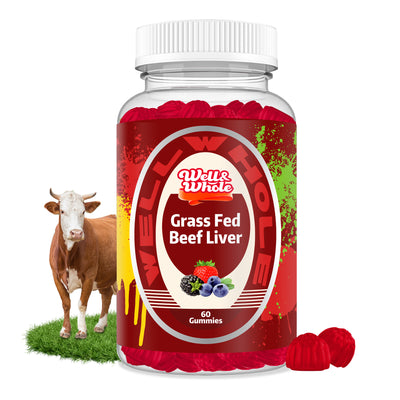
well&whole's Grass Fed Beef Liver Gummies deliver concentrated liver nutrition in supplement form. This article provides a quantitative risk assessment of vitamin A intake from liver supplements, examining safety thresholds, population-specific considerations, and practical dosing guidelines.

Vitamin A Fundamentals
Forms and Metabolism
Dietary vitamin A exists in two forms:
1. Preformed vitamin A (retinol, retinyl esters): Found in animal foods, particularly liver. Directly usable by the body. Has an established Tolerable Upper Intake Level.
2. Provitamin A carotenoids (β-carotene, etc.): Found in colorful plant foods. Requires enzymatic conversion to retinol (inefficient — 12:1 to 28:1 conversion ratio depending on the carotenoid). No established UL for carotenoid-sourced vitamin A.
The safety concerns apply specifically to preformed vitamin A — the form found in liver — because it is efficiently absorbed and can accumulate when intake exceeds utilization.
Recommended Intakes and Safety Limits
| Population | RDA (μg RAE/day) | UL (μg RAE/day) | Safety Margin (UL/RDA) |
| Adult men | 900 | 3,000 | 3.3x |
| Adult women | 700 | 3,000 | 4.3x |
| Pregnancy (14-18) | 750 | 2,800 | 3.7x |
| Pregnancy (19+) | 770 | 3,000 | 3.9x |
| Lactation (14-18) | 1,200 | 2,800 | 2.3x |
| Lactation (19+) | 1,300 | 3,000 | 2.3x |
| Children (4-8) | 400 | 900 | 2.3x |
| Children (9-13) | 600 | 1,700 | 2.8x |
Source: Institute of Medicine, Dietary Reference Intakes (2001, updated 2019)
The UL is established based on the risk of hepatotoxicity (liver damage) from chronic excessive intake and teratogenicity (birth defects) from acute high doses during pregnancy. The safety margin between RDA and UL is narrowest for children and pregnant women.
Vitamin A Content: Fresh Liver vs. Supplements
Fresh Beef Liver
| Source | Vitamin A (IU/100g) | Vitamin A (μg RAE/100g) | % of UL (per 100g) |
| Beef liver (grass-fed) | 16,898 | 5,070 | 169% |
| Beef liver (grain-fed) | 14,124 | 4,237 | 141% |
| Chicken liver | 11,078 | 3,323 | 111% |
| Cod liver oil (1 tbsp) | 13,600 | 4,080 | 136% |
A single 100g serving of beef liver exceeds the UL by 69% (grass-fed) or 41% (grain-fed). This is why fresh liver should not be consumed daily in full servings — it is a periodic food, not a daily staple.
Concentrated Liver Supplements
The critical distinction for safety: concentrated liver supplements provide liver in microgram-to-milligram amounts, not 100g portions.
| Supplement Dose (Liver Equivalent) | Vitamin A (μg RAE) | % of UL (3,000 μg) | Fresh Liver Equivalent |
| 1g liver powder (~5g fresh) | ~254 | 8.5% | 5g fresh liver |
| 2g liver powder (~10g fresh) | ~507 | 16.9% | 10g fresh liver |
| 3g liver powder (~15g fresh) | ~761 | 25.4% | 15g fresh liver |
| 4g liver powder (~20g fresh) | ~1,014 | 33.8% | 20g fresh liver |
| 5g liver powder (~25g fresh) | ~1,268 | 42.3% | 25g fresh liver |
A typical organ supplement at 3-5g liver powder per serving provides 761-1,268 μg RAE of vitamin A — 25-42% of the UL. This is firmly within the safety window for daily use.
The Concentration Myth
A common misconception is that concentrated liver supplements contain proportionally more vitamin A than fresh liver. This is incorrect. Freeze-drying removes water, concentrating all components equally — including vitamin A. A 3g serving of liver powder contains roughly the same amount of vitamin A as 15g of fresh liver (approximately a 5x concentration factor from 75% water removal). The supplement provides a fraction of a fresh liver serving's nutrients and vitamin A.
Risk Assessment by Population
General Adult Population: Very Low Risk
For adults without liver disease or pregnancy, daily liver supplement intake at recommended doses (typically 3-5g liver powder equivalent, providing 700-1,200 μg RAE vitamin A) is within safe limits.
Chronic toxicity risk assessment:
· Threshold for hypervitaminosis A: Sustained intake above 7,500-15,000 μg RAE/day (2.5-5x the UL)
· Liver supplement at maximum recommended dose: ~1,200 μg RAE/day (40% of UL)
· Safety margin: 6-12x below chronic toxicity threshold
Cases of hypervitaminosis A from food sources are rare and almost exclusively involve:
· Daily consumption of large amounts of liver (200-500g/day) for extended periods
· High-dose cod liver oil consumption (tablespoons rather than teaspoons daily)
· Polar bear or seal liver consumption (Arctic explorers — not relevant to commercial supplements)
A 2018 review in Nutrition Reviews identified 47 published cases of food-derived hypervitaminosis A between 1950-2018. None involved concentrated organ supplements at recommended doses. All involved excessive fresh liver consumption (200g+ daily for months) or inappropriate supplement dosing.
Pregnant Women: Elevated Caution Required
Vitamin A is both essential for embryonic development (organogenesis, limb formation, immune system development) and potentially teratogenic at excessive doses. The UL during pregnancy is 3,000 μg RAE/day, with teratogenic risk associated primarily with single high-dose exposures during the first trimester.
Pregnancy risk assessment:
· Liver supplement vitamin A: ~700-1,200 μg RAE/day
· Additional vitamin A from diet: ~500-800 μg RAE/day (typical Western diet)
· Prenatal vitamin A: ~750-1,500 μg RAE/day (most prenatal vitamins)
· Potential total (worst case): 700 + 800 + 1,500 = 3,000 μg RAE/day (at the UL, not over)
This calculation demonstrates that liver supplements can be compatible with pregnancy vitamin A needs when total intake is monitored. However, given the seriousness of potential teratogenicity, pregnant women should:
3. Calculate total vitamin A from ALL sources (prenatal, diet, liver supplements)
4. Ensure total stays at or below 3,000 μg RAE/day
5. Discuss all supplements with their OB/GYN
Liver Disease Patients: Special Caution
Individuals with pre-existing liver disease (hepatitis, cirrhosis, fatty liver) have altered vitamin A storage and metabolism. The liver stores approximately 50-80% of total body vitamin A as retinyl esters in hepatic stellate cells. In liver disease, storage capacity may be reduced, and vitamin A metabolites may contribute to hepatic stellate cell activation and fibrosis.
Recommendation: Patients with diagnosed liver disease should consult their hepatologist before taking vitamin A-containing supplements, including liver supplements.
Children: Dose-Appropriate Formulations Required
Children's ULs are substantially lower than adult (900 μg RAE for ages 4-8, 1,700 μg for ages 9-13). Adult-formulated liver supplements may provide vitamin A doses that approach or exceed pediatric ULs.
Recommendation: Do not give adult-formulated liver supplements to children. If liver supplementation is desired for pediatric use, choose a product specifically formulated for children or consult a pediatrician for appropriate dosing.
Vitamin A Toxicity: Signs and Timeline
Hypervitaminosis A can be acute (single very large dose) or chronic (moderately excessive intake over months to years).
Acute Toxicity
· Single dose >200,000 μg RAE (~66x the UL) in adults
· Symptoms: Nausea, vomiting, headache, dizziness, blurred vision, irritability
· Onset: Hours after ingestion
· Resolution: Typically within days of discontinuation
· Risk from liver supplements: Effectively zero (impossible to achieve from supplements at recommended serving sizes)
Chronic Toxicity
· Sustained intake >7,500-15,000 μg RAE/day for months to years
· Symptoms: Dry skin, cheilitis (cracked lips), hair loss, bone and joint pain, hepatomegaly (enlarged liver), pseudotumor cerebri (increased intracranial pressure causing headaches and visual changes)
· Laboratory: Elevated serum retinyl esters, abnormal liver enzymes, hypercalcemia
· Onset: Months to years of excessive intake
· Risk from liver supplements at recommended doses: Effectively zero (40% of UL vs. 250-500% required for chronic toxicity)
Recovery
Vitamin A toxicity is generally reversible upon discontinuation, though recovery of bone density changes may be incomplete. Serum retinol normalizes within 1-4 weeks. Hepatic vitamin A stores decline slowly (half-life of approximately 50-100 days).
Practical Safety Recommendations
Safe Dosing Guidelines
· Adults: Liver supplements at recommended serving sizes (typically 3-5g liver powder equivalent daily) are safe for long-term use. Monitor total vitamin A from all sources.
· Pregnant women: Calculate total vitamin A intake from all sources. Consult OB/GYN. Consider lower-dose options or alternating-day dosing.
· Liver disease patients: Consult hepatologist before use.
· Children: Use pediatric-formulated products only.
· Combination users: If taking multiple supplements containing vitamin A (liver + cod liver oil + multivitamin), sum the total and ensure it stays below 3,000 μg RAE/day.
Monitoring Recommendations
For individuals taking liver supplements long-term (>6 months), periodic monitoring can include:
· Liver enzymes (ALT, AST) — annual
· Serum retinol — if clinically indicated (routine monitoring not necessary for most)
· Clinical monitoring for signs of vitamin A excess — patient self-awareness
Drug Interactions
| Medication Class | Interaction | Clinical Significance |
| Oral retinoids (isotretinoin, acitretin) | Additive vitamin A effect | Do NOT combine — risk of toxicity |
| Topical retinoids (tretinoin) | Minimal systemic absorption | Low risk |
| Orlistat (weight loss) | Reduces fat-soluble vitamin absorption | Separate by 2+ hours |
| Bile acid sequestrants | Reduces fat-soluble vitamin absorption | Avoid concurrent use |
| Tetracycline antibiotics | Increased intracranial pressure risk (theoretical) | Separate doses; monitor for headache |
Frequently Asked Questions
Q1: How much vitamin A is actually in one serving of beef liver gummies?
Concentrated liver supplements provide liver powder equivalent to approximately 3-5g of fresh liver, containing roughly 150-250 μg RAE of vitamin A — far less than a serving of fresh liver (5,070 μg RAE per 100g). The supplement provides 5-8% of the UL.
Q2: Can I take liver gummies every day, indefinitely?
Yes, at recommended serving sizes. The vitamin A content is well within safe limits for daily, long-term use. Chronic toxicity requires sustained intake 6-12x higher than supplement levels.
Q3: I eat liver once a week — should I still take liver supplements?
If you consume 100g of fresh liver weekly (5,070 μg RAE), you average ~724 μg RAE/day from diet alone. Adding a liver supplement (150-250 μg RAE) brings your daily average to ~874-974 μg RAE — approximately one-third of the UL. This is safe for daily supplementation alongside weekly liver consumption.
Q4: Are the symptoms of too much vitamin A obvious?
Chronic toxicity symptoms develop gradually (dry skin, cracked lips, hair thinning, joint pain) and can be mistaken for other causes. Acute toxicity symptoms (nausea, headache, vomiting) are dramatic but essentially impossible from supplement-level dosing.
Q5: Does vitamin A from liver accumulate in the body?
Yes, excess vitamin A is stored in hepatic stellate cells. This is a normal physiological process — the liver stores vitamin A for periods of low dietary intake. Problems arise only when storage becomes excessive (hypervitaminosis A), which requires intake far above supplement levels sustained over long periods.
Q6: Should I take a break from liver supplements periodically ("cycling")?
At recommended doses, cycling is unnecessary for safety — daily intake is within the chronic safety window. Some users prefer cycling for personal comfort or to reassess how they feel without supplements. If you choose to cycle, there is no standard protocol; 4-6 weeks on, 1-2 weeks off is a common but not evidence-based approach.
Q7: What's the safest liver supplement option for someone concerned about vitamin A?
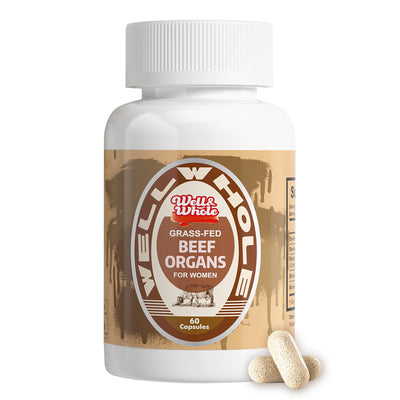
Multi-organ supplements (liver + kidney + heart) naturally dilute the liver content, providing lower vitamin A per serving than liver-only supplements. The well&whole Grassfed Beef Organ Capsules provide multi-organ nutrition with proportionally lower vitamin A.

Q8: Can I get my vitamin A levels tested?
Serum retinol is a standard lab test but reflects recent intake and homeostatic regulation rather than total body stores. Serum retinyl esters are more indicative of excess storage. These tests are rarely ordered for routine monitoring but can be requested if you have specific concerns.
Conclusion
Vitamin A from beef liver supplements is safe at recommended serving sizes for the general adult population. Concentrated liver supplements at typical doses (3-5g liver powder equivalent) provide 150-250 μg RAE of vitamin A — 5-8% of the 3,000 μg UL, and a fraction of what a serving of fresh liver provides.
The risk of hypervitaminosis A from liver supplements is theoretical, not practical, at manufacturer-recommended doses. Documented cases of food-derived vitamin A toxicity involve sustained consumption of large amounts of fresh liver (200-500g daily) — orders of magnitude beyond what concentrated supplements deliver.
well&whole's Grass Fed Beef Liver Gummies are formulated to deliver the nutritional benefits of grass-fed beef liver — including vitamin A — within a safety window appropriate for daily, long-term use. As with any supplement, pregnant women, individuals with liver disease, and those taking retinoid medications should consult their healthcare provider.
Related supplements
Where to begin? Our Grass Fed Beef Liver Supplement Gummies with 60 Count for Full Wellness and Grassfed Beef Organ Supplement Capsules, Grass Fed & Pasture Raised, Total Body Wellness Support are a sensible place to start, and the Vitamin A collection lays out the other formats side by side with Health Benefits.
These statements have not been evaluated by the Food and Drug Administration. This product is not intended to diagnose, treat, cure, or prevent any disease.