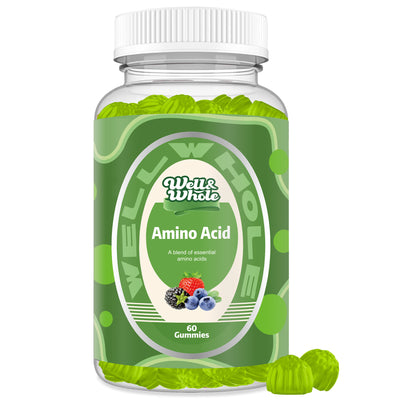
Vegetables With All Essential Amino Acids: A Complete Guide for Plant-Based Eaters

Vegetables With All Essential Amino Acids: A Complete Guide for Plant-Based Eaters
If you follow a plant-based diet, you’ve probably heard the concern that vegetables don’t contain all the essential amino acids your body needs. But is that entirely true? The short answer is: yes, some vegetables and plant foods do provide all nine essential amino acids. While most individual vegetables are “incomplete” proteins, a handful of plant-based superstars—plus smart food combinations—can easily meet your daily amino acid requirements. In this guide, we’ll explore which vegetables offer a complete protein profile, how to pair them, and why well&whole plant protein supplements can fill any gaps for a balanced, nutrient-rich diet.
What Are Essential Amino Acids and Why Do We Need Them?
Essential amino acids are nine building blocks your body can’t produce on its own. They must come from food. These include histidine, isoleucine, leucine, lysine, methionine, phenylalanine, threonine, tryptophan, and valine [1]. Every cell in your body relies on them for muscle repair, enzyme production, immune function, and neurotransmitter synthesis. Without a consistent supply, your body may break down its own muscle tissue to get them. For vegans and vegetarians, getting all nine from plant sources is not only possible—it can be delicious and convenient. Complete protein vegetables are rare but real, and knowing them makes meal planning far easier.
Summary: Essential amino acids must come from diet; a few plant foods naturally contain all nine, making a plant-based diet fully sustainable.
The Myth of Incomplete Plant Proteins
For decades, experts taught that only animal products offer complete proteins. But modern research has debunked this oversimplification. The reality is that many plant foods—like soy, quinoa, buckwheat, spirulina, chia seeds, and even certain leafy greens when eaten in sufficient variety—provide all essential amino acids [2]. A study published in the American Journal of Clinical Nutrition concluded that a diverse plant-based diet easily meets protein requirements, as long as calorie intake is adequate [3]. The old “protein combining” idea (e.g., rice and beans at the same meal) has been relaxed; your body actually pools amino acids from different meals throughout the day. So if you eat spinach at lunch and lentils at dinner, you’re covered. However, if you rely heavily on a single vegetable like lettuce or cucumber, you will miss critical amino acids. That’s why understanding which vegetables are “complete” is a game-changer for plant-based eaters.
Summary: The incomplete-protein myth is outdated; a varied plant diet delivers all amino acids, but certain vegetables are natural all-in-one sources.
Top Vegetables and Plant Foods with All Nine Essential Amino Acids
1. Soybeans (and Edamame, Tofu, Tempeh)
Soy is the most well-known complete protein vegetable. A 100-gram serving of cooked soybeans provides about 16 grams of protein with a full amino acid profile, including a high concentration of lysine often lacking in grains [4]. Edamame, tofu, and tempeh all retain this property. For a quick snack, steamed edamame offers a perfect balance.
2. Quinoa (Technically a Seed, but Often Used as a Grain)
While quinoa is botanically a seed, it’s commonly grouped with grains in nutrition. One cup of cooked quinoa delivers 8 grams of complete protein, plus fiber, magnesium, and iron. According to the FAO, quinoa’s amino acid score is comparable to casein from milk [5]. It’s gluten-free and versatile for salads, bowls, or breakfast porridge.
3. Buckwheat (Also a Seed)
Buckwheat groats are another complete protein plant food. A 100-gram serving of cooked buckwheat contains about 3.4 grams of protein, but it’s unusually rich in lysine and methionine. The USDA Nutrient Database confirms buckwheat provides all essential amino acids in adequate ratios [6]. Use it in pancakes, soba noodles, or as a rice alternative.
4. Spirulina
This blue-green algae is a powerhouse. Two tablespoons (15 grams) of dried spirulina offer 8 grams of protein with all nine essential amino acids. A 2014 review in Journal of Medicinal Food highlighted spirulina’s complete profile and its high bioavailability [7]. Sprinkle it into smoothies or juices—but note it’s not a vegetable in the traditional leafy sense, but often categorized as a “superfood vegetable.”
5. Chia Seeds
Chia seeds are tiny but mighty. An ounce (28 grams) provides about 4.4 grams of protein, and they contain all essential amino acids, though slightly low in methionine but still sufficient for an overall complete score [8]. Soaking them makes a gel that works in puddings, oatmeal, or baked goods.
Other notable mentions: Hemp seeds, amaranth, and even certain leafy greens like spinach and kale—when eaten in large quantities—can contribute significantly, but they are not complete on their own. For example, spinach has all amino acids, but its methionine and histidine levels are borderline low, so it’s best paired with grains or legumes. That’s why the term vegetables with all essential amino acids most accurately applies to the foods listed above.
Summary: Soy, quinoa, buckwheat, spirulina, and chia seeds are verified complete protein sources; combine other veggies with grains/legumes for full coverage.
How to Combine Vegetables for a Complete Amino Acid Profile
If you don’t eat the specific foods above daily, you can still achieve a complete profile by combining different vegetables. The classic pairing is grains + legumes (e.g., rice and lentils), but you can also mix seeds with greens. For instance, a salad of spinach, chickpeas, and sunflower seeds covers all amino acids. Another example: whole wheat pita with hummus (chickpeas and sesame) creates a complete protein. For plant-based athletes, these combinations are simple and effective when building a complete protein vegetables for vegans meal plan.
A practical tip: include a variety of colors and types at each meal. Dark leafy greens, cruciferous vegetables (broccoli, Brussels sprouts), and starchy vegetables (potatoes, sweet corn) all contribute different amino acid profiles. According to the Academy of Nutrition and Dietetics, you don’t need to meticulously combine within the same meal; just ensure diversity throughout the day [9].
Summary: Pairing grains with legumes, or seeds with greens, provides all essential amino acids without needing special foods.
Why well&whole's Plant Protein Supports Your Daily Needs
Even the most diligent plant-based eaters sometimes miss the mark—especially when traveling, busy, or following a restrictive diet. That’s where well&whole steps in. Our premium plant protein powder is sourced from complete protein vegetables like pea protein (combined with rice to mimic the perfect amino profile) and organic quinoa. Each serving delivers 20 grams of protein with all nine essential amino acids, plus added digestive enzymes for optimal absorption. It’s free from soy, gluten, and artificial additives, making it ideal for anyone seeking a clean, plant-based essential amino acids source.
Our customers often tell us that well&whole helps them maintain muscle mass and energy without the bloating common with other powders. Whether you stir it into oatmeal, blend it into smoothies, or use it in baking, you’re getting a convenient backup for days when your vegetable intake isn’t perfect. For those searching for vegetables with all essential amino acids but wanting a faster option, well&whole is your reliable partner.
Summary: well&whole offers a complete, clean plant protein that complements whole-food vegetables for consistent amino acid intake.
Frequently Asked Questions (FAQ)
Q1: Can I get all essential amino acids from just eating spinach and broccoli? No. While spinach and broccoli contain some amino acids, they are incomplete—they lack adequate amounts of methionine, histidine, or lysine. You would need to pair them with grains (like quinoa) or legumes (like chickpeas) to form a complete profile.
Q2: How much of a complete protein vegetable do I need per day for muscle building? The general recommendation is 0.8 grams of protein per kilogram of body weight for sedentary adults, and 1.2–1.7 g/kg for active individuals. For example, a 70 kg person needs 84–119 grams of protein daily. You can get a significant portion from 1 cup of cooked quinoa (8 g), 1 cup of edamame (17 g), or 2 tablespoons of spirulina (8 g). Spread these across meals.
Q3: Is well&whole protein safe for people with allergies? Yes, well&whole is free from the top allergens: soy, dairy, gluten, and artificial ingredients. It is manufactured in a facility that processes tree nuts, though careful cleaning procedures are followed. Always check the label for your specific concerns. If you have severe allergies, contact our support team for batch-specific details.
References
[1] World Health Organization. "Protein and amino acid requirements in human nutrition." WHO Technical Report Series 935, 2007.
[2] U.S. Department of Agriculture, Agricultural Research Service. FoodData Central, 2019. (usda.gov)
[3] Craig, W.J. "Health effects of vegan diets." American Journal of Clinical Nutrition, 89(5), 1627S-1633S, 2009. doi:10.3945/ajcn.2009.26736N
[4] USDA FoodData Central. "Soybeans, mature cooked, boiled." Accessed 2025.
[5] Food and Agriculture Organization. "Quinoa: An ancient crop to contribute to world food security." FAO, 2011.
[6] USDA FoodData Central. "Buckwheat, groats, roasted, cooked." Accessed 2025.
[7] Khan, Z., et al. "Spirulina: A comprehensive review of its nutritional and therapeutic potential." Journal of Medicinal Food, 17(11), 1137-1148, 2014.
[8] USDA FoodData Central. "Chia seeds, dried." Accessed 2025.
[9] Academy of Nutrition and Dietetics. "Position of the Academy of Nutrition and Dietetics: Vegetarian Diets." Journal of the Academy of Nutrition and Dietetics, 116(12), 1970-1980, 2016.
These statements have not been evaluated by the Food and Drug Administration. This product is not intended to diagnose, treat, cure, or prevent any disease.