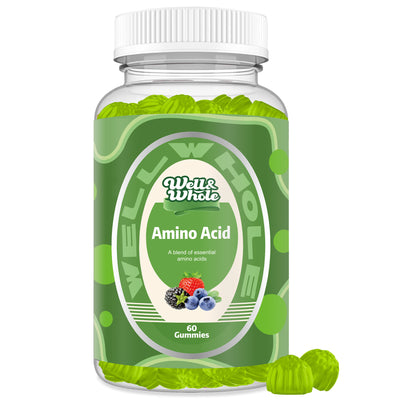
Valine is an Essential Amino Acid

Valine is an Essential Amino Acid
Valine plays a crucial role in human health, yet many people overlook this branched-chain amino acid (BCAA) when planning their nutrition. As one of the nine essential amino acids that the body cannot produce on its own, valine must come from diet or supplementation. Whether you're an athlete looking to improve recovery, someone managing muscle loss with age, or simply aiming for balanced wellness, understanding valine helps you make informed choices. At well&whole, we recognize that quality ingredients matter, which is why we emphasize the science behind every nutrient we offer.
Key Takeaways
- Essential amino acids (EAAs) are the nine amino acids the body cannot make on its own and must get from diet or supplements.
- A complete EAA blend includes all nine, whereas BCAAs cover only three of them—an important distinction when comparing products.
- Liquid EAA drops are a convenient format for people who dislike pills or want to sip them around training or throughout the day.
What Makes Valine an Essential Amino Acid?
Unlike non‑essential amino acids that the body can synthesize, valine has no internal manufacturing shortcut. It must be consumed through food or supplements. Structurally, valine belongs to the BCAA family alongside leucine and isoleucine. These three share a branched molecular shape that gives them unique metabolic properties. For example, valine is primarily metabolized in muscle tissue rather than the liver, making it directly available for energy production during exercise.
Common dietary sources include meat, dairy, eggs, soy, and legumes. A single serving of chicken breast provides roughly 1.2 g of valine, while a cup of cooked lentils offers about 0.8 g. However, the Recommended Dietary Allowance (RDA) for valine is approximately 24 mg per kilogram of body weight per day—meaning a 70 kg adult needs about 1.7 g daily (source: National Institutes of Health, Office of Dietary Supplements). Many people fall short, especially those on plant‑based diets or with high physical demands.
Summary: Valine is essential because the body cannot produce it. It must come from diet or supplements, and common food sources include meat, dairy, and legumes. Meeting the daily requirement supports normal physiological functions.
Health Benefits of Valine: Beyond Muscle Recovery
While valine is best known for its role in muscle protein synthesis, its benefits extend far beyond the gym. Valine supplementation benefits include improved muscle repair, better nitrogen balance, and enhanced immune function. Research published in the Journal of the International Society of Sports Nutrition shows that BCAA intake before and after resistance training reduces muscle soreness and accelerates recovery (source: JISSN, 2017). For people recovering from illness or surgery, valine helps preserve lean mass when appetite is low.
Beyond muscles, valine is a precursor for glucose production during fasting or intense exercise. This gluconeogenic property helps stabilize blood sugar levels and sustain energy. Some studies also link adequate valine levels to balanced brain chemistry, as BCAAs compete with tryptophan for transport across the blood‑brain barrier, potentially influencing mood and fatigue perception.
Summary: Valine supports muscle recovery, energy metabolism, and immune health. Its role in glucose production makes it valuable for active individuals and those under physical stress.
How to Choose a Valine Supplement: What well&whole Recommends
Not all valine supplements are created equal. When looking for a product, purity and bioavailability matter. At well&whole, we source our valine from fermented plant‑based origins to ensure it’s both pharmaceutical grade and suitable for vegans. Our process avoids synthetic solvents and heavy metals, which is critical because contaminants can interfere with absorption and safety.
Dosage guidelines vary depending on goals. For general wellness, 2–5 g of combined BCAAs (including valine) taken before or after exercise is common. For targeted valine intake, single‑amino supplements typically range from 500 mg to 2 g per serving. Always consult a healthcare provider before starting supplementation, especially if you have kidney or liver conditions, as excess amino acids can strain these organs.
Summary: A high‑quality valine supplement should be pure, third‑party tested, and suitable for your dietary needs. well&whole offers a clean, fermented option that fits active lifestyles.
Who Can Benefit from Increasing Valine Intake?
While everyone needs valine, certain groups may require extra attention to their intake. Athletes and bodybuilders often use valine rich foods or supplements to reduce muscle breakdown during training. Older adults experiencing sarcopenia—age‑related muscle loss—may find that consistent valine intake, combined with resistance exercise, helps maintain strength. Vegans and vegetarians who rely on plant proteins should pay attention to valine content because many plant sources (like grains) are lower in this amino acid compared to animal proteins. For these populations, a valine dietary supplement can be a practical solution to fill gaps without overhauling the entire diet.
Summary: Athletes, seniors, and plant‑based eaters are most likely to benefit from ensuring adequate valine. Strategic supplementation supports their unique metabolic needs.
Frequently Asked Questions (FAQ)
Q1: Can valine help with weight loss?
Yes, indirectly. Valine helps preserve muscle mass during calorie restriction, which supports a higher resting metabolic rate. Some people also experience improved exercise performance, leading to greater calorie burn. However, valine is not a direct fat‑burner.
Q2: Are there any side effects of too much valine?
Excessive intake (typically above 5–10 g per day from supplements) may cause nausea, digestive discomfort, or an imbalance with other BCAAs. People with maple syrup urine disease (MSUD) must avoid valine and other BCAAs entirely.
Q3: How does well&whole ensure the quality of its valine supplements?
All well&whole products undergo third‑party testing for purity, potency, and contaminants. Our valine is fermented from non‑GMO corn, free from artificial additives, and packed in facilities following Good Manufacturing Practices (GMP).
Essential amino acids vs. BCAAs: what the difference means
The nine essential amino acids include the three branched-chain amino acids (leucine, isoleucine, valine) plus six others such as lysine, threonine, and tryptophan. A complete EAA product supplies all nine; a BCAA product supplies only three.
For people focused on overall protein support, a full EAA spectrum is often the more complete choice. Your goal—recovery, daily protein intake, or convenience—should guide the format.
How EAA drops are commonly used
Liquid EAA drops are typically added to water and sipped. Many active adults use them around training sessions or distributed through the day to support normal protein synthesis.
Because liquids absorb without needing to swallow several capsules, they suit people who travel or who find large pills inconvenient.
Who might be interested
Active adults, older adults watching their protein intake, and anyone with a diet low in complete proteins may look at EAA supplementation.
They are also popular with people following plant-forward eating patterns who want to round out their amino acid intake.
How to choose a quality EAA product
Check that all nine essentials are present and that the label states the amount per serving. A balanced leucine-containing ratio supports normal muscle protein synthesis.
Look for third-party testing, a clean ingredient list, and a format you will use consistently—drops, powders, or capsules.
This article is for general wellness education and is not intended to diagnose, treat, cure, or prevent any condition. Individual needs vary—always review product labels and consult a qualified healthcare professional before starting any new supplement.
Related supplements
Explore the full well&whole supplement collection to find formats and combinations that fit your routine.
These statements have not been evaluated by the Food and Drug Administration. This product is not intended to diagnose, treat, cure, or prevent any disease.