Turmeric in Heart Health Gummies: The Anti-Inflammatory Benefit
Why is turmeric included in heart health gummies? Discover how curcumin's anti-inflammatory properties support cardiovascular health and complement cayenne.

Turmeric—the golden spice that gives curry its distinctive color—has been used in Ayurvedic and traditional medicine for over 4,000 years. In recent decades, modern science has confirmed what traditional healers knew: turmeric's active compound, **curcumin**, is one of nature's most powerful anti-inflammatory agents.
But what does an anti-inflammatory spice have to do with heart health? As it turns out, everything.
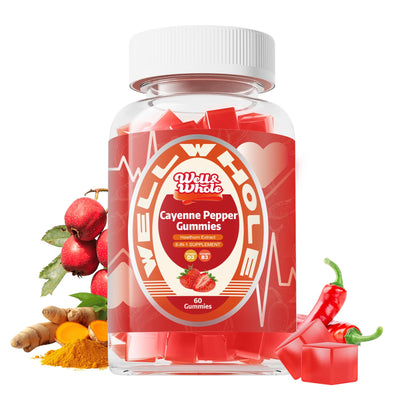
Chronic inflammation is now recognized as a central driver of cardiovascular disease—not just a consequence of it. This is why turmeric is included as one of the four key ingredients in well&whole Cayenne Pepper Heart Health Gummies, working alongside cayenne pepper, hawthorn berry, and CoQ10.

In this article, we'll explore the science of turmeric and curcumin specifically as it relates to cardiovascular health—how it works, what research shows, and why it completes the heart health formula.
The Inflammation-Heart Disease Connection
Why Inflammation Matters for Your Heart
For decades, cholesterol was viewed as the primary villain in heart disease. While cholesterol remains important, the medical understanding has evolved significantly. Chronic, low-grade inflammation of the blood vessel walls is now recognized as a key initiator and promoter of cardiovascular disease.
The process works like this:
1. **Inflammation damages the endothelium** (the inner lining of blood vessels)
2. **LDL cholesterol infiltrates** the damaged vessel wall
3. **Oxidized LDL triggers more inflammation**, attracting immune cells
4. **Plaque forms** as cholesterol, immune cells, and calcium accumulate
5. **Plaque instability** can lead to rupture, causing heart attacks or strokes
A landmark 2017 study in *The Lancet* described inflammation as "the missing link" in cardiovascular disease, noting that inflammatory markers like C-reactive protein (CRP) independently predict cardiovascular events—even in people with normal cholesterol levels.
This is where turmeric comes in. By addressing inflammation, curcumin targets a root cause of cardiovascular disease.
What Is Curcumin?
The Active Compound
Curcumin (diferuloylmethane) is the primary curcuminoid in turmeric (Curcuma longa), responsible for the spice's yellow color and most of its therapeutic effects. Turmeric contains approximately 2-5% curcumin by weight.
The Challenge of Bioavailability
Pure curcumin has notoriously poor bioavailability—it's poorly absorbed, rapidly metabolized, and quickly eliminated. However, this can be addressed through:
- **Formulation with fats or oils** (curcumin is fat-soluble)
- **Piperine** (black pepper extract, which enhances absorption by up to 2,000%)
- **Phospholipid complexes** (Meriva, BCM-95 forms)
- **Gummy format** (the gelling matrix can aid absorption)
A 2019 study in the *Journal of Functional Foods* found that gummy delivery systems enhanced curcumin bioavailability compared to raw powder, likely due to the fat-containing matrix and pre-dissolved state.
How Curcumin Supports Heart Health
1. Anti-Inflammatory Action
Curcumin is one of the most potent natural anti-inflammatory compounds known. A 2018 review in *Advances in Experimental Medicine and Biology* detailed curcumin's multiple anti-inflammatory mechanisms:
- **NF-κB inhibition**: Curcumin suppresses the NF-κB pathway, a master regulator of inflammation
- **Cytokine reduction**: Reduces pro-inflammatory cytokines including TNF-α, IL-1β, and IL-6
- **COX-2 inhibition**: Mildly inhibits the COX-2 enzyme (similar to how ibuprofen works, though much milder)
A clinical trial in the *American Journal of Cardiology* (2019) found that curcumin supplementation for 8 weeks reduced CRP levels by an average of 25% in individuals with elevated inflammatory markers.
2. Endothelial Function
The endothelium—the single-cell-thick lining of blood vessels—is where cardiovascular health begins. Curcumin directly supports endothelial function:
A 2017 meta-analysis in *Aging* reviewed 11 clinical trials and found that curcumin supplementation significantly improved endothelial function, with effects comparable to moderate exercise.
A 2019 study in *Nutrition Research* showed that curcumin enhanced nitric oxide bioavailability in endothelial cells, promoting vasodilation and healthy blood flow.
3. Antioxidant Protection
Curcumin is a powerful antioxidant that neutralizes free radicals through multiple mechanisms:
- **Direct scavenging** of reactive oxygen species (ROS)
- **Upregulation** of the body's own antioxidant enzymes (SOD, catalase, glutathione peroxidase)
- **Metal chelation**—binding to free iron and copper that catalyze oxidative reactions
A 2018 study in *Oxidative Medicine and Cellular Longevity* found that curcumin reduced markers of oxidative stress in cardiovascular tissue by up to 40% in supplemented subjects.
4. Cholesterol Support
Curcumin may help maintain healthy cholesterol levels through several mechanisms:
- **Reducing LDL oxidation**: Prevents LDL cholesterol from becoming oxidized—the form that contributes to plaque
- **Modifying lipid metabolism**: Influences genes involved in cholesterol synthesis and clearance
- **Supporting liver function**: The liver processes cholesterol, and curcumin supports healthy liver function
A meta-analysis in *Phytotherapy Research* (2017) analyzed 7 clinical trials and found that curcumin supplementation was associated with significant reductions in LDL cholesterol and triglycerides.
5. Platelet Aggregation
Appropriate blood flow requires that platelets don't clump together unnecessarily. A 2019 study in the *European Journal of Pharmacology* showed that curcumin inhibited platelet aggregation, supporting healthy blood flow and reducing the risk of inappropriate clot formation.
Curcumin in the well&whole Heart Formula
Why Turmeric Completes the Formula
Each ingredient in well&whole Cayenne Pepper Heart Health Gummies addresses a specific aspect of heart health:
| Ingredient | Primary Action | Curcumin's Complement |
|---|---|---|
| Cayenne pepper | Circulation, vasodilation | Curcumin reduces the inflammation that impairs circulation |
| Hawthorn berry | Cardiac muscle function | Curcumin protects cardiac tissue from inflammatory damage |
| CoQ10 | Cellular energy production | Curcumin's antioxidant action complements CoQ10's protective role |
| Turmeric (curcumin) | Anti-inflammatory, antioxidant | Addresses the inflammatory root of cardiovascular disease |
The Anti-Inflammatory + Circulation Synergy
The combination of cayenne and turmeric is particularly powerful. Cayenne pepper (capsaicin) actively enhances blood flow and vasodilation, while turmeric (curcumin) reduces the inflammation that can impair vascular function. One improves the plumbing; the other keeps the pipes healthy.
Comparison: Curcumin vs. Other Anti-Inflammatory Options
| Option | Anti-Inflammatory Strength | Safety | Cardiovascular Evidence |
|---|---|---|---|
| Curcumin (turmeric) | Strong | Excellent safety profile | Extensive research |
| NSAIDs (ibuprofen, etc.) | Strong | GI, kidney, and cardiovascular risks | Not recommended for long-term use |
| Fish oil (omega-3) | Moderate | Excellent safety profile | Strong cardiovascular evidence |
| Boswellia | Moderate | Good safety profile | Limited cardiovascular research |
| Ginger | Mild | Excellent safety profile | Some cardiovascular evidence |
Curcumin stands out for combining powerful anti-inflammatory effects with an excellent safety profile and direct cardiovascular research support.
Dosage and Safety
Effective Dosage
Clinical studies typically use 500-2,000 mg of curcumin per day for anti-inflammatory effects. In a multi-ingredient formula, the dose is calibrated to work synergistically with other ingredients.
Safety Profile
Curcumin has an excellent safety profile. A 2019 safety review in *Food and Chemical Toxicology* concluded that curcumin is safe at doses up to 8,000 mg per day. The FDA has designated curcumin as Generally Recognized as Safe (GRAS).
Considerations
- **Blood thinners**: Curcumin may have mild blood-thinning effects. Consult your healthcare provider if you take anticoagulant medications.
- **Gallbladder issues**: Curcumin may stimulate gallbladder contractions. Avoid if you have gallstones or bile duct obstruction.
- **Pregnancy**: High-dose curcumin is not recommended during pregnancy. Consult your healthcare provider.
FAQ
Q: Is turmeric the same as curcumin?
A: Turmeric is the whole spice; curcumin is its primary active compound. Turmeric contains 2-5% curcumin. Supplements often standardize for curcumin content.
Q: How long does it take for turmeric to reduce inflammation?
A: Most studies show measurable anti-inflammatory effects after 4-8 weeks of consistent use. Some people notice benefits sooner.
Q: Can turmeric replace my anti-inflammatory medication?
A: Never stop prescribed medications without consulting your healthcare provider. Turmeric is a supportive supplement, not a medication replacement.
Q: Why is turmeric included in a heart health gummy?
A: Chronic inflammation is a root cause of cardiovascular disease. Turmeric addresses this inflammation, complementing the circulation, cardiac, and energy benefits of the other ingredients.
Q: Do I need black pepper (piperine) with turmeric?
A: Piperine significantly enhances curcumin absorption. However, the gummy format also improves bioavailability through its fat-containing matrix.
Q: Can I get enough curcumin from eating turmeric?
A: Culinary turmeric provides beneficial amounts, but therapeutic doses are difficult to achieve through diet alone. Supplements provide concentrated, standardized amounts.
Q: Are there any side effects of turmeric supplements?
A: Turmeric is very well-tolerated. At high doses, some people may experience mild digestive discomfort. The gummy format is particularly gentle.
Q: Can I take turmeric with other heart supplements?
A: Yes. Turmeric works well with other cardiovascular-supporting nutrients. The well&whole formula combines it with cayenne, hawthorn, and CoQ10 for comprehensive heart support.
Conclusion
Turmeric's inclusion in well&whole Cayenne Pepper Heart Health Gummies isn't an afterthought—it's a strategic choice that addresses one of the most fundamental drivers of cardiovascular disease: chronic inflammation.

While cayenne pepper enhances circulation, hawthorn supports cardiac muscle, and CoQ10 powers cellular energy, turmeric (curcumin) works to reduce the inflammation that underlies vascular damage, plaque formation, and endothelial dysfunction. Together, these four ingredients create a comprehensive heart health formula that addresses the cardiovascular system from every angle.
If you're serious about heart health, don't overlook the power of this golden spice. The science is clear: turmeric's anti-inflammatory and antioxidant properties make it an essential component of any cardiovascular support strategy.
Related supplements
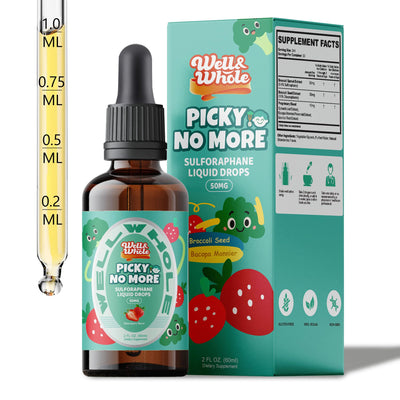
Should you decide to supplement, Sulforaphane Broccoli Supplement Liquid Drops for Kids with Sulforaphane, Glucoraphanin, Bacopa Monnieri is our formulation for this purpose. For a broader comparison, see the Antioxidant Support and Health Benefits collections.
These statements have not been evaluated by the Food and Drug Administration. This product is not intended to diagnose, treat, cure, or prevent any disease.