TUDCA vs UDCA: What's the Difference and Which Is Better?
TUDCA and UDCA are both bile acids used for liver support, but they differ in absorption, efficacy, and use cases. Learn which may be right for you.

If you've researched liver health supplements, you've likely encountered two similar-sounding compounds: **UDCA** (ursodeoxycholic acid) and **TUDCA** (tauroursodeoxycholic acid). While they share a common root and overlapping benefits, these two bile acids have distinct characteristics that may make one more suitable for your needs than the other.
This article breaks down the science behind UDCA and TUDCA, compares their mechanisms, benefits, and limitations, and helps you understand which might be the better choice for your wellness goals.
Understanding the Basics: What Are UDCA and TUDCA?
UDCA (Ursodeoxycholic Acid)
UDCA is a bile acid naturally found in human bile and is the active ingredient in prescription medications like Actigall and Urso. It's been used medically for decades to treat certain gallbladder and liver conditions.
Key properties of UDCA:
- Naturally occurring in humans (though in small amounts)
- Prescription form used for gallstone dissolution and certain liver diseases
- Available in some countries as a dietary supplement
- Moderately water-soluble
TUDCA (Tauroursodeoxycholic Acid)
TUDCA is essentially UDCA that has been "conjugated" with taurine, an amino acid. This conjugation changes the molecule's properties in important ways.
Key properties of TUDCA:
- Also naturally occurring in humans (in even smaller amounts than UDCA)
- Not typically used as a prescription medication (though researched for this purpose)
- Available as a dietary supplement
- Highly water-soluble
| **Feature** | **UDCA** | **TUDCA** |
|------------|----------|------------|
| Chemical structure | Bile acid | Bile acid + taurine conjugate |
| Water solubility | Moderate | High |
| Natural production in body | Yes (small amounts) | Yes (very small amounts) |
| Primary use | Prescription medication | Dietary supplement |
| Research depth | Extensive (medical) | Growing (supplement and research) |
The Conjugation Difference: Why Taurine Matters
The key difference between UDCA and TUDCA lies in a process called "conjugation." In the body, bile acids are often conjugated with either taurine or glycine. This conjugation:
1. **Increases water solubility**: Conjugated bile acids are more hydrophilic
2. **Enhances absorption**: The body may absorb conjugated forms more efficiently
3. **Improves cellular penetration**: Conjugated forms may enter cells more readily
4. **Reduces toxicity**: Conjugation makes bile acids less harmful to cells
Because TUDCA is already conjugated with taurine, it bypasses a step the body would need to perform with UDCA. This may give TUDCA a pharmacokinetic advantage—meaning it could be more bioavailable or effective at lower doses.
Mechanisms of Action: How They Work
UDCA Mechanisms
UDCA primarily works by:
- **Diluting toxic bile acids**: UDCA replaces more harmful bile acids in the bile acid pool
- **Promoting bile flow**: It increases bile secretion and reduces bile lithogenicity (tendency to form stones)
- **Reducing inflammatory responses**: UDCA modulates certain inflammatory pathways in the liver
TUDCA Mechanisms
TUDCA shares these mechanisms but adds additional layers:
- **Enhanced cellular protection**: TUDCA more potently reduces ER stress and supports mitochondrial function
- **Greater antioxidant activity**: The taurine conjugate may provide additional antioxidant benefits
- **Improved insulin sensitivity**: Some research suggests TUDCA may have stronger effects on metabolic health
Research Comparison: What Studies Say
UDCA Research
UDCA has been extensively studied in medical contexts. Key findings include:
- **Gallstone dissolution**: UDCA can dissolve certain types of cholesterol gallstones
- **Primary biliary cholangitis (PBC)**: Prescription UDCA is a first-line treatment
- **Liver enzyme improvement**: Multiple studies show UDCA lowers ALT and AST levels in various liver conditions
TUDCA Research
TUDCA research is newer but compelling:
- **Cellular protection**: Studies in cells and animals show potent protection against ER stress
- **Metabolic benefits**: A 2013 study in *Diabetes Care* found TUDCA improved insulin sensitivity in type 2 diabetes patients
- **Neuroprotection**: Emerging research explores TUDCA for eye and brain health
| **Research Area** | **UDCA** | **TUDCA** |
|-------------------|----------|------------|
| Liver diseases | Extensively studied, approved for some conditions | Promising but less clinical data |
| Metabolic health | Some research | Stronger emerging evidence |
| Cellular protection | Moderate evidence | Strong preclinical evidence |
| Neuroprotection | Limited | Emerging research |
| Availability | Prescription (medical grade) | Supplement (varied quality) |
Benefits Comparison
UDCA Benefits
- **Proven medical applications**: Approved for specific liver and gallbladder conditions
- **Extensive safety data**: Decades of use in medical settings
- **Standardized dosing**: Well-established therapeutic ranges
- **Insurance coverage**: Often covered when prescribed
TUDCA Benefits
- **Enhanced bioavailability**: May require lower doses for effect
- **Broader mechanisms**: Affects not just bile flow but cellular health
- **Supplement accessibility**: Available without prescription
- **Combination potential**: Often formulated with complementary ingredients (like milk thistle in well&whole's TUDCA Gummies
- **Emerging research**: May have benefits beyond what UDCA offers
Which Is Better for Specific Goals?
For Liver Enzyme Support
**Tie**: Both may support healthy liver enzyme levels, but through slightly different mechanisms. TUDCA's enhanced cellular protection may offer broader support.
For Digestive Health and Bile Flow
**UDCA**: Has more established research for biliary health. However, TUDCA is also effective and may work at lower doses.
For Metabolic Health
**TUDCA**: Emerging research suggests stronger effects on insulin sensitivity and metabolic wellness.
For Cellular Protection
**TUDCA**: More potent effects on ER stress and mitochondrial function based on current research.
For Affordability and Access
**UDCA**: Generic prescription versions are often inexpensive with insurance. TUDCA supplements vary widely in price and quality.
Safety and Side Effects
Both compounds are generally well-tolerated, but there are differences:
UDCA Safety
- **Well-established safety profile**: Decades of medical use
- **Common side effects**: Diarrhea, nausea, itching (rare)
- **Drug interactions**: Can interact with certain medications like cholestyramine
TUDCA Safety
- **Limited long-term data**: As a supplement, less post-market surveillance
- **Similar side effect profile**: Generally mild and digestive-related
- **Quality concerns**: Supplement quality varies; choose reputable brands
Practical Considerations: Cost, Access, and Quality
Cost Comparison
- **UDCA (prescription)**: Often $10–50/month with insurance; higher without
- **TUDCA (supplement)**: Typically $30–80/month depending on brand and dosage
Quality Control
- **UDCA**: Pharmaceutical-grade must meet strict FDA manufacturing standards
- **TUDCA**: Supplement quality varies. Look for third-party testing, clear labeling, and reputable manufacturers.
well&whole's TUDCA 1000mg Gummies are manufactured to high quality standards, combined with milk thistle for comprehensive liver support.
Can You Take Both?
Technically, UDCA and TUDCA overlap in function, so taking both is usually unnecessary. However, some individuals under medical supervision may use prescription UDCA while also taking a TUDCA-containing supplement for added cellular support.
**Never combine prescription UDCA with TUDCA supplements without consulting your physician.** There may be duplication of effort or unexpected interactions.
Frequently Asked Questions
1. Is TUDCA stronger than UDCA?
Not necessarily "stronger," but TUDCA may be more bioavailable and work through additional mechanisms. Effectiveness depends on individual factors and health goals.
2. Can I switch from UDCA to TUDCA?
Only under medical supervision. If you're taking prescription UDCA, consult your doctor before making changes.
3. Which is better for fatty liver?
Both have research supporting liver health. TUDCA's broader mechanisms may offer advantages, but more research is needed. Work with a healthcare provider.
4. Does TUDCA have more side effects than UDCA?
Both have similar side effect profiles—mostly mild digestive upset. TUDCA may cause fewer digestive issues for some due to its enhanced solubility.
5. Is UDCA available as a supplement?
In some countries and states, yes. However, it's primarily a prescription medication in the U.S. TUDCA is more commonly found as a supplement.
6. Which is more researched?
UDCA by far. It has decades of clinical research. TUDCA research is growing rapidly but is still catching up.
7. Can TUDCA help with gallstones?
There's limited research on TUDCA for gallstones. UDCA is the established option for certain types of cholesterol gallstones (under medical supervision).
8. Is one better for aging adults?
Both can be suitable for older adults, but TUDCA's cellular protection mechanisms may offer broader age-related benefits. Consult a healthcare provider.
9. How do I choose between them?
Consider your primary goal (liver support, metabolic health, etc.), access (prescription vs. supplement), and budget. A healthcare provider can offer personalized guidance.
10. Are there any conditions where I should avoid one or the other?
Yes. Those with bile duct obstruction should avoid both. Pregnant women, nursing mothers, and those with certain liver diseases should only use under medical supervision.
Conclusion: Making the Right Choice for You
The choice between UDCA and TUDCA isn't necessarily about which is "better" overall, but which is better **for you**.
- If you have a specific medical condition for which UDCA is prescribed, follow your doctor's guidance.
- If you're exploring liver support supplements for wellness purposes, TUDCA offers a compelling blend of traditional bile acid benefits and emerging cellular protection.
- If you're interested in metabolic health, TUDCA's research on insulin sensitivity is particularly intriguing.
For those interested in trying TUDCA, well&whole offers two excellent options:
- TUDCA 1000mg Gummies with Milk Thistle 500mg– A delicious, convenient way to incorporate TUDCA into your routine.
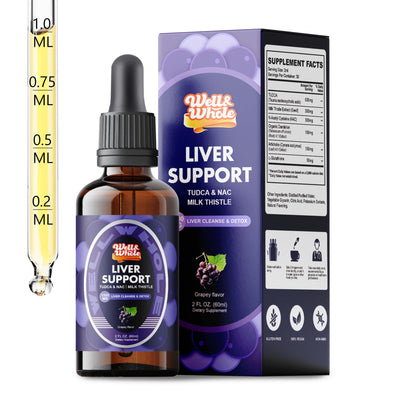
- Liver Support Liquid Drops – A comprehensive formula that includes TUDCA alongside NAC, milk thistle, dandelion, artichoke, and glutathione.
Remember: supplements work best as part of a holistic approach to health that includes a nutrient-dense diet, regular physical activity, adequate sleep, and stress management.
Related supplements
If you're ready to put this into practice, our TUDCA 1000mg Gummies with Milk Thistle 500mg for Adults is formulated with this in mind. You can also compare the Tudca and Liver Support ranges to find the format that suits you.
These statements have not been evaluated by the Food and Drug Administration. This product is not intended to diagnose, treat, cure, or prevent any disease.