TUDCA vs NAC: Which Liver Supplement Is Right for You?
TUDCA vs NAC — which is the better liver supplement? Compare mechanisms, evidence, dosing, side effects, and how to combine them in this 2026 expert guide.

Introduction
When it comes to liver support supplements, two ingredients dominate the conversation: TUDCA (Tauroursodeoxycholic acid) and NAC (N-Acetyl Cysteine). Both have decades of research behind them, both are used in clinical settings, and both are now available in supplement form.
Key Takeaways
- TUDCA (tauroursodeoxycholic acid) is a bile acid naturally present in small amounts in the body, studied for liver and cellular health support.
- It is typically taken in capsule form with meals.
- Because it affects bile, consult a healthcare professional if you have gallbladder or liver conditions or take related medication.
But they work through very different mechanisms, and the "best" choice depends entirely on *your* liver health goals.
In this guide, we'll break down the science, the evidence, the dosing, and the side effects of each — so you can make an informed decision. We'll also explore why many people (and many practitioners) actually combine them.
What Is TUDCA?
TUDCA is a water-soluble bile acid that has been used in traditional Chinese medicine for over 2,000 years (under the name *Yutan*). Modern research has revealed powerful hepatoprotective properties.
Key Mechanisms:
· **Improves bile flow** — TUDCA replaces toxic bile acids that accumulate during liver stress
· **Reduces ER stress** — Helps misfolded proteins fold correctly in liver cells
· **Anti-apoptotic** — Prevents programmed cell death in hepatocytes
· **Mitochondrial protection** — Preserves the energy-producing organelles in liver cells
Evidence Base:
· FDA-approved drug in the U.S. for primary biliary cholangitis (since 2016)
· Studied in NAFLD, NASH, ALS, retinal degeneration, and neurodegenerative diseases
· Typical supplement dose: 250–750 mg/day
What Is NAC?
NAC is a precursor to glutathione, the body's master antioxidant. It's been used in emergency medicine for decades to treat acetaminophen (Tylenol) overdose — one of the most common causes of acute liver failure.
Key Mechanisms:
· **Glutathione replenishment** — Direct precursor to the liver's primary detox molecule
· **Mucolytic** — Breaks down mucus (also used in respiratory conditions)
· **Antioxidant** — Direct free-radical scavenging
· **Anti-inflammatory** — Modulates NF-κB and cytokine pathways
Evidence Base:
· 40+ years of clinical use for acetaminophen toxicity
· Studied in mental health (depression, OCD, addiction), respiratory health, fertility
· Typical supplement dose: 600–1,800 mg/day
Head-to-Head Comparison
When to Choose TUDCA
TUDCA is the better choice if you:
· Have **impaired bile flow** (cholestasis, fatty liver)
· Are using **keto, fasting, or GLP-1 agonists** (which can stress bile production)
· Have **elevated liver enzymes** (ALT, AST, GGT) on blood tests
· Want a **long-term hepatoprotective** for chronic conditions
· Are a **biohacker** focused on longevity and metabolic health
When to Choose NAC
NAC is the better choice if you:
· Need **acute antioxidant support** (post-alcohol, post-medication)
· Are dealing with **mental health challenges** (depression, anxiety, addiction)
· Have **respiratory issues** (chronic bronchitis, sinus congestion)
· Want a **budget-friendly** foundational antioxidant
· Need **fertility or prenatal** support (under medical guidance)
The Case for Combining TUDCA + NAC
Here's the truth most supplement companies won't tell you: TUDCA and NAC aren't competitors — they're complementary.
They work through different pathways:
· TUDCA → bile flow + cellular protection
· NAC → antioxidant defense + glutathione synthesis
A 2019 paper in *Cells* journal specifically explored this synergy, noting that combining bile acid support with antioxidant support produces "additive hepatoprotective effects."
Common combination protocol:
· Morning: 500 mg NAC (with food)
· Evening: 250–500 mg TUDCA (with or without food)
· Add: Milk thistle, alpha-lipoic acid for triple-stack support
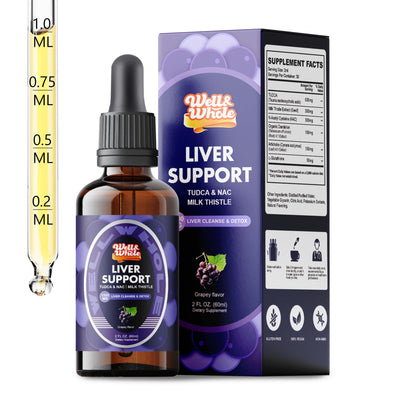
This is exactly the approach used in our [TUDCA + NAC Drops](https://www.wellwholeshop.com/) — a convenient liquid format that combines both in clinically relevant doses.
Side Effects and Safety
TUDCA:
· Generally well-tolerated
· Mild GI upset at high doses (>1,000 mg/day)
· No known drug interactions
· Not studied in pregnancy
NAC:
· Generally well-tolerated
· Sulfur/rotten-egg odor (cosmetic, not harmful)
· Can interact with nitroglycerin and certain chemotherapy drugs
· Safe in pregnancy for specific indications (under medical guidance)
Both are considered safe for long-term use at standard supplement doses.
FAQ
Can I take TUDCA and NAC together?
Yes, this is increasingly common and supported by the literature. They work through different mechanisms.
Which is better for fatty liver?
Both have evidence. TUDCA has more direct research on NAFLD/NASH, while NAC addresses the oxidative stress component.
Do I need to take them forever?
Many people cycle (8–12 weeks on, 4 weeks off) or use them seasonally. Long-term use is also considered safe.
Can I take them with milk thistle?
Yes. Milk thistle (silymarin) is another well-studied liver herb that pairs well with both.
Which is better for hangovers?
NAC works faster (within hours) and directly addresses the toxic metabolites of alcohol.
Conclusion
TUDCA vs NAC isn't really an either/or question. TUDCA excels at bile flow and cellular protection, while NAC excels at antioxidant defense and glutathione production. For most people dealing with modern liver stressors (processed food, alcohol, medications, environmental toxins), combining both produces better results than choosing one.
If you want a single, convenient product that delivers both, our [TUDCA + NAC Drops](https://www.wellwholeshop.com/) combine 250 mg TUDCA and 600 mg NAC per serving in a fast-absorbing liquid format.
What TUDCA is
TUDCA is a taurine-conjugated bile acid. Bile acids help the body digest dietary fats and support normal liver function. Endogenous levels are small, which is why supplemental forms exist.
Research interest centers on its roles in liver and cellular health pathways.
How TUDCA is commonly taken
Capsules with meals are the standard format. Serving sizes vary widely by product, so following the specific label is essential.
It is usually part of a broader liver-support routine that may also include diet adjustments.
Who might be interested
Adults focused on liver and metabolic wellness, and those already using other liver-support supplements, often explore TUDCA.
Anyone with gallbladder issues, bile-duct obstruction, or liver disease should consult a professional first.
How to choose a quality TUDCA product
Look for a clear TUDCA amount per serving, third-party purity testing, and transparent sourcing. Avoid products that do not state the active amount.
This article is for general wellness education and is not intended to diagnose, treat, cure, or prevent any condition. Individual needs vary—always review product labels and consult a qualified healthcare professional before starting any new supplement.
Related supplements
Explore the full well&whole supplement collection to find formats and combinations that fit your routine.
These statements have not been evaluated by the Food and Drug Administration. This product is not intended to diagnose, treat, cure, or prevent any disease.