TUDCA for Fatty Liver: What the Research Actually Says
Can TUDCA help with fatty liver? Review the clinical evidence, mechanisms, and practical considerations for using TUDCA to support liver health.

Non-alcoholic fatty liver disease (NAFLD)—now increasingly referred to as metabolic dysfunction-associated steatotic liver disease (MASLD)—affects an estimated 25% of adults globally. As rates of obesity, type 2 diabetes, and metabolic syndrome rise, so too does interest in safe, effective ways to support liver health.
Enter TUDCA (tauroursodeoxycholic acid), a bile acid supplement that's been generating buzz for its potential liver benefits. But does the research actually support its use for fatty liver? And if so, how does it work?
This article reviews the current scientific evidence, explains the mechanisms behind TUDCA's potential benefits, and offers practical guidance for those considering it as part of a liver support regimen.
Understanding Fatty Liver Disease
Before diving into TUDCA, it's important to understand what fatty liver disease is and why it matters.
What Is Fatty Liver?
Fatty liver occurs when fat accumulates in liver cells, typically more than 5–10% of the liver's weight. This can happen due to:
- **Excess calorie intake**: Particularly from refined carbs and sugars
- **Insulin resistance**: Which promotes fat storage
- **Sedentary lifestyle**: Reducing the body's ability to metabolize fats
- **Genetics**: Some individuals are more predisposed
Why Fatty Liver Matters
While simple fatty liver (steatosis) is often reversible, it can progress to more serious conditions:
1. **Non-alcoholic steatohepatitis (NASH)**: Inflammation and liver cell damage
2. **Fibrosis**: Scarring of liver tissue
3. **Cirrhosis**: Advanced scarring that impairs liver function
4. **Hepatocellular carcinoma**: Liver cancer (in rare cases)
The liver is remarkably resilient, but it's not invincible. Supporting liver health early—through diet, lifestyle, and targeted supplementation—can make a meaningful difference.
TUDCA: Mechanisms Relevant to Fatty Liver
TUDCA's potential benefits for fatty liver are rooted in several mechanisms:
1. Reducing Endoplasmic Reticulum (ER) Stress
The endoplasmic reticulum is a cellular structure involved in protein folding and lipid metabolism. In obese and insulin-resistant states, the ER can become overwhelmed, leading to "ER stress." This stress contributes to insulin resistance and fat accumulation in the liver.
TUDCA is one of the most potent natural compounds for reducing ER stress. By supporting healthy ER function, TUDCA may help:
- Improve insulin sensitivity
- Reduce fat accumulation in the liver
- Support healthy inflammatory responses
2. Supporting Mitochondrial Function
Mitochondria are the cell's energy generators. In fatty liver disease, mitochondrial function often becomes impaired, leading to increased oxidative stress and reduced fat burning.
TUDCA appears to support mitochondrial health by:
- Stabilizing mitochondrial membranes
- Supporting healthy energy production
- Reducing oxidative stress
3. Promoting Healthy Bile Flow
Sluggish bile flow can contribute to liver stress. TUDCA promotes bile flow, which helps:
- Remove waste products from the liver
- Support fat digestion and metabolism
- Maintain healthy cholesterol levels
4. Modulating Inflammation
Chronic low-grade inflammation is a hallmark of fatty liver disease. TUDCA has been shown to modulate inflammatory pathways, potentially reducing liver inflammation.
| **Mechanism** | **How It Helps Fatty Liver** | **Research Support** |
|--------------|-------------------------------|----------------------|
| Reduces ER stress | Improves insulin sensitivity, reduces fat accumulation | Strong (preclinical and some clinical) |
| Supports mitochondria | Enhances fat metabolism, reduces oxidative stress | Moderate |
| Promotes bile flow | Supports liver detoxification and fat metabolism | Strong |
| Modulates inflammation | Reduces liver inflammation | Moderate |
The Research: What Studies Actually Show
Preclinical Studies (Cells and Animals)
Much of the early research on TUDCA and fatty liver comes from preclinical studies. While not directly applicable to humans, these studies provide important mechanistic insights.
Key findings:
- TUDCA reduced fat accumulation in liver cells in vitro
- Animal models of fatty liver showed improved liver enzyme levels with TUDCA
- TUDCA improved insulin sensitivity in animal models of obesity
Human Clinical Studies
The human research on TUDCA for fatty liver is limited but growing.
#### Study 1: TUDCA and Insulin Sensitivity (2013)
A landmark study published in *Diabetes Care* examined TUDCA's effects in individuals with type 2 diabetes—a population with high rates of fatty liver.
**Methods**: 40 participants with type 2 diabetes received either TUDCA (500mg twice daily) or placebo for 4 weeks.
**Results**:
- TUDCA group showed significant improvement in insulin sensitivity
- Liver enzyme levels (ALT) decreased in the TUDCA group
- No serious adverse events reported
**Limitations**: Small sample size, short duration
#### Study 2: TUDCA and NAFLD (2017)
A study published in *Liver International* examined TUDCA in individuals with biopsy-proven NAFLD.
**Methods**: 50 participants received TUDCA (500mg twice daily) or placebo for 6 months.
**Results**:
- TUDCA group showed reduction in liver fat content (measured by MRI)
- Liver enzyme levels improved
- Some improvement in fibrosis markers
**Limitations**: Small sample, need for larger studies
#### Study 3: TUDCA and Bile Acids (2004)
A study in *Hepatology* examined TUDCA's effects on bile acid profiles and liver health in various liver conditions.
**Results**:
- TUDCA increased the proportion of hydrophilic bile acids in the bile acid pool
- Associated with improved liver enzyme levels
What the Research Does (and Doesn't) Say
What it says:
- TUDCA appears safe for short-to-medium term use
- TUDCA may improve insulin sensitivity
- TUDCA may reduce liver fat and improve liver enzyme levels
What it doesn't say:
- TUDCA "cures" fatty liver (no supplement does)
- TUDCA is a replacement for lifestyle changes
- Long-term safety and efficacy are established (more research needed)
Comparing TUDCA to Other Approaches
TUDCA vs. Lifestyle Changes
**Lifestyle changes** (diet, exercise, weight loss) remain the gold standard for fatty liver support. TUDCA is not a replacement but may be a helpful complement.
| **Approach** | **Effectiveness** | **Sustainability** | **TUDCA's Role** |
|--------------|-------------------|--------------------|--------------------|
| Weight loss (5–10%) | High | Challenging | May enhance results |
| Mediterranean diet | High | Moderate | Complements well |
| Exercise | Moderate-High | Moderate | May enhance results |
| TUDCA supplement | Moderate (based on limited research) | High (if well-tolerated) | Adjunctive support |
TUDCA vs. Other Supplements
**Milk thistle**: Well-researched for liver support; TUDCA may offer complementary benefits.
**NAC (N-acetyl cysteine)**: Supports glutathione production; different mechanism than TUDCA.
**Vitamin E**: Some research for NASH; mechanism unrelated to TUDCA.
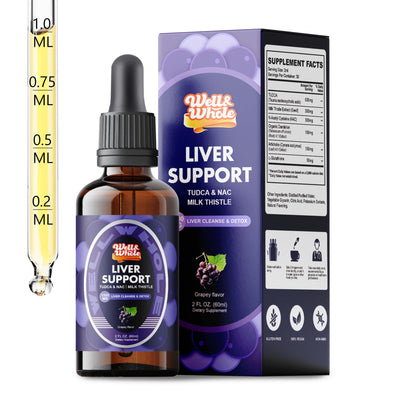
**Combination approach**: Many find that combining TUDCA with other liver-supporting supplements (like in well&whole's Liver Support Liquid Drops provides broader support.

Practical Considerations for Using TUDCA
Dosage
Most studies have used 500–1000mg of TUDCA daily, divided into two doses. However, supplement dosages vary by product. Always follow the manufacturer's instructions and consult a healthcare provider.
well&whole's TUDCA 1000mg Gummies provide a convenient way to take a substantial daily dose.

Timing
TUDCA is often taken with meals to support fat digestion. Some users prefer taking it with their largest meal of the day.
Duration
Most studies have examined TUDCA use for 4–6 months. There's limited data on long-term use beyond one year. Consider periodic breaks or cycling.
Monitoring
If using TUDCA for fatty liver support, consider monitoring:
- Liver enzyme levels (ALT, AST)
- Ultrasound or FibroScan results (if available)
- Metabolic markers (fasting glucose, insulin, HbA1c)
Work with a healthcare provider to establish a monitoring plan.
Who Might Consider TUDCA for Fatty Liver?
TUDCA may be worth discussing with a healthcare provider if you:
- Have been diagnosed with NAFLD or MASLD
- Have elevated liver enzymes
- Are working on lifestyle changes but want additional support
- Have insulin resistance or type 2 diabetes
- Are interested in cellular health support
Who Should Avoid TUDCA
- Those with bile duct obstruction
- Pregnant or nursing women (unless approved by physician)
- Those with severe liver disease (without medical supervision)
- Individuals taking certain medications (consult doctor)
Frequently Asked Questions
1. Does TUDCA cure fatty liver?
No. TUDCA is a supplement that may support liver health, but it's not a cure. Lifestyle changes remain the foundation of fatty liver management.
2. How long does it take to see results with TUDCA?
Some studies show liver enzyme improvements in 4–8 weeks. Changes in liver fat may take 3–6 months. Individual results vary.
3. Can I take TUDCA with my liver medication?
Consult your physician. TUDCA may interact with certain medications or duplicate effects of prescription liver treatments.
4. Is TUDCA safe for long-term use?
Current research suggests TUDCA is safe for medium-term use (up to 6–12 months). Long-term safety data is limited. Consider periodic breaks.
5. Can TUDCA replace my diabetes medication?
Absolutely not. TUDCA is not a replacement for prescribed medications. Never discontinue medications without consulting your doctor.
6. Should I take TUDCA if I don't have fatty liver?
Possibly, if you're interested in general liver support or metabolic health. However, the strongest research relates to liver and metabolic concerns.
7. Can TUDCA cause weight loss?
Some research suggests TUDCA may improve metabolism, but it's not a weight loss supplement. Any weight changes are likely indirect.
8. Is TUDCA suitable for children with fatty liver?
Pediatric fatty liver is a growing concern, but TUDCA should only be used in children under strict medical supervision.
9. Can I take TUDCA while trying to conceive?
Consult your healthcare provider. There's limited safety data for TUDCA use during pregnancy attempts.
10. Does TUDCA work better than milk thistle for fatty liver?
They work through different mechanisms and may complement each other. Some users prefer combination products like well&whole's TUDCA Gummies with Milk Thistle.
Conclusion: The Bottom Line on TUDCA for Fatty Liver
The research on TUDCA for fatty liver is promising but still emerging. Current evidence suggests TUDCA may:
- Support healthy insulin sensitivity
- Reduce liver fat accumulation
- Support healthy liver enzyme levels
- Provide cellular protection through multiple mechanisms
However, TUDCA is not a magic bullet. It works best as part of a comprehensive approach that includes:
1. A nutrient-dense, whole-foods diet
2. Regular physical activity
3. Stress management
4. Adequate sleep
5. Targeted supplementation (like TUDCA)
If you're considering TUDCA for fatty liver support, well&whole offers two excellent options:
- **TUDCA 1000mg Gummies with Milk Thistle 500mg – Convenient, great-tasting, and combines two liver-supporting ingredients.
- **Liver Support Liquid Drops – A comprehensive 6-ingredient formula for multi-faceted liver support.
As always, work with a healthcare provider to develop a personalized plan for your liver health. Supplements can be a valuable tool, but they're most effective when integrated into a holistic wellness strategy.
Related supplements
Where to begin? Our Liver Support Liquid Drops Supplement | TUDCA Drops Liver Cleanse & Detox with Milk Thistle, NAC, Dandelion, Artichoke & Glutathione for Detox and TUDCA 1000mg Gummies with Milk Thistle 500mg for Adults are a sensible place to start, and the Liver Support collection lays out the other formats side by side with Milk Thistle.
These statements have not been evaluated by the Food and Drug Administration. This product is not intended to diagnose, treat, cure, or prevent any disease.