TUDCA FAQs: Your Top 15 Questions Answered
Get answers to the 15 most common TUDCA questions—what it is, how it works, dosage, safety, and how it compares to other liver support ingredients.

TUDCA has become one of the most talked-about liver support supplements in the wellness space—and for good reason. With growing research showing its potential to protect liver cells, support bile flow, and reduce cellular stress, it is drawing attention from people dealing with liver concerns, bodybuilders managing supplement load, and health-conscious individuals looking for proactive liver support.
But with all that attention comes a lot of questions. What exactly is TUDCA? How does it work? How much should you take? Is it safe? Can you combine it with other liver supplements? This FAQ article answers the 15 most common questions about TUDCA, drawing on published research and practical experience.
1. What Is TUDCA?
TUDCA stands for tauroursodeoxycholic acid. It is a bile acid—a naturally occurring compound that your body produces in small amounts as part of normal bile chemistry. Specifically, TUDCA is the taurine-conjugated form of UDCA (ursodeoxycholic acid), a bile acid that has been used medically for decades to treat certain liver and gallbladder conditions.
In supplement form, TUDCA provides a concentrated dose of this beneficial bile acid, supporting liver health beyond what the body produces on its own.
2. How Does TUDCA Work in the Liver?
TUDCA supports liver health through multiple mechanisms:
- **Bile flow improvement**: TUDCA promotes healthy bile acid circulation, helping prevent cholestasis (impaired bile flow) and reducing the toxicity of accumulated bile acids in the liver.
- **Endoplasmic reticulum (ER) stress reduction**: ER stress is a key mechanism in liver cell injury and death. A 2018 study in *Cell Death & Disease* demonstrated that TUDCA reduced ER stress in hepatocytes, preventing apoptosis (programmed cell death).
- **Mitochondrial protection**: TUDCA helps stabilize mitochondrial function in liver cells, supporting energy production and reducing oxidative stress.
- **Anti-inflammatory effects**: TUDCA may reduce inflammatory signaling in the liver, particularly the NF-κB pathway implicated in liver disease progression.
3. Is TUDCA the Same as UDCA?
No, but they are related. UDCA (ursodeoxycholic acid) is the unconjugated bile acid. TUDCA is UDCA conjugated with taurine. The taurine conjugation makes TUDCA more water-soluble and, in some contexts, more bioavailable than UDCA. UDCA is available as a prescription medication (Actigall, Urso) for gallstones and primary biliary cholangitis. TUDCA is available as a dietary supplement. For a detailed comparison, see our article "TUDCA vs UDCA: What's the Difference?"
4. What Conditions Might TUDCA Help Support?
Research and clinical use of TUDCA/UDCA have explored support for:
- **NAFLD/NASH**: Emerging evidence suggests TUDCA may reduce liver enzyme elevations and cellular stress in fatty liver conditions. A 2020 pilot study in *Digestive Diseases and Sciences* found TUDCA supplementation associated with enzyme reductions.
- **Cholestasis**: TUDCA directly addresses bile flow impairment—the defining feature of cholestasis.
- **Medication-induced liver stress**: TUDCA may support liver cells stressed by drug metabolism.
- **Alcohol-related liver stress**: By reducing ER stress and supporting bile flow, TUDCA addresses mechanisms relevant to alcohol-related liver injury.
- **Bodybuilder liver support**: Athletes using high supplement loads may benefit from TUDCA's hepatoprotective properties. See "Liver Support for Bodybuilders" for more context.
**Important**: TUDCA supports liver health—it does not treat, cure, or prevent any disease.
5. What Is the Recommended TUDCA Dosage?
Supplement dosages vary by product. Clinical studies have used ranges from 250mg to 1500mg per day, depending on the context:
| Context | Typical Daily Dose | Notes |
|---------|-------------------|-------|
| General liver support | 250–500mg | Lower end for maintenance |
| Elevated enzyme support | 500–1000mg | Moderate dose for active support |
| Intensive support (under medical guidance) | 1000–1500mg | Higher dose for significant stress |
The well&whole TUDCA 1000mg Gummies with Milk Thistle provide 1000mg of TUDCA per serving, combined with milk thistle for complementary support—at a dose supported by clinical research.
Always follow the dosage on your product label and consult your healthcare provider for personalized guidance, especially if you have a diagnosed liver condition.
6. Is TUDCA Safe?
TUDCA is generally well-tolerated at supplement doses. Side effects are rare and typically mild. The most commonly reported effects at higher doses include:
- Mild gastrointestinal discomfort
- Loose stools (due to bile acid effects on digestion)
These effects are usually transient and resolve with continued use or dose adjustment.
7. Can I Take TUDCA with Other Liver Supplements?
Yes. TUDCA works through bile flow and ER stress mechanisms that are complementary to—not redundant with—other liver support ingredients:
- **NAC** replenishes glutathione (different mechanism)
- **Milk thistle** provides antioxidant/anti-inflammatory support (different mechanism)
- **Dandelion/artichoke** support bile production (complementary to TUDCA)
- **Glutathione** directly supplies the master antioxidant (different mechanism)
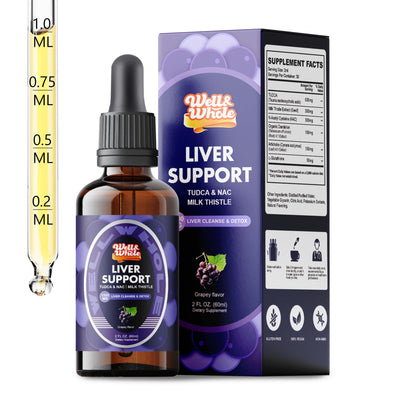
This complementary action is why multi-ingredient formulas make sense. The well&whole Liver Support Liquid Drops and well&whole TUDCA Gummies with Milk Thistle both pair TUDCA with complementary ingredients.
8. How Long Before TUDCA Shows Results?
Most clinical studies show measurable changes in liver enzyme markers after 8–12 weeks of consistent TUDCA use. Some studies have noted changes as early as 4 weeks. The effects are cumulative—daily, consistent use builds results over time, not overnight.
9. Does TUDCA Interact with Medications?
TUDCA is a bile acid and may potentially affect the absorption or metabolism of some medications, particularly those processed through bile-dependent pathways. If you take prescription medications, consult your healthcare provider before starting TUDCA.
10. Is TUDCA Natural?
Yes. TUDCA is a bile acid that your body produces naturally in small amounts. Supplemental TUDCA provides concentrated doses beyond what endogenous production supplies. It is not a synthetic drug; it is a naturally occurring compound used in concentrated form.
11. Can TUDCA Help with Gallbladder Issues?
TUDCA's parent compound, UDCA, is used medically to dissolve certain types of gallstones and manage primary biliary cholangitis. TUDCA may support bile flow and reduce bile acid toxicity in ways relevant to gallbladder health. However, diagnosed gallbladder conditions require medical evaluation—do not self-treat.
12. Who Should Avoid TUDCA?
- **Pregnant or nursing women**: No established safety data; consult a healthcare provider.
- **People with bile duct obstruction**: TUDCA increases bile flow, which may be problematic if bile ducts are blocked.
- **People taking prescription bile acid medications**: Consult your prescriber before adding supplemental TUDCA.
- **Children**: No established dosing or safety data for pediatric use.
13. What Is the Difference Between TUDCA Gummies and Drops?
The core ingredient is the same. Differences are in delivery format:
- **Gummies**: Pre-measured dose, convenient, pleasant taste, no measuring required
- **Liquid drops**: Faster absorption, adjustable dosing, may include additional ingredients beyond TUDCA
The well&whole TUDCA 1000mg Gummies offer convenience and a pre-measured dose. The well&whole Liver Support Liquid Drops offer TUDCA plus five additional liver-supportive ingredients with dosing flexibility.
14. Can Athletes Benefit from TUDCA?
Yes. Athletes—including bodybuilders—place high metabolic demands on their livers through increased protein processing, supplement metabolism, and training-generated oxidative stress. TUDCA's hepatoprotective properties may help maintain liver function under these conditions. See "Liver Support for Bodybuilders" for a detailed discussion.
15. What Should I Look for in a TUDCA Supplement?
- **Exact TUDCA content per serving**: Transparent labeling, not proprietary blends
- **Appropriate dosage**: 250–1000mg per serving aligned with clinical research
- **Complementary ingredients**: Milk thistle, NAC, or other liver supporters that work through different mechanisms
- **Third-party testing**: Verification of purity, potency, and absence of contaminants
- **Reputable manufacturer**: Established brand with quality manufacturing practices
Conclusion
TUDCA is one of the most promising liver support ingredients available today, backed by mechanistic research showing bile flow support, ER stress reduction, mitochondrial protection, and anti-inflammatory effects. It works through specific, well-understood mechanisms that complement—rather than duplicate—other liver support compounds.
Whether you are looking for proactive liver maintenance, support during supplement-intensive training phases, or adjunctive help alongside lifestyle changes for liver health concerns, TUDCA offers evidence-backed support worth considering.
well&whole TUDCA 1000mg Gummies with Milk Thistle provide a convenient, pre-measured dose of TUDCA paired with silymarin for complementary antioxidant support. For a broader multi-ingredient formula, well&whole Liver Support Liquid Drops combine TUDCA with NAC, milk thistle, dandelion, artichoke, and glutathione—addressing multiple liver support mechanisms in one product.
Related supplements
If you'd like to try it, TUDCA 1000mg Gummies with Milk Thistle 500mg for Adults is the closest match to what we've covered here. Browse Tudca and Liver Support to see how the alternatives compare.
These statements have not been evaluated by the Food and Drug Administration. This product is not intended to diagnose, treat, cure, or prevent any disease.