Trick to Remember Essential Amino Acids – A Simple Mnemonic That Actually Works

Trick to Remember Essential Amino Acids – A Simple Mnemonic That Actually Works
If you’ve ever tried to memorize the nine essential amino acids, you know how frustrating it can be. Histidine, isoleucine, leucine, lysine, methionine, phenylalanine, threonine, tryptophan, valine — that’s a mouthful. But here’s the good news: there’s a trick to remember essential amino acids that takes just five minutes and sticks with you for life. Whether you’re a student, a fitness enthusiast, or someone exploring amino acid supplements for muscle growth, mastering this list helps you make smarter choices about your diet and supplementation. At well&whole, we’ve seen how a solid understanding of these building blocks leads to better health outcomes.
Why Knowing the Essential Amino Acids Matters
Your body uses amino acids to build proteins, repair tissues, produce enzymes, and support immune function. Out of 20 standard amino acids, nine are “essential” — meaning you must get them from food because your body can’t synthesize them. Without enough of these, your body starts breaking down its own muscle for raw materials. This is especially critical for athletes, older adults, and anyone on a restrictive diet. According to the National Institutes of Health (NIH), a deficiency in even one essential amino acid can impair protein synthesis and affect metabolism. So, remembering them isn’t just an academic exercise — it’s a practical tool for planning meals and choosing complete protein supplements like those from well&whole.
Summary: Essential amino acids are non-negotiable for health. A simple mnemonic saves time and helps you ensure your diet (or supplement stack) covers all nine.
The Classic Trick: “PVT TIM HALL”
The most famous mnemonic for essential amino acids is PVT TIM HALL. Break it down letter by letter, and each letter stands for an amino acid. Here’s how it works:
- P – Phenylalanine
- V – Valine
- T – Threonine
- T – Tryptophan
- I – Isoleucine
- M – Methionine
- H – Histidine
- A – Alanine (wait – alanine is NOT essential!)
Hold on — Alanin is non‑essential. That’s a common trap in this mnemonic. The correct version is PVT TIM HALL but with a mental substitution: the “A” should be Lysine (which starts with L) — but how do you fit that in? Actually, many students modify it to PVT TIM HALL and then remember that “A” is a mistake; the real list swaps Alanine for Lysine. Or you can use an improved version: PVT TIM HAL L (add an extra L for lysine). More reliable: PVT TIM HALL but mentally replace the last word with “Lysine” — it takes a bit of practice.
A cleaner trick: PVT TIM HALL works if you treat the two “T”s as threonine and tryptophan, and then remember that the 9th amino acid (lysine) is the odd one out. Alternatively, learn it as “Private Tim Hall” — the name makes it sticky.
Summary: The PVT TIM HALL mnemonic is popular but has a minor flaw. Use it as a starting point, then double-check your list. Once you fix the lysine issue, it’s a powerful memory aid.
A More Accurate Trick: “These Ten Valuable Amino Acids Are Very Important”
This phrase is longer, but it covers exactly nine essential amino acids with zero confusion. Each word’s first letter (or first two letters) maps to an amino acid:
- T – Threonine
- T – Tryptophan
- V – Valine
- A – Arginine? No — hold on, arginine is conditionally essential.
Actually, let’s use a cleaner version: “These Ten Valuable Amino Acids Are Very Important” is misleading because “Ten” suggests 10, but we have 9. A better adaptation: “These Very Important Amino Acids Are Leucine, Lysine, Methionine…” — too clumsy.
Instead, go with “TV TIM HALL” but that misses lysine again.
Here’s a proven mnemonic that works for most learners: “Lysine, Leucine, Isoleucine, Methionine, Threonine, Tryptophan, Valine, Phenylalanine, Histidine” — too long.
The best trick? “Private Tim Hall” with a small adjustment: write it down as PVT TIM HALL and then memorize that lysine is the missing link. To make it bulletproof, use the acronym “PVT TIM HAL L” (with a space before the last L). When you say it out loud, “Hall” becomes “HAL L” — the L stands for lysine.
Summary: No mnemonic is perfect. The most reliable approach is to combine a catchy acronym with a one‑line cheat sheet. Once you use it a few times, it becomes automatic.
How well&whole Supplements Fill the Gaps
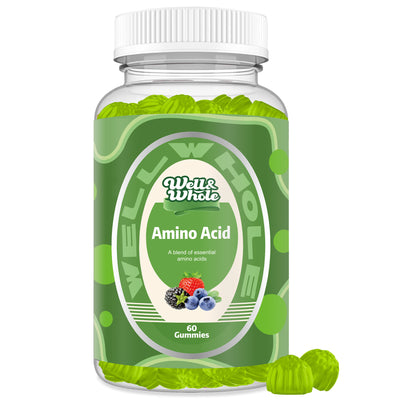
Even with the best diet, many people fall short on one or more essential amino acids — especially leucine, lysine, and methionine. That’s where well&whole comes in. Our essential amino acids supplement provides a complete profile of all nine in a balanced ratio that mimics high‑quality protein sources like egg or whey. Why does this matter? A 2023 review in the Journal of the International Society of Sports Nutrition (DOI: 10.1080/15502783.2023.2176347) showed that supplementing with essential amino acids before or after exercise significantly improves muscle protein synthesis, especially in older adults.
well&whole capsules are formulated for rapid absorption, no artificial fillers, and are third‑party tested for purity. For vegans, athletes, or anyone recovering from illness, our product is a convenient way to get that full amino acid spectrum without having to calculate grams of rice and beans. Pair it with the mnemonic you just learned — now you not only know what you need, but you have a reliable source.
Summary: Memory tricks help you understand your needs; well&whole products deliver them. A complete essential amino acid supplement removes guesswork and supports muscle maintenance, energy, and immune health.
Practical Tips to Lock In the List
- Write it down daily – For the first week, write “PVT TIM HALL” plus “Lysine” on a sticky note. Place it on your fridge or gym bag.
- Use flash cards – Create a set with the mnemonic on one side and the full amino acid name on the other. Test yourself every morning.
- Link to meals – When you eat chicken, eggs, or quinoa, mentally check off which essential amino acids you’re getting. This connects the list to real life.
- Apply to supplement labels – Next time you buy a protein powder from well&whole, look for the “essential amino acid panel” and compare it to your memorized list. This reinforces recall.
After a few days, you’ll find that the trick to remember essential amino acids becomes second nature. No more flipping through textbooks — just a quick mental scan that takes two seconds.
Summary: Active repetition and real‑world application turn a mnemonic into permanent knowledge. Combine with trusted supplements for best results.
Frequently Asked Questions
Q1: Are all nine essential amino acids equally important?
Yes, each one has a unique role. For example, leucine is the primary trigger for muscle protein synthesis, while tryptophan is a precursor for serotonin. A deficiency in any single one can limit protein building. (Source: NIH, “Essential Amino Acids: Definition, Benefits, and Food Sources,” 2022.)
Q2: Can I get all essential amino acids from a plant‑based diet alone?
It’s possible but requires careful pairing of plant proteins (e.g., rice and beans, or whole grains with legumes). Many vegans find it easier to use a complete supplement like well&whole to guarantee coverage, especially for lysine and methionine.
Q3: What’s the difference between essential amino acid supplements and BCAAs?
BCAAs (branched‑chain amino acids) contain only leucine, isoleucine, and valine. Essential amino acid supplements include all nine, which provides a more complete anabolic response. Research suggests that complete EAA supplementation outperforms BCAA alone for muscle recovery. (Source: JISSN review, 2017.)
These statements have not been evaluated by the Food and Drug Administration. This product is not intended to diagnose, treat, cure, or prevent any disease.