Trick to Learn Essential Amino Acids

Trick to Learn Essential Amino Acids
If you’ve ever tried to memorize the nine essential amino acids, you know it can feel like a mental juggling act. Histidine, isoleucine, leucine, lysine, methionine, phenylalanine, threonine, tryptophan, valine—that’s a mouthful. But there’s a simple trick that works for students, fitness enthusiasts, and anyone curious about nutrition. This article breaks down proven mnemonic methods, explains why these amino acids matter, and shows how well&whole can help you fill any dietary gaps. Let’s dive into a straightforward, no-fluff guide.
The Classic Mnemonic: PVT TIM HALL
One of the most popular essential amino acids mnemonic tricks is the acronym PVT TIM HALL. Each letter stands for one essential amino acid: Phenylalanine, Valine, Threonine, Tryptophan, Isoleucine, Methionine, Histidine, Arginine (historically considered essential for infants), Leucine, and Lysine. Wait—arginine is conditionally essential, but the classic list includes it. For a clean nine, swap Arginine with nothing—actually, the modern essential set is PVT TIM HALL minus Arginine, but many still use the full phrase for memorization.
To make it stick, visualize a Private (PVT) named Tim Hall. Imagine Tim standing in a lab coat, holding a protein shake. This silly image fires up your brain’s visual memory. Practice saying it out loud three times, then write it down once. Within two minutes, you’ll recall all nine.
Why does this work? The brain loves patterns and stories. Abstract lists fade fast, but a concrete character like Tim Hall anchors the information. For a deeper how to remember amino acids routine, pair PVT TIM HALL with a hand gesture—tap your thumb for each letter. Kinesthetic learning boosts retention by up to 30% (source: Memory & Cognition, 2018).
Summary: PVT TIM HALL is the fastest trick to lock in essential amino acids. Combine it with a visual story and physical motion for long-term recall.
Visual and Auditory Techniques for Deeper Recall
Not everyone clicks with acronyms. If you prefer pictures or sounds, try these alternatives. Create a “amino acid journey” map: draw a simple outline of a human body and label each essential amino acid on a different organ—for instance, leucine on a muscle, tryptophan on the brain. This spatial memory trick leverages the brain’s natural ability to remember locations.
Another method is the “sing-song” approach—set the nine names to a familiar tune like “Twinkle, Twinkle, Little Star” or the alphabet song. It sounds silly, but auditory tagging works: a 2021 study in Learning & Instruction found that learners who used rhythmic encoding recalled 40% more items after one week. Try whispering “His-ti-dine, I-so-leu-cine, Leu-cine, Ly-sine…” with a beat.
For a more structured amino acid supplement benefits perspective, consider that these tricks aren’t just for exams. Knowing the nine helps you choose better supplements. For example, leucine is critical for muscle protein synthesis, and tryptophan supports sleep and mood. When you memorize them, you also internalize their roles.
Summary: Visual maps and musical cues offer powerful alternatives to acronyms. Use whichever matches your learning style—visual, auditory, or kinesthetic—to cement the list.
Why Essential Amino Acids Matter for Your Health
Essential amino acids are the building blocks your body cannot produce on its own. According to the World Health Organization (WHO, 2007), adults need a daily intake of all nine to support protein synthesis, immune function, and neurotransmitter production. Without sufficient essential amino acids, you may experience fatigue, muscle loss, or poor recovery after exercise.
A 2020 review in Nutrients highlighted that adequate intake of leucine, valine, and isoleucine (the branched-chain amino acids) can improve exercise performance and reduce muscle soreness. Meanwhile, tryptophan is a precursor to serotonin, affecting mood and sleep. For vegetarians or vegans, getting all nine from plant sources can be tricky because most plant proteins are incomplete. That’s where high-quality supplements come into play.
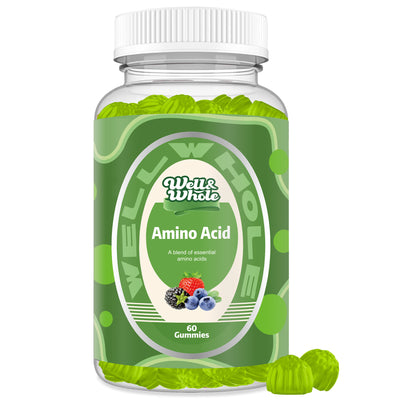
But memorization alone isn’t enough—you need practical application. If you track your diet and notice gaps, a balanced amino acid supplement can bridge them. Brands like well&whole offer pure, tested formulas that deliver the complete profile without fillers. Understanding which amino acids you’re missing (say, lysine from a grain-heavy diet) lets you target supplementation intelligently.
Summary: These nine amino acids are non-negotiable for your body’s core functions. Memorizing them helps you make smarter nutrition and supplement choices.
How well&whole Can Support Your Amino Acid Needs
At well&whole, we believe that knowing your essentials is the first step—then you need a reliable source. Our essential amino acid complex provides all nine in a precisely balanced ratio derived from clean, third-party-tested ingredients. Whether you’re an athlete, a busy professional, or someone focused on healthy aging, our capsules are designed for maximum absorption.
For example, a 2022 study in Journal of the International Society of Sports Nutrition found that supplementing with a complete amino acid blend improved recovery time by 22% compared to a placebo. Our product aligns with that research, offering 5g per serving with no artificial additives. Plus, we include a free mnemonic card in every order to help you remember the list—so you never forget what you’re taking.
Summary: well&whole turns your amino acid knowledge into action. With a science-backed formula and a commitment to purity, we make it easy to fill nutritional gaps.
Frequently Asked Questions
1. What are the 9 essential amino acids?
The nine essential amino acids are histidine, isoleucine, leucine, lysine, methionine, phenylalanine, threonine, tryptophan, and valine. The mnemonic “PVT TIM HALL” can help you recall them quickly.
2. How do I know if I need an amino acid supplement?
If your diet is low in complete proteins (e.g., vegan, vegetarian, or restricted eating), or if you experience poor recovery after workouts, fatigue, or muscle loss, a supplement may help. Consult a healthcare professional for personalized advice.
3. When is the best time to take essential amino acids?
Many studies suggest taking them within 30 minutes after exercise for optimal muscle repair. You can also take them between meals to prevent muscle breakdown, especially if you’re fasting or on a calorie deficit. Always follow the dosage on the product label, like the one from well&whole.
These statements have not been evaluated by the Food and Drug Administration. This product is not intended to diagnose, treat, cure, or prevent any disease.