Traditional Diets and Organ Meats: What We Can Learn
Discover what traditional diets teach us about organ meats. From the Maasai to the Inuit, cultures worldwide prized beef organs for health. Learn the ancestral wisdom behind organ supplements.

In the modern world, muscle meat dominates the plate while organ meats are largely forgotten. But for virtually all of human history—and in many traditional cultures that persist today—this hierarchy was reversed. Organ meats, including liver, kidney, and heart, were the most prized parts of the animal, reserved for hunters, elders, pregnant women, and those needing strength.
This wasn't primitive superstition. Traditional cultures around the world independently arrived at the same conclusion: organ meats are uniquely valuable for human health. They didn't have gas chromatographs or nutrient databases—they had thousands of years of observation and empirical evidence.
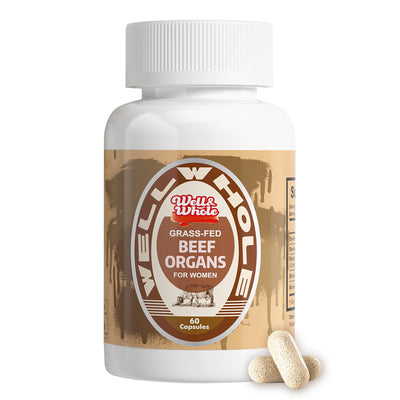
In this article, we'll explore what traditional diets teach us about organ meats, examine specific cultural practices, and connect ancestral wisdom to modern organ supplements like well&whole's Grassfed Beef Organ Capsules.
Weston A. Price: The Pioneer of Traditional Nutrition
The modern understanding of traditional organ meat consumption owes much to Dr. Weston A. Price, a dentist who traveled the world in the 1930s studying the diets and health of isolated traditional populations.
What Price Discovered
In his landmark book *Nutrition and Physical Degeneration* (1939), Price documented remarkable patterns across 14 traditional cultures he studied on five continents:
- Traditional diets were far richer in fat-soluble vitamins than modern diets
- Organ meats were consistently prized—often more than muscle meat
- Traditional populations showed striking resistance to dental decay and chronic disease
- When these populations adopted modern processed foods, health deteriorated within a single generation
Price's analysis of the foods these cultures valued most revealed that organ meats, particularly liver, provided dramatically more vitamins and minerals than any plant foods consumed.
The Vitamin Comparison
Price analyzed nutrient content of traditional foods and found:
| **Food** | **Relative Mineral Content** | **Relative Vitamin Content** |
|---------|---------------------------|---------------------------|
| Beef Liver | 10-50x vegetables | 10-100x vegetables |
| Other Organ Meats | 5-20x vegetables | 5-50x vegetables |
| Dairy (grass-fed) | 2-5x vegetables | 3-10x vegetables |
| Muscle Meat | 1-3x vegetables | 1-5x vegetables |
*Source: Adapted from Price, 1939 — historical analyses using methods available at the time*
While Price's analytical methods were limited by 1930s technology, modern nutritional analysis has largely confirmed his fundamental insight: organ meats are exceptionally nutrient-dense compared to other foods.
Traditional Cultures and Their Organ Meat Practices
The Maasai of East Africa
The Maasai traditionally consumed a diet of milk, blood, and meat from their cattle. When an animal was slaughtered, the liver was traditionally consumed raw on the spot—considered the most precious and strengthening part. Warriors would consume liver before battle and during times of physical stress.
The Maasai's low rates of chronic disease, despite a diet high in animal products, have been documented by multiple researchers. A 1964 study in the *American Heart Journal* examining Maasai cardiovascular health found remarkably low rates of cardiovascular disease despite their animal-based diet—with organ meat consumption noted as a distinguishing feature (Mann et al., 1964).
The Inuit of the Arctic
Arctic indigenous peoples traditionally consumed a diet composed almost entirely of animal foods, with a strong emphasis on organs. Seal and whale liver, heart, and other organs were highly valued—not discarded. These organ meats provided vitamin C (fresh organ meats contain meaningful amounts), vitamin A, and other nutrients almost entirely absent from the Arctic's plant-poor environment.
Vilhjalmur Stefansson, an Arctic explorer who lived with the Inuit for years in the early 1900s, documented their practice of consuming fresh organ meats—particularly liver—and noted their excellent health on this diet. He later demonstrated the diet's viability by consuming only meat and organ meats for a full year under medical supervision at Bellevue Hospital in 1928, with no adverse health effects.
Traditional European Practices
In traditional European cultures, "nose-to-tail" eating was standard practice. Blood sausage, liver pâté, kidney pie, heart stew, and bone broths were common foods—not delicacies reserved for special occasions. Every part of the animal was used.
The French *steak tartare* (raw beef), Italian *fegato alla veneziana* (liver and onions), Scottish haggis (organ meats in sheep stomach), German *leberwurst* (liver sausage), and English steak and kidney pie all represent surviving examples of traditional organ meat preparation.
The key insight: organ meats were not an afterthought in traditional European cooking—they were central to the cuisine.
Traditional Chinese Medicine
In Traditional Chinese Medicine (TCM), organ meats have been prescribed for their corresponding organs for thousands of years:
- Liver to nourish the blood (especially for women)
- Kidney to support the kidney meridian and vitality
- Heart to calm the spirit (shen)
The TCM concept that consuming an animal's organ supports the corresponding human organ—a principle known as "like-supports-like"—is one of the earliest documented examples of organotherapy.
Common Themes Across Traditional Cultures
Despite vast geographic and cultural differences, traditional organ meat practices share remarkable consistencies:
1. Organs Were Prized, Not Discarded
Across every traditional culture, organ meats were among the most valued foods. When an animal was harvested, no part was wasted—and the organs were often the first and most carefully prepared parts.
2. Organs Were Given to Those with Highest Needs
Pregnant and nursing women, growing children, elders, and warriors/athletes were consistently given priority access to organ meats. These groups have the highest nutritional demands, suggesting traditional people understood organs' superior nutritional value through empirical observation.
3. Whole Animals Were Consumed
The concept of consuming only muscle meat while discarding organs is a modern industrial phenomenon. Traditional cultures consumed the entire animal, achieving nutritional completeness that isolated muscle meat cannot provide.
4. Raw or Minimally Processed Preparation
Many traditional cultures consumed certain organs—especially liver—raw or minimally cooked, preserving heat-sensitive nutrients. Modern freeze-drying achieves a similar preservation effect without the food safety concerns of raw consumption.
What We've Lost in the Modern Food System
The modern food system has systematically moved away from organ meat consumption:
- **Industrial meat production** focuses almost exclusively on muscle meat
- **Taste preferences** have shifted away from stronger organ meat flavors
- **Convenience** drives food choices toward pre-prepared muscle meat products
- **Nutritional knowledge** about organ meats' value has faded from public awareness
- **Supermarket availability** of organ meats is extremely limited
The result: most people in developed countries consume zero organ meats, despite their unmatched nutritional density.
How Organ Supplements Bridge the Gap
Beef organ supplements like well&whole's Grassfed Beef Organ Capsules offer a practical way to reconnect with traditional nutritional wisdom:
- They provide organ meats in a convenient, palatable format
- Freeze-drying preserves nutrients without the food safety concerns of raw consumption
- Grass-fed sourcing reflects traditional animal husbandry practices
- Multi-organ blends mirror the whole-animal approach of traditional cultures
- They fit modern lifestyles without requiring hunting, butchering, or organ meat preparation skills
FAQ
Q: Why did traditional cultures value organ meats over muscle meat?
A: Through centuries of observation, traditional cultures recognized that organ meats provided particular benefits for strength, vitality, fertility, and recovery. Modern nutritional science has confirmed these organs' exceptional nutrient density—they contain 10-100 times the vitamins and minerals of plant foods and significantly more than muscle meat.
Q: Is there scientific support for traditional organ meat use?
A: Yes. While specific traditional claims haven't all been formally studied, the nutrient composition of organ meats is well-documented by modern nutritional science. Beef liver, kidney, and heart contain bioavailable nutrients in concentrations unmatched by other foods.
Q: How can I incorporate organ meats into a modern diet?
A: If you enjoy cooking and eating organ meats, fresh liver, kidney, and heart can be prepared through traditional recipes. For most people, organ supplements like well&whole's capsules or gummies provide a practical alternative—the nutritional benefits without the taste and preparation barriers.
Q: What is "nose-to-tail" eating?
A: Nose-to-tail eating refers to consuming all edible parts of an animal—organs, bones, connective tissues, and muscle meat—rather than only eating the muscle cuts. This approach maximizes nutritional intake, reduces food waste, and respects the animal.
Q: Is there a risk of nutrient excess from organ meats?
A: Organ meats are nutrient-dense and should be consumed in appropriate amounts. Supplements like well&whole's are formulated with specific serving sizes. The main concern with excessive organ consumption is vitamin A intake—follow serving recommendations.
Q: Did Dr. Price's research hold up to modern scrutiny?
A: While Price's work was observational and his analytical methods were limited by 1930s technology, his fundamental insight—that traditional diets rich in organ meats and fat-soluble vitamins supported superior health—has been largely validated by subsequent nutritional research.
Q: How do organ supplements compare to fresh organ meats in traditional diets?
A: Freeze-dried organ supplements preserve most nutrients, with modest losses in certain water-soluble vitamins. They offer similar nutritional benefits to fresh organ meats, with the advantages of convenience, consistent dosing, and verified grass-fed sourcing.
Q: Can organ supplements replace the wisdom of traditional diets?
A: Organ supplements provide the nutritional component of traditional organ meat consumption. The broader traditional diet context—including seasonal eating, food preparation methods, and holistic lifestyle factors—is harder to capture in any supplement.
Conclusion
Traditional cultures across every inhabited continent independently recognized what modern nutritional science now confirms: organ meats are uniquely valuable foods. The practice of consuming liver, kidney, heart, and other organs was not cultural coincidence—it was empirical nutrition, refined over millennia of human experience.
While most of us won't return to hunting and gathering or traditional nose-to-tail cooking, we can honor ancestral nutritional wisdom through modern means. Beef organ supplements like well&whole's Grassfed Beef Organ Capsules bridge the gap between ancient nutritional knowledge and contemporary lifestyles—providing the concentrated nutrition of grass-fed organs in a format that fits a 21st-century routine.
Explore well&whole's organ supplements at wellwholeshop.com.
Related supplements
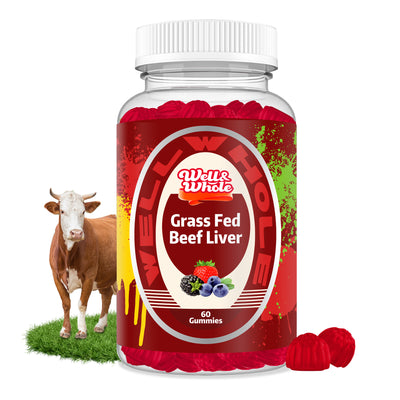
If you'd like to try it, Grass Fed Beef Liver Supplement Gummies with 60 Count for Full Wellness and Grassfed Beef Organ Supplement Capsules, Grass Fed & Pasture Raised, Total Body Wellness Support are the closest match to what we've covered here. Browse Vitamin A and Health Benefits to see how the alternatives compare.
These statements have not been evaluated by the Food and Drug Administration. This product is not intended to diagnose, treat, cure, or prevent any disease.