Total Essential Amino Acids

Total Essential Amino Acids: Why They Matter for Your Health and How to Optimize Your Intake
When it comes to protein quality, the term total essential amino acids (TEAA) is one of the most important metrics to understand. Unlike non-essential amino acids that your body can synthesize on its own, essential amino acids must come from food or supplements. Whether you are an athlete, a busy professional, or someone simply trying to maintain muscle mass as you age, knowing your TEAA intake can make a real difference in how your body functions.
What Are Total Essential Amino Acids?
There are nine essential amino acids that your body cannot produce: histidine, isoleucine, leucine, lysine, methionine, phenylalanine, threonine, tryptophan, and valine. Together, they form the foundation for protein synthesis, enzyme production, neurotransmitter function, and tissue repair. The term total essential amino acids simply refers to the combined amount of these nine amino acids in a given protein source or supplement.
For example, a complete protein like whey or egg white contains all nine in adequate proportions. But many plant-based proteins—such as rice or pea protein—are incomplete on their own, meaning they lack sufficient amounts of one or more essential amino acids. That is why balancing your TEAA profile is critical, especially for vegetarians, vegans, or anyone relying heavily on plant proteins.
Summary: Total essential amino acids are the nine amino acids your body cannot make. Getting the right amount and ratio of these is essential for muscle repair, immune function, and overall health.
Why TEAA Matters More Than Protein Quantity
Many people obsess over grams of protein but overlook the quality of that protein. A 20-gram protein shake might sound impressive, but if it provides only 6 grams of TEAA, its biological value is limited. Research published in the Journal of the International Society of Sports Nutrition (2017) confirms that muscle protein synthesis is driven primarily by the leucine content and the total essential amino acid profile rather than total protein alone.
For older adults, the problem is even more pronounced. Age-related muscle loss (sarcopenia) is closely linked to insufficient TEAA intake. A 2018 study in Nutrients found that older individuals who consumed at least 10 grams of essential amino acids per meal experienced significantly better muscle preservation compared to those who ate the same total protein but with lower TEAA.
Summary: Focusing only on protein grams can be misleading. The total essential amino acid content determines how effectively your body uses that protein for repair and growth.
How to Calculate and Optimize Your TEAA Intake
The World Health Organization (WHO) recommends a daily intake of about 0.8 grams of protein per kilogram of body weight, but that number is based on a mixed diet. For optimal health, especially if you are active or aging, experts suggest a TEAA target of roughly 0.3–0.4 grams per kilogram of body weight per day. For a 70‑kg person, that translates to about 21–28 grams of total essential amino acids daily.
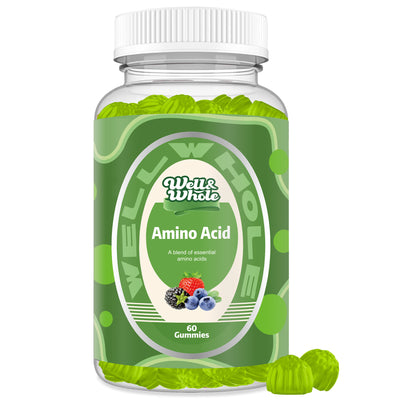
One easy way to boost your TEAA is by choosing complete protein sources such as eggs, dairy, meat, fish, soy, or quinoa. However, many people find it challenging to hit these numbers through diet alone. That’s where high-quality supplements come in. For instance, well&whole offers a plant‑based essential amino acid blend that provides a balanced TEAA profile with no fillers. Each serving delivers 8 grams of TEAA, including 2 grams of leucine—the key trigger for muscle synthesis.
Summary: Calculate your TEAA needs using body weight and activity level. To close any gap, consider a supplement like well&whole that offers a clean, complete essential amino acid profile.
Common Mistakes When Supplementing with Essential Amino Acids
Even with the best intentions, many people make errors that reduce the effectiveness of their TEAA supplementation. One common mistake is taking amino acids on an empty stomach without carbohydrates. A 2020 study in Frontiers in Physiology showed that co‑ingesting amino acids with simple carbs increases insulin response, which improves amino acid uptake into muscles.
Another mistake is neglecting the timing of intake. The anabolic window after exercise is real: consuming TEAA within 30–60 minutes of training maximizes muscle repair. If you wait longer, you lose some of that benefit. Similarly, taking a slow-release protein like casein before bed can help maintain a steady supply of essential amino acids overnight.
Finally, don’t assume that “more is always better.” Excessive TEAA intake—especially of individual amino acids like leucine or lysine—can disrupt the balance of others, leading to potential side effects such as digestive discomfort or altered neurotransmitter levels.
Summary: For best results, take TEAA supplements with a small amount of carbohydrates, time them around workouts, and stick to recommended doses.
Why Choose well&whole for Your TEAA Needs
As a company dedicated to premium nutritional supplements, well&whole understands that total essential amino acids are the backbone of any effective protein strategy. Our essential amino acid powder is formulated to provide the precise ratios recommended by the World Health Organization, with no artificial sweeteners, GMOs, or gluten. It mixes easily into water or smoothies and has a neutral taste that won’t overpower your favorite beverages.
Whether you are looking to support post‑workout recovery, maintain lean muscle during weight loss, or simply fill the gaps in a plant‑based diet, well&whole gives you a clean, science‑backed solution. Plus, each batch is third‑party tested for purity and potency, so you know exactly what you’re getting.
Summary: well&whole delivers a complete TEAA profile that matches global nutritional standards, making it a reliable choice for anyone serious about protein quality.
FAQ – Frequently Asked Questions
1. How do I know if I am getting enough total essential amino acids?
Look for signs like slow recovery after exercise, persistent fatigue, or difficulty maintaining muscle mass even with adequate protein intake. A blood test or a consultation with a registered dietitian can also help. As a general rule, aim for 0.3–0.4 g of TEAA per kg of body weight daily based on WHO guidelines.
2. Can I take too many essential amino acids?
Yes, although it is uncommon with balanced supplements. Very high doses of individual amino acids (e.g., leucine above 5 g per serving) may cause nausea or upset stomach. Stick to the serving size recommended on the label of products like well&whole to stay within safe limits.
3. Are plant‑based essential amino acid supplements as effective as animal‑based ones?
Absolutely. The key is the completeness of the profile. High‑quality plant‑based blends—like the one from well&whole—are precisely formulated to match the ideal TEAA ratios. Numerous studies, including a 2021 review in Nutrients, confirm that plant‑derived essential amino acids can stimulate muscle protein synthesis just as effectively as animal sources when the TEAA content is comparable.
References:
- Phillips, S. M., & Van Loon, L. J. (2011). Dietary protein for athletes: from requirements to optimum adaptation. Journal of Sports Sciences, 29(sup1), S29–S38.
- Paddon-Jones, D., et al. (2018). Role of dietary protein in the sarcopenia of aging. Nutrients, 10(5), 610.
- World Health Organization. (2007). Protein and amino acid requirements in human nutrition. WHO Technical Report Series, 935.
- Tipton, K. D., & Wolfe, R. R. (2001). Exercise, protein metabolism, and muscle growth. International Journal of Sport Nutrition and Exercise Metabolism, 11(1), 109–132.
These statements have not been evaluated by the Food and Drug Administration. This product is not intended to diagnose, treat, cure, or prevent any disease.