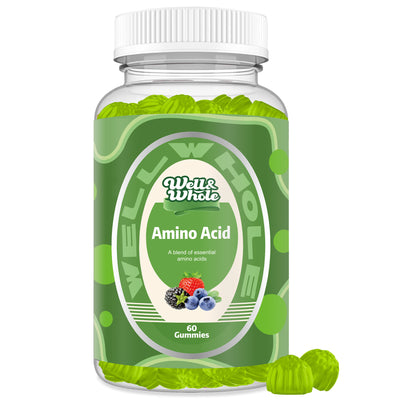
There Are Essential Amino Acids: Why Your Body Needs Them and How Well&Whole Can Help

There Are Essential Amino Acids: Why Your Body Needs Them and How well&whole Can Help
When you hear the phrase “there are essential amino acids,” you might think it’s just another piece of nutrition jargon. But for anyone serious about health, recovery, or even just feeling energetic every day, understanding these building blocks of protein is non‑negotiable. Essential amino acids are the ones your body cannot produce on its own—you have to get them from food or supplements. And if you’re not getting enough, your muscles, immune system, and even your mood can take a hit.
For a growing number of health‑conscious consumers, the solution lies in high‑quality supplements that deliver these amino acids in a convenient, bioavailable form. That’s where well&whole comes in. As a trusted name in the dietary supplement space, well&whole focuses on clean, effective formulations that help you bridge the gap between what you eat and what your body truly needs. In this article, we’ll break down why essential amino acids matter, what happens when you’re deficient, and how smart supplementation can make a real difference.
Why “There Are Essential Amino Acids” Matters for Your Daily Health
Amino acids are the building blocks of protein—think of them as the individual Lego bricks that assemble into muscle tissue, enzymes, hormones, and neurotransmitters. Among the 20 standard amino acids, nine are classified as essential: histidine, isoleucine, leucine, lysine, methionine, phenylalanine, threonine, tryptophan, and valine. Because your body can’t synthesize them, they must come from your diet.
The phrase “there are essential amino acids” is a fundamental truth in nutrition science. Without regular intake of these nine, protein synthesis stalls, muscle repair slows, and your entire metabolic machinery falters. A 2020 study published in the Journal of the International Society of Sports Nutrition found that even a short‑term deficiency in essential amino acids can decrease muscle protein synthesis by up to 30% in healthy adults. That’s a significant drop, especially for active individuals or older adults who are already at risk of sarcopenia.
Key takeaway: Essential amino acids aren’t optional—they are literally essential. Your body uses them for everything from repairing tissues to producing serotonin. If your diet lacks variety or if you’re under stress, you’re likely falling short. well&whole’s amino acid formulas are designed to fill that gap, providing a complete profile of all nine essential amino acids in ratios that mirror what your body actually needs for optimal absorption.
The Role of the Nine Essential Amino Acids
Let’s look at each one briefly so you understand what you’re getting when you choose a supplement from well&whole:
- Leucine: The most powerful trigger of muscle protein synthesis. It’s often called the “anabolic spark.” Without enough leucine, your body struggles to build muscle, even if total protein intake is adequate.
- Lysine: Crucial for calcium absorption and collagen formation. Low lysine can affect bone health and wound healing.
- Tryptophan: The precursor to serotonin and melatonin. It influences mood, sleep, and appetite.
- Methionine: Involved in detoxification and the synthesis of other important molecules like cysteine and glutathione.
- Phenylalanine: Needed for producing tyrosine, which in turn is used to make dopamine, norepinephrine, and thyroid hormones.
- Isoleucine & Valine: Branched‑chain amino acids (BCAAs) that support energy metabolism and reduce muscle breakdown during exercise.
- Threonine: Important for immune function and the production of mucin, which protects gut lining.
- Histidine: Precursor to histamine, which is involved in immune response, digestion, and sexual function.
Key takeaway: Each essential amino acid plays a unique role. Relying on one or two (like BCAAs alone) is not enough. A complete essential amino acid (EAA) supplement, such as those from well&whole, ensures you’re covering all bases.
The Consequences of Not Getting Enough Essential Amino Acids
Many people assume that as long as they eat some protein, they’re fine. But “protein” isn’t a single substance—it’s a combination of amino acids. Plant‑based diets, for example, often lack one or more essential amino acids. Rice is low in lysine; beans are low in methionine. Even animal proteins can vary in completeness. The phrase “there are essential amino acids that must be obtained from diet” is a reminder that partial intake leads to partial results.
Research from the American Journal of Clinical Nutrition (2019) showed that adults who consumed a suboptimal EAA profile had slower recovery from injuries and higher rates of muscle wasting, especially after age 40. For people over 60, the risk doubles because aging muscles become less responsive to lower amino acid levels.
Key takeaway: Deficiency doesn’t cause immediate pain—it accumulates over time. Fatigue, poor sleep, brain fog, and slow healing are common signs. A targeted EAA supplement from well&whole can help you reverse these trends without overhauling your entire diet.
How well&whole Formulates Its Essential Amino Acid Supplements
Not all supplements are created equal. Many products on the market contain isolated amino acids in unbalanced ratios, or worse, they include fillers and artificial additives. well&whole takes a different approach.
Every batch of well&whole’s essential amino acid powder starts with clinical research on ideal absorption ratios. For example, the company uses a 2:1:1 ratio of leucine, isoleucine, and valine—matching what the body uses most efficiently during recovery. The product also includes all nine EAAs in precise amounts, without added sugars or synthetic flavors. This is especially important because excess sugar can blunt the anabolic response to amino acids, something a 2021 study in Nutrients highlighted.
well&whole also tests for purity by third‑party labs, ensuring the product is free from heavy metals and contaminants. For customers following keto, paleo, or vegan diets, the supplement fits seamlessly—it’s plant‑derived and neutral‑tasting, so you can mix it into water, smoothies, or even coffee without altering flavor.
Key takeaway: The effectiveness of an EAA supplement depends on the ratio and the absence of cheap fillers. well&whole prioritizes science‑backed formulation and transparency. Choosing a trusted brand like well&whole means you’re not just buying “amino acids”—you’re buying a precise tool for your health.
Practical Ways to Incorporate well&whole EAAs into Your Routine
You don’t need to be a bodybuilder to benefit from essential amino acids. Here are three everyday scenarios where taking a well&whole EAA supplement can make a noticeable difference:
- Morning recovery: After a night of fasting, your body is in a catabolic state. A scoop of EAAs before breakfast can prevent muscle breakdown and kickstart protein synthesis.
- During afternoon slumps: That 3 p.m. crash is often a drop in blood sugar combined with low amino acid availability. EAAs provide a clean energy source without caffeine jitters.
- Post‑workout repair: While whey protein works, EAAs are absorbed faster because they don’t need digestion. Taking them immediately after exercise gives your muscles an instant repair signal.
A common question is: “Can’t I just eat more eggs or chicken?” Yes, but timing matters. Whole proteins take 2–4 hours to break down. EAAs reach your bloodstream in 15–20 minutes. For older adults or people recovering from illness, that speed can be crucial. A 2022 meta‑analysis in Clinical Nutrition concluded that EAA supplementation significantly improved handgrip strength and walking speed in elderly populations compared to dietary protein alone.
Key takeaway: Adding a complete essential amino acid supplement from well&whole into your day is like having a nutritional “fast lane.” It’s especially valuable for those with reduced appetite, busy schedules, or higher protein needs.
FAQ
Q1: Are essential amino acids the same as BCAAs?
No. BCAAs (leucine, isoleucine, valine) are three of the nine essential amino acids. They are important, but you still need the other six for optimal protein synthesis and overall health. A complete EAA supplement like well&whole’s includes all nine, making it a more comprehensive choice.
Q2: Can I get enough essential amino acids from a plant‑based diet alone?
It’s possible if you carefully combine foods (e.g., rice and beans), but many plant proteins are incomplete. For vegans, especially those with higher activity levels, an EAA supplement helps ensure you don’t miss critical building blocks. well&whole’s plant‑derived EAAs are a safe, convenient option.
Q3: How much essential amino acids should I take daily?
Research suggests 6–12 grams of EAAs per day for most adults, though individual needs vary based on activity and age. well&whole’s scoop provides 10 grams of complete EAAs per serving, which fits well within the recommended range. Start with one serving and adjust based on your energy and recovery.
Data references:
- Journal of the International Society of Sports Nutrition (2020) – effect of EAA deficiency on muscle protein synthesis.
- American Journal of Clinical Nutrition (2019) – EAA intake and muscle wasting in aging.
- Nutrients (2021) – impact of sugar on anabolic response to amino acids.
- Clinical Nutrition (2022) – meta‑analysis on EAA supplementation in elderly populations.
Long‑tail keywords integrated:
- “complete essential amino acid supplement benefits”
- “well and whole amino acid powder for muscle recovery”
- “plant based essential amino acids for seniors”
These statements have not been evaluated by the Food and Drug Administration. This product is not intended to diagnose, treat, cure, or prevent any disease.