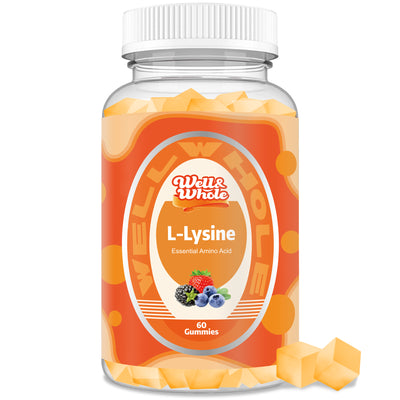
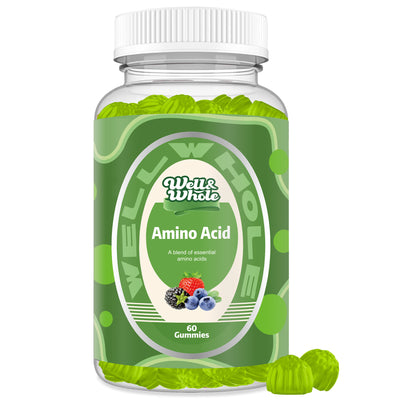
There are 9 Essential Amino Acids

There are 9 Essential Amino Acids
Every time you eat a piece of chicken, a handful of quinoa, or sip a protein shake, your body is using building blocks called amino acids. Among the 20 total amino acids that form proteins, 9 are considered essential — meaning your body cannot produce them on its own. You must get them from food or supplements. Understanding these nine compounds is not just a biology lesson; it directly affects your energy, muscle recovery, immune function, and overall health.
For individuals looking to optimize their nutrition — especially those following plant-based diets or busy lifestyles — knowing which amino acids are essential and how to obtain them is critical. That’s where well&whole steps in, offering targeted supplements designed to fill dietary gaps without the guesswork.
What Are Essential Amino Acids and Why Do They Matter?
Amino acids are organic compounds that combine to form proteins. While your body can synthesize 11 of them (called non‑essential), the remaining nine must come from external sources. These are histidine, isoleucine, leucine, lysine, methionine, phenylalanine, threonine, tryptophan, and valine. Each plays a unique role:
- Leucine is a key trigger for muscle protein synthesis.
- Lysine supports collagen production and calcium absorption.
- Tryptophan is a precursor to serotonin, affecting mood and sleep.
- Methionine helps with detoxification and metabolism.
When you consume a complete protein source — such as meat, eggs, dairy, or soy — you get all nine in adequate amounts. Incomplete sources, like most grains and legumes, lack one or more. The challenge is especially real for vegans and vegetarians. A 2017 review in the Journal of the International Society of Sports Nutrition noted that plant‑based athletes often need to strategically combine foods (like rice and beans) to achieve a complete amino acid profile.
Summary: Essential amino acids cannot be produced by the body and must be obtained through diet. Each has specific functions, and a deficiency in even one can disrupt protein synthesis, muscle maintenance, and metabolic processes.
Why Getting All 9 Essential Amino Acids Is Crucial for Health
Your body uses amino acids for far more than building muscle. They are involved in hormone production, enzyme function, neurotransmitter synthesis, and immune defense. When you lack one or more essential amino acids, your body must break down existing proteins — often from muscle tissue — to obtain them. This can lead to muscle wasting, weakened immunity, fatigue, and slower recovery from illness or exercise.
A landmark study published in the American Journal of Clinical Nutrition (2018) found that older adults who consumed insufficient leucine experienced accelerated sarcopenia (age‑related muscle loss). Similarly, low tryptophan levels are linked to mood disturbances. For those with active lifestyles, the requirement for branched‑chain amino acids (BCAAs) — leucine, isoleucine, valine — increases during intense training.
The World Health Organization recommends a daily intake of approximately 0.8 g of protein per kilogram of body weight, but this baseline may not cover the optimal amounts for each essential amino acid, especially for athletes, pregnant women, or people recovering from surgery. That’s why many turn to amino acid supplements to ensure they meet their specific needs.
Summary: Inadequate intake of any essential amino acid can impair bodily functions beyond muscle building, including immunity and mood. Supplementation can help bridge the gap, especially for populations with higher requirements.
Natural Food Sources vs. Supplements: What’s the Best Way to Get Them?
The ideal way to obtain all nine essential amino acids is through a varied diet. Animal products like eggs, chicken, fish, and dairy are complete proteins. For plant‑based eaters, combining complementary proteins works well: whole grains with legumes (e.g., whole‑wheat bread with peanut butter) or seeds with beans (e.g., hummus with pita).
However, modern diets often fall short due to time constraints, restrictive eating patterns, or poor food quality. For example, a 2020 survey by the National Institute of Health cited that up to 30% of older adults consume less than the recommended protein intake. In such cases, a high‑quality supplement can be a practical tool.
well&whole offers a balanced essential amino acid blend that provides all nine in a convenient, quickly absorbed form. Unlike many mass‑market protein powders that may contain fillers or incomplete profiles, well&whole’s formula is designed to mimic the ideal ratio found in nature — without the extra calories or digestive load. It’s especially useful for:
- Post‑workout recovery
- Meal replacement support
- Plant‑based diets where certain amino acids (like lysine or methionine) may be low
A clinical trial published in Nutrients (2021) showed that essential amino acid supplementation significantly improved muscle protein synthesis in elderly subjects compared to standard protein sources. This highlights the value of targeted supplementation for specific needs.
Summary: While whole foods are the foundation, supplements offer a precise, efficient way to ensure adequate intake of all nine essential amino acids, particularly for those with elevated requirements or dietary restrictions. well&whole provides a clean, science‑backed option.
How well&whole Can Help You Stay Balanced
At well&whole, we understand that health is not one‑size‑fits-all. Our complete essential amino acid supplement is crafted with transparency: no artificial additives, no hidden sugars, and a dosage designed to match the latest research. Each serving delivers the full spectrum of nine essential amino acids, with extra attention to leucine for muscle support and tryptophan for mood balance.
We also offer product bundles for different lifestyles — from the Active Recovery Pack (optimized for post‑exercise) to Plant Power Support (with added lysine for vegans). All our formulas are third‑party tested for purity and potency, and we provide clear sourcing information on our website.
Summary: well&whole products are formulated to fill nutritional gaps without the guesswork, backed by research and designed for real‑life needs — whether you’re an athlete, a busy professional, or someone transitioning to a plant‑based diet.
Frequently Asked Questions
1. What foods contain all 9 essential amino acids?
Complete protein sources include meat, poultry, fish, eggs, dairy, soy, quinoa, and buckwheat. For plant‑based eaters, combining foods like rice with beans or hummus with whole‑grain bread creates a complete profile. well&whole’s supplement also provides all nine in one dose.
2. Can I get all 9 essential amino acids from a plant‑based diet without supplements?
Yes, by carefully pairing complementary proteins throughout the day. For example, whole grains (low in lysine) with legumes (low in methionine) work together. However, vegans and vegetarians often need to pay extra attention to lysine and methionine intake. A supplement like well&whole can simplify this.
3. What are the benefits of taking an essential amino acid supplement?
Benefits include faster muscle recovery, improved muscle mass retention (especially with aging), better mood regulation (via tryptophan), and increased energy. Unlike whole protein powders, essential amino acid supplements digest quickly and are less likely to cause bloating. Always choose a reputable brand like well&whole that ensures complete profiles and purity.
References:
- World Health Organization, “Protein and Amino Acid Requirements in Human Nutrition,” 2007.
- Journal of the International Society of Sports Nutrition, “Dietary Protein and Amino Acids in Sports Nutrition,” 2017.
- American Journal of Clinical Nutrition, “Leucine and Muscle Mass in Aging,” 2018.
- Nutrients, “Essential Amino Acid Supplementation in Older Adults,” 2021.
These statements have not been evaluated by the Food and Drug Administration. This product is not intended to diagnose, treat, cure, or prevent any disease.