There Are 20 Essential Amino Acids: What You Need to Know for Optimal Health

There Are 20 Essential Amino Acids: What You Need to Know for Optimal Health
When people talk about protein, they often mention 20 essential amino acids – but the truth is a bit more nuanced. Actually, our bodies require 20 different amino acids to function properly, and nine of them are considered essential because we must get them from food. The remaining 11 are non‑essential, meaning our bodies can produce them on their own. However, the phrase “20 essential amino acids” has become a popular shorthand in the supplement and fitness worlds, and understanding their role can help you make smarter choices about your diet and health. At well&whole, we believe that knowing what your body truly needs is the first step toward better wellness.
What Are the 20 Amino Acids and Why Do They Matter?
Amino acids are the building blocks of every protein in your body – from muscles and enzymes to hormones and neurotransmitters. All 20 amino acids work together to support growth, repair, and countless metabolic processes. The nine essential ones include histidine, isoleucine, leucine, lysine, methionine, phenylalanine, threonine, tryptophan, and valine. The 11 non‑essential ones are alanine, arginine, asparagine, aspartic acid, cysteine, glutamic acid, glutamine, glycine, proline, serine, and tyrosine. Even though your body can make the non‑essential ones, their production depends on having enough raw materials from your diet and overall health.
Why does this matter for you? If you’re not getting enough of the essential amino acids – especially through a balanced diet or quality supplements – your body cannot build the proteins it needs. This can lead to muscle loss, weakened immunity, poor skin and hair health, and even mood imbalances. For active individuals, vegetarians, vegans, or anyone recovering from illness, paying attention to amino acid intake becomes even more critical.
Summary: The 20 amino acids are divided into nine essential and 11 non‑essential. Both groups are vital, but the essential ones must come from food or supplements. Without them, your body cannot perform its basic building and repair functions.
How to Get All 20 Essential Amino Acids from Your Diet
Getting a full spectrum of amino acids doesn’t have to be complicated. Animal‑based foods like meat, poultry, fish, eggs, and dairy are complete proteins – they naturally contain all nine essential amino acids in sufficient amounts. Plant‑based eaters need to be more strategic. Combining foods like rice and beans, hummus and whole‑wheat pita, or peanut butter on whole‑grain bread can create a complete protein profile. However, many people find it challenging to hit the right combinations every day, especially with busy lifestyles.
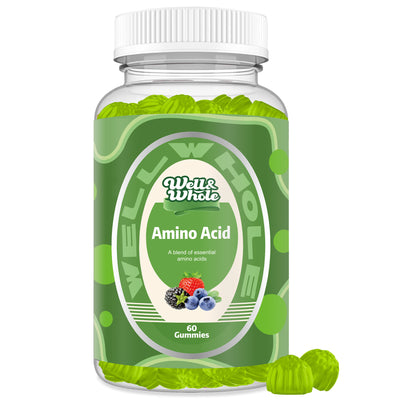
That’s where high‑quality supplements come in. A well‑formulated amino acid supplement can fill the gaps without requiring you to meticulously plan every meal. For example, well&whole offers a balanced blend of both essential and conditionally essential amino acids, designed to support muscle recovery, energy production, and overall vitality. The key is to look for products that specify the inclusion of all nine essential amino acids, not just a few isolated ones.
Long‑tail keyword integration: Many people search for “essential amino acids benefits for muscle growth” or “complete protein sources for vegans” – understanding these terms helps you see why variety matters. Whether you’re an athlete, a busy professional, or someone managing a plant‑based diet, ensuring you get all 20 amino acids (especially the essential nine) can make a real difference in how you feel day to day.
Summary: Complete proteins from animals are the easiest source, but plant‑based eaters can combine foods or use supplements like those from well&whole to meet their amino acid needs. The goal is to provide your body with all nine essential amino acids consistently.
The Role of Amino Acid Supplements in Modern Wellness
Supplements aren’t just for bodybuilders anymore. More people are turning to amino acid supplements to support everything from sleep (tryptophan) to stress reduction (glycine) and joint health (proline, glycine). The science behind amino acid supplementation is solid: when taken at the right times and in appropriate doses, these nutrients can enhance your body’s natural recovery processes.
For instance, leucine is a star player in muscle protein synthesis, while lysine is important for collagen formation and immune function. well&whole’s formula includes a carefully calibrated ratio of all essential amino acids, plus added B‑vitamins to aid absorption. This makes it a convenient option for anyone who wants to “complete” their diet without overhauling it.
Long‑tail keyword: If you’re researching “amino acid supplements for recovery after workout” or “best essential amino acids for energy” – you’ll see that timing and balance matter. Taking a supplement within 30 minutes after exercise, or on an empty stomach for better absorption, can maximize benefits. Always check with a healthcare professional, especially if you have existing health conditions.
Summary: Amino acid supplements offer targeted support for specific wellness goals. well&whole provides a comprehensive blend that fits seamlessly into a busy routine, helping you cover your daily requirements without guesswork.
Common Myths About Essential Amino Acids
One widespread misconception is that you need to eat all 20 essential amino acids at every meal. That’s not true – your body maintains an amino acid pool that can draw from over the course of a day. As long as you consume enough of the nine essential ones overall, your body will manage the rest.
Another myth: “Plant proteins are incomplete, so vegans can’t build muscle.” While individual plant proteins may lack one or two essential amino acids, eating a varied diet (legumes, grains, nuts, seeds, vegetables) easily covers all bases. And if you’re still concerned, a plant‑based amino acid supplement like the one from well&whole can provide peace of mind.
Long‑tail keyword: Searching for “can you get all essential amino acids from plants” and “do I need amino acid supplements if I eat enough protein” often leads people to realize that supplements are a tool, not a crutch. The best approach is to combine a balanced diet with smart supplementation when needed.
Summary: You don’t need to obsess over every meal, but consistency matters. Myths about incomplete proteins are largely outdated; with a little planning or a quality supplement, anyone can meet their amino acid needs.
Frequently Asked Questions
Q1: Are there really 20 essential amino acids, or just 9?
A: Technically, only nine are “essential” because your body cannot make them. But the phrase “20 essential amino acids” is commonly used to refer to the full set of 20 amino acids that your body uses to build proteins. well&whole’s supplement includes all nine essential ones, plus supportive ingredients.
Q2: Can I get all 20 amino acids from a vegan diet alone?
A: Yes. By eating a variety of plant foods – such as quinoa, tofu, tempeh, lentils, chickpeas, nuts, and seeds – you can obtain all nine essential amino acids over the course of a day. Many vegans also choose a supplement like well&whole to simplify the process.
Q3: How do I know if I need an amino acid supplement?
A: If you’re an athlete, recovering from illness, on a restrictive diet, or simply feel low on energy or muscle soreness, a supplement may help. Look for one that lists all essential amino acids and has transparent sourcing – well&whole provides a third‑party tested formula to ensure quality and purity.
References
- National Institutes of Health (NIH). “Amino Acids.” https://ods.od.nih.gov/factsheets/AminoAcids-HealthProfessional/
- Journal of the International Society of Sports Nutrition. “Essential amino acids and muscle recovery.” 2017.
- USDA FoodData Central. “Protein quality and amino acid profiles.” https://fdc.nal.usda.gov/
These statements have not been evaluated by the Food and Drug Administration. This product is not intended to diagnose, treat, cure, or prevent any disease.