The Office Worker's Leg Health Guide: Horse Chestnut Gummies for Standing & Sitting Jobs
Practical guide for office workers to support leg circulation during long hours of sitting and standing. How horse chestnut gummies, movement breaks, and simple habits prevent leg swelling, heaviness, and discomfort.

You sit at a desk for 8-10 hours. Your legs are motionless, dangling below you, with gravity pulling blood downward while your inactive calf muscles fail to pump it back up. By 3 PM, your ankles feel tight. By 5 PM, your shoes feel snugger than they did this morning. By the time you get home, your legs feel heavy, tired, and maybe a little swollen.
Or maybe you have a standing job—retail, healthcare, teaching—where you're on your feet all day. Your legs ache by hour 4, throb by hour 6, and by the end of your shift, you can feel the fluid pooling above your ankles.
Both scenarios share a root cause: gravity-assisted venous pooling, compounded by prolonged immobility (sitting) or prolonged orthostatic pressure (standing). Horse chestnut extract gummies from well&whole address this problem at its source, but they work best as part of a comprehensive leg health strategy.

Let's build that strategy.
The Desk Worker's Leg Problem: What's Actually Happening
Two things go wrong when you sit still for hours:
1. Venous Stasis: Your calf muscles are your "second heart"—each step you take, your calf contracts and squeezes the deep veins in your legs, pushing blood upward against gravity. One-way valves in those veins prevent backflow. When you sit without moving, the calf pump stops. Blood pools in the lower legs. Venous pressure increases.
A 2012 study in the European Journal of Applied Physiology measured popliteal vein blood flow in seated office workers: after 60 minutes of uninterrupted sitting, venous blood flow decreased by 40% compared to baseline. After 3 hours, the decrease exceeded 60%.
2. Increased Capillary Filtration Pressure: Elevated venous pressure is transmitted backward to the capillaries, increasing the pressure gradient that forces fluid out of capillaries and into surrounding tissues. This is the mechanism of dependent edema—the ankle and foot swelling that accumulates throughout the day.
Office workers who also have risk factors—age over 40, family history of varicose veins, pregnancy history (women), obesity, or a previous DVT—are compounding the gravity problem with pre-existing venous vulnerability.
Standing workers face a similar mechanism: The column of blood from the heart to the feet creates significant hydrostatic pressure. Without calf pump activation (standing still, not walking), venous return depends almost entirely on the small residual pressure from the arterial side—insufficient to overcome gravity without muscle assistance.
---
How Horse Chestnut Gummies Help Your Legs Survive the Workday
The aescin in horse chestnut extract works through three mechanisms directly relevant to the office/standing work scenario:
1. Capillary Sealing: Aescin reduces the permeability of small blood vessels, meaning less fluid leaks from your capillaries into the surrounding tissue of your ankles and feet. This is the primary anti-edema mechanism and the most directly relevant to the "swollen ankles at 5 PM" problem.
2. Venous Tone Support: Aescin mildly increases the tone (contractile state) of vein walls, helping them maintain a smaller diameter. Smaller vein diameter = higher blood flow velocity = better venous return against gravity.
3. Anti-Inflammatory Effect: Prolonged venous pooling triggers low-grade inflammation in the vein wall. Aescin's mild anti-inflammatory activity helps reduce this inflammation-driven venous dysfunction.
The P23 Horse Chestnut Protocol for Office/Standing Workers
| Time | Action | Why |
| Morning (with breakfast) | 1 serving P23 Horse Chestnut Gummies | Establishes therapeutic aescin levels for the workday |
| Mid-morning (10 AM) | 2-minute leg break (walk, calf raises) | Activates calf pump, briefly reducing venous pooling |
| Lunch break | 10-15 minute walk | Significant calf pump activation; sustained benefit |
| Mid-afternoon (2:30 PM) | 2-minute leg break + ankle circles | Re-activates calf pump during the afternoon slump |
| End of workday | Foot elevation at home (if possible) | Gravity-assisted venous drainage |
Pro Tip: Take your P23 gummies with breakfast, not on an empty stomach. The gummy format means you don't need water or a meal specifically for the supplement—just include it in your morning routine and let aescin's 10-19 hour half-life provide all-day venous support.
---
Movement Breaks: The "Micro-Dose" Approach to Calf Pump Activation
You can't do a full workout every hour. But you can do 60-120 seconds of targeted movement that makes a measurable difference in leg circulation.
The 90-Second Desk Leg Reset
Do this at your desk (or in a bathroom stall if you want privacy) every 90-120 minutes:
0:00-0:30 — Seated Ankle Pumps:
Sitting in your chair, rapidly point and flex your toes (full range of motion). This activates the calf pump without requiring you to stand. Aim for 30-40 repetitions in 30 seconds.
0:30-1:00 — Standing Calf Raises:
Stand up, hold onto your desk for balance, and do 15-20 controlled calf raises (rise onto toes, slowly lower). Full range of motion matters more than speed.
1:00-1:30 — Marching in Place:
30 seconds of gentle marching (lifting knees to hip height if possible). This activates the thigh muscle pump and increases overall lower-extremity blood flow.
Total time: 90 seconds. Total equipment: none. Benefits: calf pump activation, brief venous pressure reduction, temporary edema reduction.
Common Mistake: Thinking that fidgeting (bouncing your leg, tapping your foot) is enough. It's better than nothing, but the muscle contractions are too small and too brief to generate meaningful venous pumping. You need deliberate, full-range-of-motion muscle activation.
---
The Seated Posture Factor: How You Sit Affects Your Veins
Not all sitting positions are equal. Some sitting postures actively impair venous return:
Worst Sitting Position (The Leg-Crosser):
Crossing your legs at the knee compresses the popliteal vein behind the knee—the main deep vein returning blood from your lower leg. A 2015 study in Blood Pressure Monitoring found that leg crossing significantly increased venous pressure in the crossed leg, with the effect persisting for 5-10 minutes after uncrossing. If you must cross your legs, alternate which leg is on top.
Bad Sitting Position (The Chair Edge Sitter):
Sitting on the edge of your chair with no back support concentrates your body weight on a small area of your thighs, which can compress the femoral vein where it passes through the groin—especially if you're overweight.
Better Sitting Position (Supported Thighs):
Sit with your back against the chair, thighs fully supported by the seat (no "edge sitting"), and feet flat on the floor. Your knees should be at roughly 90 degrees, and the chair edge should not press into the back of your thighs.
Best Sitting Position (When Possible — Slight Leg Elevation):
A small footrest (even a box or ream of paper under your desk) that elevates your feet 4-6 inches above the floor slightly reduces the hydrostatic pressure column from heart to feet and makes it marginally easier for venous blood to return. The effect is modest but cumulative over an 8-hour day.
---
Standing Job Leg Protocol
If your job requires prolonged standing, the strategy shifts from "interrupt sitting" to "activate the pump while standing":
Heel-to-Toe Rocks (Every 20-30 Minutes):
Rock back onto your heels, then forward onto your toes. Repeat 10-15 times. This activates the calf pump without stepping away from your station.
Shift Weight Between Legs:
Prolonged equal weight-bearing = constant venous pressure in both legs. Shifting your weight from one leg to the other every few minutes alternates the pressure, giving each leg brief periods of lower venous pressure.
Use Anti-Fatigue Mats (If Available):
Anti-fatigue mats don't directly improve circulation, but they reduce muscle fatigue, which allows you to maintain subtle postural shifts and leg movements throughout your shift. Less leg muscle fatigue = more spontaneous movement = better calf pump activity.
Compression Socks + Horse Chestnut Gummies:
For standing workers with significant end-of-day leg symptoms, compression socks (15-20 mmHg) plus daily P23 horse chestnut gummies provide a two-pronged approach: mechanical compression from the outside + pharmacological capillary sealing from the inside. This combination is more effective than either approach alone.
---
Pro Tips for Office Leg Health
Tip 1: Drink Water (But Not Gallons)
Dehydration reduces blood volume, which doesn't directly hurt your veins but makes EVERYTHING harder for your cardiovascular system. Adequate hydration supports overall circulatory function. You don't need a gallon—just drink when you're thirsty and keep your urine pale yellow.
Tip 2: Limit Afternoon Sodium Bombs
The office snack drawer (chips, pretzels, salted nuts) and lunch takeout (high-sodium restaurant food) contribute to fluid retention that compounds the gravity-driven swelling problem. High sodium intake = more water retention = more fluid available to leak out of capillaries = worse end-of-day swelling. Keep your lunch and snacks relatively low-sodium.
Tip 3: Temperature Management
Heat causes vasodilation (vein widening), which can worsen venous pooling. Cold causes vasoconstriction (vein narrowing), which improves venous return. If your office is warm in the afternoon, a small desk fan directed at your legs can provide mild relief. If you're at home, a cool foot soak at the end of the day is both pleasant and circulatory-friendly.
Tip 4: The Evening Leg Elevation
When you get home, spend 10-15 minutes with your legs elevated above heart level (lying on the floor with your legs up a wall is the classic "legs up the wall" yoga pose). This uses gravity to drain the fluid that's accumulated in your lower legs all day. Blood and lymph flow downhill—make gravity work FOR your circulation for a change.
Tip 5: Don't Ignore One-Leg Symptoms
If one leg is consistently more swollen, painful, warm, or discolored than the other, this is NOT normal dependent edema—it could indicate a deep vein thrombosis (DVT). Asymmetrical leg symptoms warrant urgent medical evaluation, especially if they come on suddenly. Horse chestnut gummies are NOT a treatment for DVT.
---
Frequently Asked Questions
Q1: How soon will I notice less leg swelling after starting P23 gummies?
A: The capillary-sealing effect of aescin begins within hours of the first dose, but the clinical accumulation of benefit—noticeably less ankle swelling by end of day—typically takes 3-7 days of consistent use. The most reliable assessment: compare your end-of-day ankle appearance after 2 weeks of daily use to your baseline. Take a photo at 5 PM before starting, then again after 2 weeks, for an objective comparison.
Q2: Can I take horse chestnut gummies only on days when I know I'll be sitting a lot?
A: Consistent daily dosing produces better results than as-needed dosing because aescin's effects on capillary permeability and venous tone are cumulative and sustained with regular use. That said, taking P23 only on workdays (5 days on, 2 days off on weekends) is reasonable if your symptoms are exclusively work-related and resolve on days off. The half-life supports this pattern.
Q3: Will horse chestnut gummies prevent varicose veins if I don't have them yet?
A: There is no clinical evidence that horse chestnut prevents the development of varicose veins in people who don't have them. Aescin addresses edema, venous tone, and inflammation associated with existing venous insufficiency—it has not been studied for primary prevention. The best prevention for varicose veins remains maintaining a healthy weight, regular exercise (especially walking), and avoiding prolonged standing or sitting without movement.
Q4: I also get leg cramps during the workday—will P23 help with that?
A: Horse chestnut is not a muscle cramp remedy. Leg cramps in sedentary workers are more likely related to dehydration, electrolyte imbalances (magnesium, potassium), or prolonged static positioning causing muscle fatigue, rather than venous insufficiency per se. Address hydration, consider magnesium supplementation, and do the movement breaks described in this guide for cramp prevention.
Q5: Can I take P23 gummies with my blood pressure medication?
A: Horse chestnut does not significantly affect blood pressure at standard doses and has no known direct interactions with common antihypertensive medications (ACE inhibitors, ARBs, calcium channel blockers, thiazide diuretics, beta-blockers). However, always discuss new supplements with your prescribing physician, especially if you're on multiple medications.
Q6: How does the effectiveness of horse chestnut gummies compare to compression stockings?
A: These are complementary, not competitive. Compression stockings provide physical external pressure that mechanically prevents venous pooling and fluid extravasation. Horse chestnut gummies provide internal pharmacological support for capillary integrity and venous tone. Studies comparing the two directly are limited, but the general clinical consensus is that compression stockings (when worn consistently) provide greater edema reduction, while aescin provides additional anti-inflammatory and venous tone benefits that compression alone does not. Combining both provides the most comprehensive approach.
Q7: I take regular breaks and walk around—do I still need horse chestnut gummies?
A: Movement breaks are the most important intervention for office-related leg symptoms, and they should be your FIRST line of defense. If regular walking and movement breaks are sufficient to prevent end-of-day leg symptoms, you may not need horse chestnut supplementation. If movement alone isn't enough—if your legs still feel heavy, tired, or swollen despite good break habits—P23 gummies add the pharmacological dimension to your leg health strategy.
Q8: Can pregnancy-related leg swelling be managed with horse chestnut gummies?
A: No. Horse chestnut is NOT recommended during pregnancy or breastfeeding. The safety of aescin during pregnancy has not been established. Pregnancy-related edema should be managed with compression stockings, leg elevation, adequate hydration, and salt moderation, under the guidance of an obstetrician or midwife.
---
Conclusion: Small Habits, Big Difference
Office workers and standing professionals don't develop leg problems overnight—they accumulate over years of 8+ hours/day in venous-unfriendly positions. The solution accumulates the same way: small, consistent habits that protect your leg circulation shift after shift, day after day.
The formula is straightforward: horse chestnut gummies with breakfast (pharmacological capillary support), 90-second movement breaks every 90-120 minutes (mechanical calf pump activation), good seated/standing posture (reduce venous compression), leg elevation when you get home (gravity-assisted drainage), and adequate hydration with limited sodium.

None of these interventions is dramatic. Together, they can mean the difference between heavy, swollen legs at 5 PM and "I didn't think about my legs once today."
Shop Horse Chestnut Extract Gummies →
Related supplements
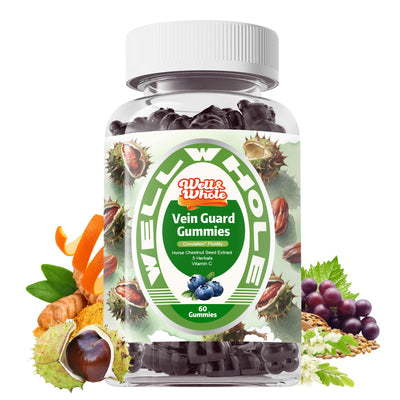
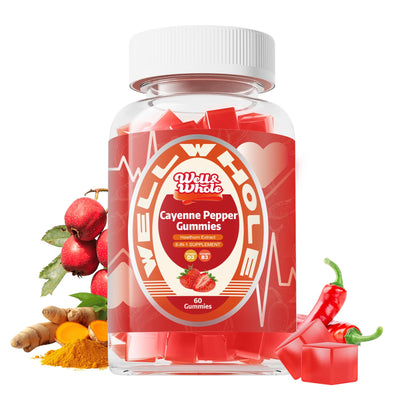
Putting it simply: if this is something you want to add to your routine, our Well&Whole Horse Chestnut Extract Gummies, Circulation Supplements for Legs and Cayenne Pepper Heart Health Gummies with Hawthorn & CoQ10 & Turmeric are a good place to start. The wider Heart Health collection is worth a look, and the CoQ10 range covers related formats.
These statements have not been evaluated by the Food and Drug Administration. This product is not intended to diagnose, treat, cure, or prevent any disease.