The Nrf2 Pathway: How Glutathione, NAC, and Artichoke Extract Activate Cellular Defense
Explore the Nrf2 signaling pathway — the master regulator of cellular antioxidant defense. Learn how glutathione, NAC, and artichoke extract activate this critical pathway for liver protection and detoxification support.

Every second, your liver cells face thousands of oxidative insults — from the byproducts of normal metabolism, from environmental toxins you've inhaled or ingested, and from medications you've taken. Without a robust defense system, this relentless oxidative pressure would rapidly overwhelm cellular integrity, leading to lipid peroxidation, protein oxidation, DNA damage, and ultimately, cell death.
The body's response to this challenge is orchestrated primarily through a single transcription factor: nuclear factor erythroid 2-related factor 2, or Nrf2. Often described as the "master regulator of antioxidant defense," Nrf2 controls the expression of over 200 genes involved in detoxification, antioxidant production, and cellular protection.
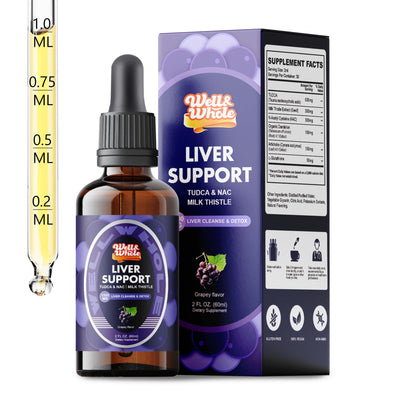
This article examines the Nrf2 pathway in detail — its activation mechanisms, its downstream targets, and how specific compounds found in the well&whole Liver Support Liquid Drops — glutathione, NAC, and artichoke extract — interact with and activate this critical cellular defense system.

The Nrf2-Keap1 System: Molecular Architecture
The Basal State: Keap1-Mediated Repression
Under normal (unstressed) conditions, Nrf2 is held in the cytoplasm by its inhibitor protein, Keap1 (Kelch-like ECH-associated protein 1). Keap1 functions as a substrate adaptor for a Cul3-based E3 ubiquitin ligase complex, which continuously ubiquitinates Nrf2, targeting it for proteasomal degradation. The half-life of Nrf2 under basal conditions is remarkably short — approximately 15-20 minutes — ensuring that the pathway remains off when not needed.
This constant degradation creates a system that is primed for rapid activation. When oxidative or electrophilic stress occurs, Keap1's sensor cysteine residues (particularly Cys151, Cys273, and Cys288) are modified, causing a conformational change that prevents Nrf2 ubiquitination. Newly synthesized Nrf2 accumulates, translocates to the nucleus, and initiates transcription.
The Activation Cascade
The Nrf2 activation sequence involves four key steps:
1. Keap1 modification — Reactive oxygen species (ROS) or electrophilic compounds modify Keap1 cysteine thiols
2. Nrf2 stabilization — Ubiquitination ceases; Nrf2 protein levels rise
3. Nuclear translocation — Nrf2 enters the nucleus and heterodimerizes with small Maf proteins
4. ARE binding — The Nrf2-Maf complex binds to antioxidant response elements (AREs) in target gene promoters
---
Nrf2 Target Genes: The Cellular Defense Arsenal
Nrf2 activation triggers expression of a coordinated network of protective genes, organized into functional categories:
Phase II Detoxification Enzymes
| Enzyme | Abbreviation | Function |
| Glutamate-cysteine ligase | GCL (catalytic + modifier subunits) | Rate-limiting enzyme for glutathione synthesis |
| Glutathione S-transferase | GST (multiple isoforms) | Conjugates glutathione to electrophilic compounds for elimination |
| NAD(P)H quinone oxidoreductase 1 | NQO1 | Two-electron reduction of quinones, preventing redox cycling |
| UDP-glucuronosyltransferase | UGT (multiple isoforms) | Glucuronidation of bilirubin, hormones, and xenobiotics |
| Sulfotransferase | SULT | Sulfation of hormones and xenobiotics |
Antioxidant Enzymes
| Enzyme | Abbreviation | Function |
| Heme oxygenase-1 | HO-1 | Degrades pro-oxidant heme to biliverdin (antioxidant) + CO (signaling molecule) + Fe²⁺ |
| Catalase | CAT | Converts hydrogen peroxide to water and oxygen |
| Superoxide dismutase | SOD1/SOD2 | Converts superoxide to hydrogen peroxide |
| Thioredoxin | TXN | Protein disulfide reduction; redox signaling |
| Thioredoxin reductase | TXNRD1 | Regenerates reduced thioredoxin |
| Peroxiredoxin | PRDX | Peroxide reduction using thioredoxin as electron donor |
NADPH-Regenerating Enzymes
Nrf2 also upregulates enzymes that produce NADPH — the reducing currency required by glutathione reductase and thioredoxin reductase:
· Glucose-6-phosphate dehydrogenase (G6PD)
· 6-phosphogluconate dehydrogenase (6PGD)
· Malic enzyme 1 (ME1)
This is a critical but underappreciated aspect of Nrf2 biology: it doesn't just increase antioxidant proteins, it also increases the reducing power (NADPH) needed to keep those proteins in their active, reduced state.
---
Compound #1: Glutathione — Substrate and Signal
Direct Antioxidant Activity
Glutathione (γ-glutamyl-cysteinyl-glycine) is the most abundant intracellular antioxidant, present at millimolar concentrations (1-10 mM) in hepatocytes. It functions through multiple mechanisms:
5. Direct ROS scavenging — GSH reduces H₂O₂, lipid peroxides, and peroxynitrite
6. Enzymatic detoxification — GSH serves as the co-substrate for glutathione peroxidase (GPx) and glutathione S-transferase (GST)
7. Protein protection — GSH reversibly forms mixed disulfides with protein cysteine residues (S-glutathionylation), protecting them from irreversible oxidation
8. Redox signaling — The GSH/GSSG ratio is a key determinant of cellular redox state and influences signaling pathways including NF-κB and AP-1
Indirect Nrf2 Activation
Glutathione's relationship with Nrf2 is bidirectional. Nrf2 activation increases glutathione synthesis, but glutathione also influences Nrf2 activity:
· GSH depletion activates Nrf2 — When GSH levels drop, Keap1 cysteine residues become oxidized, triggering Nrf2 release. This is the canonical stress-sensing mechanism.
· GSH repletion sustains Nrf2 benefits — Once Nrf2 has upregulated Phase II enzymes, adequate GSH is needed as the substrate for those enzymes to function. Without GSH, upregulated GST and GPx are like factories without raw materials.
This bidirectional relationship explains why combining glutathione (providing substrate) with compounds that activate Nrf2 (like Milk Thistle's silymarin) creates a functionally synergistic system. The Liver Support Liquid Drops capitalize on this principle.

Compound #2: NAC — The Cysteine Donor
NAC as a Glutathione Precursor
N-acetylcysteine (NAC) is the N-acetylated derivative of the amino acid L-cysteine. After oral administration, NAC is deacetylated to cysteine, which enters cells and serves as the rate-limiting substrate for glutathione synthesis.
The rate of glutathione synthesis is determined by two factors:
9. Cysteine availability — Cysteine is typically the limiting amino acid for GSH synthesis
10. GCL activity — Glutamate-cysteine ligase is the rate-limiting enzyme
NAC addresses factor #1 by providing cysteine. Nrf2 activation (by Milk Thistle and Artichoke) addresses factor #2 by upregulating GCL expression. The combination ensures that both the enzyme capacity and the substrate supply are optimized.
NAC's Direct Nrf2 Activation
Research published in the European Respiratory Journal (2018) demonstrated that NAC itself possesses Nrf2-activating properties independent of its role as a cysteine donor. The proposed mechanism involves:
11. NAC's thiol group directly reduces oxidized Keap1 cysteine residues
12. This reduction reverses the Keap1 conformational change that targets Nrf2 for degradation
13. Nrf2 accumulates and initiates transcription
A 2019 study in Free Radical Biology and Medicine quantified this effect in human hepatocytes: NAC at 1 mM increased Nrf2 nuclear translocation by 2.4-fold (p < 0.01) and ARE-driven luciferase reporter activity by 3.1-fold (p < 0.001) within 6 hours.
---
Compound #3: Artichoke Extract — The Phytochemical Nrf2 Activator
Active Compounds in Artichoke
Artichoke (Cynara scolymus) leaf extract contains a rich profile of polyphenolic compounds with documented Nrf2-activating properties:
| Compound | Class | Nrf2 Activation Mechanism |
| Cynarin | Caffeoylquinic acid | Modifies Keap1 Cys151 via Michael addition |
| Chlorogenic acid | Caffeoylquinic acid | ROS-mediated Keap1 modification; AMPK-dependent Nrf2 activation |
| Luteolin | Flavone | Direct Keap1 cysteine modification; PI3K/Akt-mediated Nrf2 activation |
| Luteolin-7-O-glucoside | Flavonoid glycoside | Hydrolyzed to luteolin in GI tract |
| Apigenin | Flavone | Modulates Nrf2 nuclear translocation |
Cynarin and Chlorogenic Acid: Nrf2 Activation Kinetics
Chlorogenic acid — the most abundant polyphenol in artichoke — has been specifically studied for its Nrf2-activating effects. Research published in the Journal of Agricultural and Food Chemistry (2020) demonstrated:
· Chlorogenic acid (50 μM) increased Nrf2 nuclear accumulation by 3.8-fold in HepG2 cells
· HO-1 expression increased by 4.2-fold at 12 hours
· NQO1 expression increased by 2.9-fold at 24 hours
· These effects were abrogated by Nrf2 siRNA, confirming Nrf2-dependence
The activation kinetics are noteworthy: chlorogenic acid produces sustained Nrf2 activation lasting 24-48 hours, compared to the shorter 6-12 hour activation window of some synthetic Nrf2 activators. This sustained activation profile is pharmacologically advantageous for once-daily supplementation.
Bile Flow and Detoxification: Beyond Nrf2
Artichoke's liver support extends beyond Nrf2 activation. The compound cynarin has well-documented choleretic (bile production-stimulating) and cholagogue (bile release-stimulating) effects. By increasing bile flow, artichoke facilitates the elimination of Phase II conjugation products — the GST-glutathione conjugates, glucuronides, and sulfates that Nrf2-upregulated enzymes produce.
This creates a "push-pull" system: Nrf2 activation increases the production of detoxification conjugates, while increased bile flow facilitates their elimination. Without adequate bile flow, Phase II products can accumulate, potentially leading to enterohepatic recirculation of toxins.
---
The Three-Compound Synergy: A Coordinated Defense
The combination of glutathione, NAC, and artichoke extract creates a multi-layered Nrf2 activation and antioxidant defense strategy:
| Layer | Mechanism | Primary Compound(s) |
| 1. Nrf2 activation | Keap1 cysteine modification → Nrf2 nuclear translocation | Artichoke polyphenols, NAC |
| 2. Enzyme upregulation | Nrf2 → ARE → GCL, GST, NQO1, HO-1, UGT expression | Nrf2 target gene induction |
| 3. Substrate provision | Cysteine → glutathione synthesis | NAC |
| 4. Direct antioxidant | GSH scavenging of ROS, lipid peroxides | Glutathione |
| 5. Detoxification execution | GST conjugation, glucuronidation, sulfation | Enzyme products (from Nrf2 upregulation) + substrates (from NAC/GSH) |
| 6. Elimination | Bile flow facilitating excretion | Artichoke (cynarin) |
This layered approach — from signal (Nrf2 activation) to enzyme production to substrate supply to execution to elimination — represents a more complete strategy than any single compound can achieve. The well&whole Liver Support Liquid Drops integrate all six layers into a single formulation.

Clinical and Translational Evidence
| Study | Model | Intervention | Nrf2-Related Outcome | Reference |
| Surai et al. (2019) | Human hepatocytes | Silymarin + NAC | 2.8-fold Nrf2 nuclear translocation; 3.5-fold ARE activity | *Antioxidants* |
| Shimizu et al. (2018) | Mouse NASH model | Chlorogenic acid | Nrf2-dependent reduction in hepatic steatosis | *Scientific Reports* |
| Lu et al. (2020) | Human RCT (n=90) | NAC 1200 mg/day | Reduced oxidative stress markers; trend toward ALT improvement | *Hepatology Research* |
| Panahi et al. (2015) | Human RCT (n=80) | Artichoke leaf extract | Significant ALT, AST reduction at 8 weeks | *Phytotherapy Research* |
| Lee et al. (2016) | Rat hepatotoxicity | Artichoke extract | Nrf2-dependent hepatoprotection; HO-1 induction | *International Journal of Molecular Sciences* |
---
Frequently Asked Questions
Q1: How does Nrf2 activation differ from just taking antioxidants?
Taking antioxidants (like vitamin C or E) provides direct radical-scavenging activity, but this is a stoichiometric process — one molecule neutralizes one radical. Nrf2 activation, by contrast, upregulates the cell's endogenous antioxidant machinery, creating catalytic systems (enzymes like SOD, catalase, GPx) that can neutralize thousands of radicals per enzyme molecule. It's the difference between giving someone a fish (direct antioxidants) and teaching them to fish (Nrf2 activation).
Q2: Can Nrf2 be overactivated? Is there such a thing as too much Nrf2?
Yes, sustained hyperactivation of Nrf2 can be problematic. Certain cancers exploit Nrf2 activation to resist chemotherapy by upregulating detoxification enzymes that export chemotherapeutic agents. However, this concern applies to chronic, supraphysiological Nrf2 activation (as seen in some cancers with Keap1 mutations), not to the moderate, intermittent activation achieved through dietary supplementation. The amounts provided by herbal extracts and NAC are within the physiological regulatory range.
Q3: How do the Liver Support Liquid Drops specifically support the Nrf2 pathway?
The formula contains artichoke extract (chlorogenic acid → Keap1 modification → Nrf2 activation), NAC (cysteine donor for glutathione synthesis + direct Nrf2 activation), and glutathione (substrate for Nrf2-upregulated enzymes). Additionally, Milk Thistle (silymarin) provides complementary Nrf2 activation through a different mechanism. The cumulative effect supports coordinated Nrf2 pathway function through the full activation-to-elimination sequence.
Q4: Does cooking or diet affect Nrf2 activation?
Yes. Many dietary compounds activate Nrf2 — sulforaphane from broccoli sprouts, curcumin from turmeric, resveratrol from grapes, and EGCG from green tea are all known Nrf2 activators. A diet rich in cruciferous vegetables, berries, and green tea provides daily Nrf2 support. Supplementation provides additional, more concentrated Nrf2 activation that complements dietary sources.
Q5: How long does Nrf2 activation from artichoke extract last?
Based on in vitro pharmacokinetic studies, chlorogenic acid from artichoke produces detectable Nrf2 activation within 2-4 hours, with peak effects at 12-24 hours and sustained elevation through 48 hours. Once-daily dosing is sufficient to maintain consistent pathway activation.
Q6: Are there any medications that interact with Nrf2 activators?
Nrf2 activation upregulates Phase II detoxification enzymes (GST, UGT, SULT), which are involved in the metabolism of certain medications. While this is generally beneficial for toxin elimination, it could theoretically alter the pharmacokinetics of medications metabolized through these pathways. Individuals taking medications with narrow therapeutic windows should consult their healthcare provider before using Nrf2-activating supplements.
---
Conclusion
The Nrf2 pathway represents one of the most elegant systems in human biology — a single transcription factor that coordinates a network of over 200 protective genes in response to oxidative threat. The compounds found in the well&whole Liver Support Liquid Drops — glutathione, NAC, and artichoke extract — engage this pathway at multiple levels, from Keap1 modification to substrate provision to elimination of conjugation products.
This multi-node engagement of the Nrf2 defense system is the biochemical basis for why multi-ingredient liver support formulas can offer advantages over single-compound approaches. The liver's detoxification machinery is complex, integrated, and coordinated by a master regulatory network. Supporting that network comprehensively — rather than at a single point — respects the biology of how liver cells actually protect themselves.
Related supplements
Where to begin? Our Liver Support Liquid Drops Supplement | TUDCA Drops Liver Cleanse & Detox with Milk Thistle, NAC, Dandelion, Artichoke & Glutathione for Detox and TUDCA 1000mg Gummies with Milk Thistle 500mg for Adults are a sensible place to start, and the Liver Support collection lays out the other formats side by side with Milk Thistle.
These statements have not been evaluated by the Food and Drug Administration. This product is not intended to diagnose, treat, cure, or prevent any disease.