The Nine Essential Amino Acids Are Found in These Key Foods

The Nine Essential Amino Acids Are Found in These Key Foods
Understanding where the nine essential amino acids are found is crucial for anyone looking to optimize their diet, support muscle repair, or maintain overall health. These amino acids—histidine, isoleucine, leucine, lysine, methionine, phenylalanine, threonine, tryptophan, and valine—cannot be produced by the body and must come from food or supplements. For a保健品贸易 company like well&whole, this knowledge helps guide customers toward complete protein sources and effective supplementation. Below, we break down the best dietary sources, plant-based strategies, and how to ensure adequate intake.
What Are the Nine Essential Amino Acids?
The nine essential amino acids serve as the building blocks for proteins, enzymes, and neurotransmitters. Each plays a unique role: leucine triggers muscle protein synthesis, tryptophan supports serotonin production, and lysine aids calcium absorption and collagen formation. The body requires a steady supply from external sources because it lacks the enzymes to synthesize them. According to the World Health Organization (WHO), adult requirements vary from about 10 mg/kg of body weight per day for tryptophan to 39 mg/kg for leucine (WHO/FAO/UNU, 2007).
Key takeaway: Without adequate intake of all nine essential amino acids, the body cannot repair tissues, produce hormones, or maintain immune function.
Top Animal-Based Sources of Complete Proteins
Animal products are considered complete proteins because they naturally contain all nine essential amino acids in sufficient proportions. Eggs, for instance, provide about 6 grams of protein per large egg, with a balanced amino acid profile. Chicken breast offers roughly 31 grams of protein per 100 grams, rich in leucine and lysine. Greek yogurt is another excellent source, delivering around 10 grams of protein per 100 grams along with calcium and probiotics.
Fish like salmon and tuna also rank high: a 100-gram serving of cooked salmon provides about 22 grams of protein and all essential amino acids, particularly methionine. Red meats such as beef are dense in histidine and valine. For those who consume dairy, whey protein—often used in supplements—is rapidly absorbed and contains high levels of branched-chain amino acids (BCAAs). A 2020 review in Nutrients confirmed that animal-derived proteins have a higher digestibility score than most plant sources (van Vliet et al., 2020).
Key takeaway: Meat, poultry, fish, eggs, and dairy remain the most reliable sources of the nine essential amino acids, making them a cornerstone for athletes and health-conscious individuals.
Plant-Based Sources and How to Combine Them
Plant-based eaters often worry about whether the nine essential amino acids are found in adequate amounts in their diet. While most plant foods are incomplete (lacking one or more essential amino acids), strategic combinations create complete profiles. For example, rice and beans together cover all nine: rice provides methionine but is low in lysine, while beans are rich in lysine but lack methionine. Hummus with whole wheat pita (chickpeas plus wheat) works similarly.
Soy products stand out as exceptions. Tofu, tempeh, and edamame are complete proteins—one cup of cooked soybeans offers about 29 grams of protein and all essential amino acids. Quinoa is another plant-based complete protein, with 8 grams of protein per cooked cup and a good balance of amino acids. Buckwheat and hemp seeds also contain all nine, though their proportions may be slightly lower than animal sources.
For vegans aiming to hit high leucine levels, a list of complete protein foods includes chia seeds, pumpkin seeds, and spirulina. However, the Digestible Indispensable Amino Acid Score (DIAAS) for plant proteins is often lower due to antinutrients like phytates. A 2021 study in the Journal of Nutrition noted that combining legumes with grains improves DIAAS scores significantly (Moughan, 2021).
Key takeaway: Plant-based eaters can meet their needs by pairing complementary proteins or choosing soy, quinoa, and hemp. For vegan essential amino acids sources, variety is key.
Why well&whole Supplements Can Help Fill the Gaps
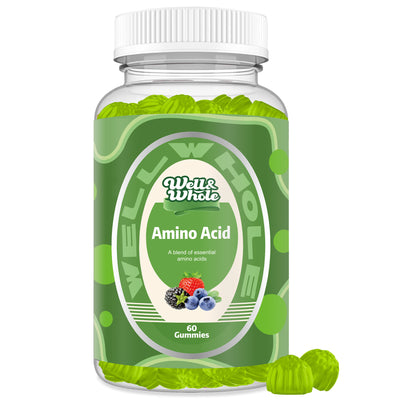
Even with a well-planned diet, some individuals—such as athletes, older adults, or people with restrictive diets—may not consistently consume all nine essential amino acids. That’s where well&whole comes in. Our essential amino acids supplement is formulated to provide a precise ratio mirroring human muscle tissue, supporting recovery and reducing muscle breakdown. Each serving delivers 5 grams of pure essential amino acids, with no fillers or artificial additives.
For those on plant-based diets, our powder blends seamlessly into smoothies, oatmeal, or water. Clinical research shows that supplementing with essential amino acids can enhance protein synthesis by up to 30% in older adults, especially when taken after exercise (Paddon-Jones et al., 2004). Unlike single BCAAs, a complete blend ensures all nine are present, avoiding potential imbalances.
Key takeaway: When dietary gaps persist, a high-quality supplement like well&whole ensures you never miss out on the nine essential amino acids your body requires daily.
How to Ensure You Get Enough Essential Amino Acids
To maintain optimal levels, aim for a dietary protein intake of 0.8–1.2 grams per kilogram of body weight, spread across meals. Focus on whole foods: eggs at breakfast, chicken or tofu at lunch, and fish or legumes at dinner. For athletes, the American College of Sports Medicine recommends 1.2–2.0 g/kg, with an emphasis on leucine-rich sources. Tracking your intake using apps like MyFitnessPal can highlight if you’re lacking in any essential amino acid.
If you find it challenging to meet needs through food alone—especially if you’re training hard or recovering from illness—the best essential amino acids supplement from well&whole offers a convenient, science-backed solution. Always consult a healthcare provider before starting any new supplement regimen.
Key takeaway: Combining a varied diet with targeted supplementation is the most effective strategy to ensure your body gets all nine essential amino acids every day.
Frequently Asked Questions (FAQ)
1. Can I get all nine essential amino acids from a vegan diet? Yes, by combining complementary plant proteins (e.g., rice and beans) or consuming complete plant sources like soy, quinoa, and hemp seeds. However, many vegans benefit from supplementing with a product like well&whole to ensure optimal intake, especially if they have higher protein needs.
2. What happens if I don’t get enough of one essential amino acid? A deficiency in any one essential amino acid can impair protein synthesis, leading to muscle wasting, weakened immunity, and poor wound healing. This is why consuming a complete protein or a balanced supplement is critical.
3. Are essential amino acid supplements better than BCAAs? Yes, because BCAAs (leucine, isoleucine, valine) represent only three of the nine essential amino acids. A full essential amino acid supplement ensures all nine are present, which stimulates a more robust anabolic response, as confirmed by research in The American Journal of Clinical Nutrition (Paddon-Jones et al., 2004).
References:
- WHO/FAO/UNU. (2007). Protein and amino acid requirements in human nutrition. World Health Organization Technical Report Series, 935.
- van Vliet, S., et al. (2020). Protein quality and amino acid composition of animal-based and plant-based protein sources. Nutrients, 12(6), 1657.
- Moughan, P. J. (2021). Dietary protein quality and human health: The DIAAS concept. Journal of Nutrition, 151(1), 5–11.
- Paddon-Jones, D., et al. (2004). Essential amino acid and carbohydrate supplementation ameliorates muscle protein loss in humans during 28 days bedrest. The American Journal of Clinical Nutrition, 80(2), 308–314.
These statements have not been evaluated by the Food and Drug Administration. This product is not intended to diagnose, treat, cure, or prevent any disease.