The Essential Amino Acids Quizlet: A Complete Guide for Better Health

The Essential Amino Acids Quizlet: A Complete Guide for Better Health
If you have ever searched for "the essential amino acids quizlet" online, you likely want a clear, organized breakdown of what these nutrients are and why they matter. This guide covers everything from the essential amino acids list to practical ways to incorporate them into your daily routine. Whether you are a fitness enthusiast, a student studying biochemistry, or someone looking to optimize their nutrition, this article will help you master the essentials — just like a quizlet flashcard deck, but with deeper context.
What Are Essential Amino Acids?
Amino acids are the building blocks of protein. The human body requires 20 different amino acids to function properly, but nine of them are classified as essential because your body cannot produce them on its own. They must come from food or supplements. According to the National Institutes of Health (NIH), the nine essential amino acids are: histidine, isoleucine, leucine, lysine, methionine, phenylalanine, threonine, tryptophan, and valine (NIH, 2023). Each one plays a distinct role — from muscle repair to neurotransmitter production.
To sum up: Essential amino acids are non‑negotiable for health. Without adequate intake from diet or supplementation, your body cannot synthesize proteins needed for tissue growth, enzyme function, and immune support.
Why Are Essential Amino Acids Important for Your Body?
Understanding the benefits of essential amino acids goes beyond basic nutrition. Leucine, for example, is a key trigger for muscle protein synthesis, making it critical for athletes and older adults aiming to preserve muscle mass. Lysine supports calcium absorption and collagen formation, while tryptophan is a precursor to serotonin and melatonin, influencing mood and sleep. A deficiency in any one essential amino acid can lead to fatigue, weakened immunity, and impaired recovery.
Research published in the Journal of the International Society of Sports Nutrition highlights that consuming a complete profile of essential amino acids before or after exercise can enhance recovery and reduce muscle soreness (JISSN, 2021). For the general population, maintaining adequate levels supports overall vitality. This is where a supplement like well&whole can fill gaps left by modern diets.
In summary: The nine essential amino acids are not just optional extras — they are foundational for energy, metabolism, and long‑term health. Prioritizing them in your daily regimen helps your body perform at its best.
How to Get Essential Amino Acids from Your Diet and Supplements
The Role of Complete Proteins
Complete proteins — those that contain all nine essential amino acids in sufficient amounts — are primarily found in animal sources such as meat, eggs, dairy, and fish. Plant‑based options like quinoa, soy, and buckwheat also qualify, but most plant proteins are incomplete. For vegetarians and vegans, combining different plant sources (e.g., rice and beans) is a common strategy. However, modern lifestyles often make it challenging to meet daily needs solely through food. This is where high‑quality supplements step in.
well&whole’s Approach to Amino Acid Supplementation
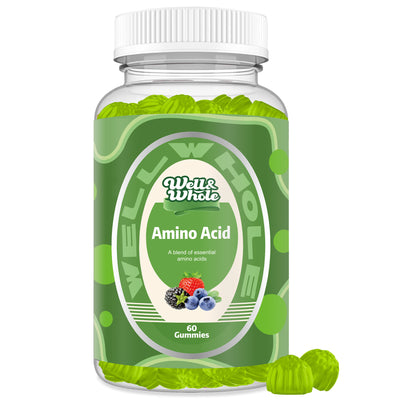
As a health and wellness company, well&whole focuses on delivering precisely formulated essential amino acids supplements that bridge nutritional gaps. Their products are designed to provide a balanced ratio of all nine essentials, with an emphasis on absorption and bioavailability. For example, their powdered blend can be mixed into water or a smoothie for a quick post‑workout boost. well&whole also uses third‑party testing to ensure purity, so you know exactly what you are putting into your body.
To wrap up: Whether through whole foods or supplements, securing your essential amino acid intake is a straightforward step toward better health. For convenience and consistency, a trusted brand like well&whole can make all the difference.
The Essential Amino Acids Quiz: Test Your Knowledge
A quick mental quiz can reinforce what you have learned — just like a real quizlet. Try these three questions:
- How many essential amino acids are there? (Answer: 9)
- Which essential amino acid is most associated with muscle growth? (Answer: Leucine)
- Can your body store essential amino acids for later use? (Answer: No — they must be consumed daily because there is no storage pool.)
This kind of active recall helps cement the information. For a deeper dive, look for the essential amino acids foods chart on well&whole’s website, which lists top sources for each amino acid.
In conclusion: Testing yourself on facts like these turns passive reading into active learning. Use this quiz method whenever you study nutrition topics — it works.
Common Myths About Essential Amino Acids
Myth 1: "You can get all essential amino acids from any single plant food."
Reality: Only a few plant foods (e.g., quinoa, soy) are complete proteins. Most require complementary pairings.
Myth 2: "More is always better."
Reality: Excess essential amino acids are simply excreted or converted to energy. Sticking to recommended amounts (around 0.8 g of protein per kg of body weight for basics, with higher needs for athletes) is optimal.
Myth 3: "Supplements are unnecessary if you eat well."
Reality: Even with a balanced diet, factors like stress, illness, or intense training can increase requirements. A supplement can offer a convenient safety net.
In summary: Debunking these myths helps you make informed decisions. Rely on credible sources — such as the World Health Organization’s protein recommendations (WHO, 2007) — rather than hearsay.
Frequently Asked Questions
1. What are the nine essential amino acids?
The nine are histidine, isoleucine, leucine, lysine, methionine, phenylalanine, threonine, tryptophan, and valine. They are essential because your body cannot synthesize them. (Source: NIH, 2023)
2. How much essential amino acids do I need daily?
Daily requirements vary by age, weight, and activity level. The WHO suggests that adults need about 0.8 g of protein per kg of body weight, with essential amino acids comprising roughly 30–40% of that total. Athletes may need up to 1.2–2.0 g/kg. (Source: WHO/FAO/UNU, 2007)
3. Can I get all essential amino acids from plant-based foods?
Yes, but only if you eat a variety of plant proteins throughout the day. Quinoa, soy, and amaranth are complete plants. For others, combine legumes with grains (e.g., beans + rice) to form a complete profile. well&whole’s plant‑based essential amino acid supplement is also an option for vegans.
These statements have not been evaluated by the Food and Drug Administration. This product is not intended to diagnose, treat, cure, or prevent any disease.