The Difference Between Essential and Nonessential Amino Acids

The Difference Between Essential and Nonessential Amino Acids
Amino acids are the building blocks of protein, and they play a fundamental role in nearly every biological process in your body. But not all amino acids are created equal. Understanding the difference between essential and nonessential amino acids is crucial for anyone interested in nutrition, fitness, or overall health. Whether you’re an athlete looking to optimize recovery or someone simply wanting to support your body’s daily functions, this distinction can guide your dietary choices and supplement decisions.
What Are Essential Amino Acids?
Essential amino acids are the nine amino acids that your body cannot produce on its own. They must come from food or supplements. These include histidine, isoleucine, leucine, lysine, methionine, phenylalanine, threonine, tryptophan, and valine (National Institutes of Health, 2023). Without a steady supply from your diet, your body cannot synthesize proteins needed for muscle repair, enzyme production, hormone regulation, and immune function.
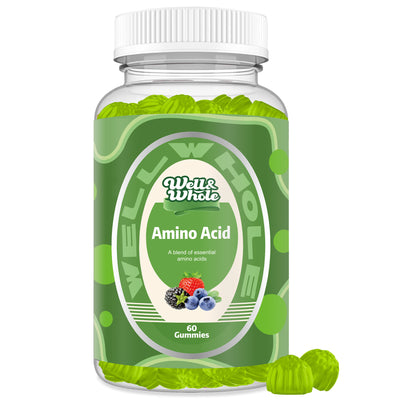
Sources of essential amino acids are typically complete proteins found in animal products like meat, eggs, dairy, and fish. However, plant-based foods such as quinoa, soy, and buckwheat also provide all nine. For those who struggle to meet their needs through diet alone, amino acid supplements can fill the gap. well&whole offers a high-quality essential amino acid blend designed to support muscle protein synthesis and recovery.
Summary: Essential amino acids are indispensable because your body cannot make them. They must be consumed regularly to maintain health, and a deficiency can impair protein synthesis and overall bodily functions.
What Are Nonessential Amino Acids?
Nonessential amino acids, despite the name, are anything but unimportant. The term “nonessential” simply means your body can synthesize them from other amino acids or metabolic pathways. There are 11 nonessential amino acids: alanine, arginine, asparagine, aspartic acid, cysteine, glutamic acid, glutamine, glycine, proline, serine, and tyrosine (U.S. National Library of Medicine, 2022). They play critical roles in detoxification, neurotransmitter production, and tissue repair.
For example, glutamine is a key fuel for immune cells, and glycine is involved in collagen formation. Even though your body can produce them, certain conditions—like intense exercise, illness, or stress—may increase demand beyond what your body can synthesize. In such cases, nonessential amino acid function becomes a limiting factor in recovery. That’s why many athletes include supplements that support these amino acids, especially for gut health and muscle repair.
Summary: Nonessential doesn’t mean unnecessary. Your body can make them, but under stress or high physical demand, additional dietary intake can be beneficial. Understanding their roles helps you tailor your nutrition.
Why the Distinction Matters for Health and Supplementation
Knowing the difference is more than academic—it directly impacts how you plan your diet and choose supplements. Essential amino acids are the priority because you cannot rely on your body to produce them. If you’re following a plant-based diet, you need to combine different plant proteins to ensure you get all nine. On the other hand, nonessential amino acids may become conditionally essential when your body’s synthesis capacity is overwhelmed.
For a health and wellness supplement brand like well&whole, this distinction guides product formulation. Our essential amino acid supplements are designed to provide a precise ratio that mimics natural protein sources, while our complete protein blends include both essential and nonessential types for comprehensive support. The benefits of essential amino acids are well-documented: improved muscle mass, reduced soreness, and better nitrogen balance (Tipton et al., 2018, Journal of the International Society of Sports Nutrition). Meanwhile, nonessential ones like glutamine support gut barrier integrity (Zuhl et al., 2014, Nutrients).
Summary: Prioritize essential amino acids in your diet, but don’t overlook nonessential ones during periods of high stress. Supplements can help bridge gaps in both categories.
How to Ensure You Get Enough Essential Amino Acids
The easiest way to ensure adequate intake is to consume high-quality protein at each meal. For omnivores, this means including eggs, chicken, fish, or dairy. For vegetarians and vegans, combining legumes with grains (like rice and beans) or eating soy products can cover all bases. But modern lifestyles often make it hard to hit these targets consistently. That’s where amino acid supplements for muscle growth come in.
well&whole offers a pure essential amino acid powder that dissolves easily and tastes neutral. It’s ideal for post-workout recovery, travel, or busy mornings when a full meal isn’t possible. We recommend taking it within 30 minutes after exercise to maximize muscle protein synthesis. Additionally, pairing it with a carbohydrate source can enhance absorption. If you’re concerned about nonessential amino acid function during intense training, our complete protein formulas also include key conditionally essential ones like arginine and glutamine.
Summary: Focus on whole food sources first, but supplement with high-quality essential amino acids when needed. well&whole provides targeted products to support your unique needs.
Frequently Asked Questions
Q1: Can I get all essential amino acids from a plant-based diet?
Yes, but you need to strategically combine different plant proteins. For example, eating whole grains with legumes (like rice and beans) or consuming isolated soy or pea protein can provide all nine essential amino acids. However, plant-based sources are often lower in one or two amino acids, so careful planning—or a supplement like well&whole—can help.
Q2: Are nonessential amino acids completely unnecessary if I eat a normal diet?
No. “Nonessential” only means your body can produce them. They are still vital for functions like collagen production, neurotransmission, and immune support. If you are under physical stress, illness, or recovering from injury, your body may not keep up, making them “conditionally essential.” Supplementing with them can aid recovery.
Q3: Do amino acid supplements really improve athletic performance?
Evidence shows that essential amino acid supplementation can enhance muscle protein synthesis, reduce exercise-induced muscle damage, and speed recovery when taken around workouts (Paslakos et al., 2014, Journal of Nutrition). Nonessential amino acids like glutamine may also reduce immune suppression after intense training. For best results, choose a reputable brand like well&whole with a balanced profile.
Sources:
- National Institutes of Health. (2023). “Amino Acids.” MedlinePlus.
- U.S. National Library of Medicine. (2022). “Nonessential Amino Acids.” Genetics Home Reference.
- Tipton, K. D., et al. (2018). “Stimulation of net muscle protein synthesis by ingestion of essential amino acids.” Journal of the International Society of Sports Nutrition, 15(1).
- Zuhl, M. N., et al. (2014). “Glutamine supplementation improves intestinal permeability and immune function in athletes.” Nutrients, 6(10).
- Paslakos, S. M., et al. (2014). “Effects of amino acid supplementation on muscle protein synthesis and performance.” Journal of Nutrition, 144(10).
These statements have not been evaluated by the Food and Drug Administration. This product is not intended to diagnose, treat, cure, or prevent any disease.