The Complete Guide to Liver Health: Why Modern People Must Take Proactive Steps to Protect Their Livers
The liver is the body’s “chemical plant.” This article analyzes the 8 major factors that harm the liver, the 6 key signs to watch for, 10 evidence-based liver-protective ingredients (from TUDCA to milk thistle), and a 21-day liver health action plan.

Introduction
Your liver is the hardest-working organ in your body. It filters 1.5 liters of blood every minute, performs over 500 metabolic functions, and stores months’ worth of vitamins A and B12.
But the liver is also the most “resilient” organ—it has an incredible capacity for compensation, and noticeable symptoms often don’t appear until more than 70% of the liver is damaged.
This means that by the time you feel “discomfort in the liver area,” the damage may have been accumulating for years.
The good news is that the liver is also the body’s most regenerative organ—if 70% of it is removed, the remaining portion can regrow to its original size within a few months.
This article will tell you:
What the liver does every day
What is silently harming it
6 “distress signals”
10 evidence-based liver-protective ingredients
A 21-day liver health action plan
Key Takeaways
- Botanical supplements use concentrated plant compounds traditionally valued for everyday wellness support.
- Quality depends on sourcing, standardization, and third-party testing.
- Follow label servings and consult a professional if you take medication or are pregnant.
1. What Does the Liver Do? More Than You Might Think
1.1 Five Core Functions
1. Detoxification
Converts toxins into harmless substances in two phases:
**Phase I** (CYP450 enzyme system): Converts fat-soluble toxins into intermediate products
**Phase II** (Conjugation reactions): Binds intermediate products to glutathione, glucuronic acid, and other substances, making them water-soluble so they can be excreted in urine or feces
2. Metabolism
Glycogen storage and release (Blood glucose regulation)
Lipid synthesis, breakdown, and transport
Protein metabolism (amino acid deamination, urea synthesis)
3. Synthesis
Bile (800–1,000 ml daily)
Albumin (the primary plasma protein)
Clotting factors
Transport proteins (transferrin, etc.)
4. Storage (Storage)
Vitamins A, B12, D, E, and K
Iron, copper, and folate
Glycogen
5. Immunity
Kupffer cells phagocytose pathogens in the bloodstream
The liver contains the body’s largest population of macrophages
1.2 The Dual Nature of the Liver’s “Compensatory Capacity”
The liver can continue to function normally even after 70% of its tissue is damaged—this is its survival strategy.
However, the downside is that you won’t notice any problems until the damage becomes irreversible.
2. 8 Major “Silent” Factors That Damage the Liver
🔴 Factor 1: Excessive Alcohol Consumption
The most classic behavior that damages the liver.
Men: > 3 drinks/day or > 14 drinks/week
Women: > 2 drinks/day or > 7 drinks/week
Pathway of damage: Alcoholic fatty liver → Alcoholic hepatitis → Cirrhosis
🔴 Factor 2: Non-Alcoholic Fatty Liver Disease (NAFLD / MAFLD)
This is the most common chronic liver disease in the United States, affecting 30–40% of adults.
Causes: Obesity, insulin resistance, high-fructose diet, sedentary lifestyle.
An often-overlooked culprit: fructose. Fructose is metabolized almost exclusively in the liver, and excessive intake directly leads to the synthesis of liver fat.
🔴 Factor 3: Medications and Supplements
**Acetaminophen (Tylenol)**: Overdose leads to acute liver failure
**Statins**: Elevated transaminase levels in a small number of people
**Certain antibiotics and antiepileptic drugs**
**Iron supplement overdose**: Risk of hemochromatosis
**Vitamin A overdose**
**Kava**: FDA warning
**Comfrey**: Contains pyrrolizidine alkaloids
🔴 Factor 4: High-fructose corn syrup (HFCS)
Fructose is directly converted into fat in the liver.
Sugary beverages (soda, fruit juice, energy drinks) are a hidden driver of NAFLD.
🔴 Factor 5: Environmental Toxins
**Plasticizers (BPA, phthalates)**: Found in plastic packaging, the inner linings of cans, and thermal paper
**Polychlorinated Biphenyls (PCBs)**
**Pesticide Residues**
**Air Pollution (PM2.5)**: Studies show that exposure to PM2.5 is associated with elevated liver enzymes
🔴 Factor 6: Viral Hepatitis
**Hepatitis B (HBV)**
**Hepatitis C (HCV)**
There are approximately 2–3 million undiagnosed cases of hepatitis C in the United States
🔴 Factor 7: Autoimmune Hepatitis, PBC, PSC
The immune system attacks the liver or bile ducts. More common in women.
🔴 Factor 8: Hereditary Liver Diseases
**Hemochromatosis**: Iron overload, common among people of Northern European descent
**Wilson’s Disease**: Abnormal copper metabolism
**Alpha-1 Antitrypsin Deficiency**
Related supplements
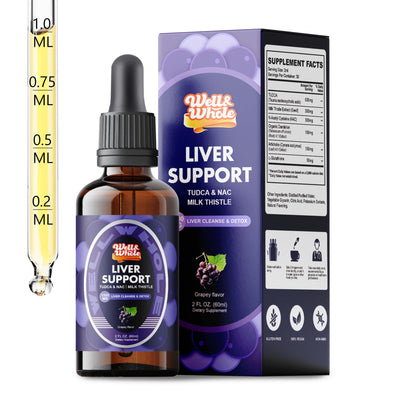
Where to begin? Our Liver Support Liquid Drops Supplement | TUDCA Drops Liver Cleanse & Detox with Milk Thistle, NAC, Dandelion, Artichoke & Glutathione for Detox and TUDCA 1000mg Gummies with Milk Thistle 500mg for Adults are a sensible place to start, and the Liver Support collection lays out the other formats side by side with Milk Thistle.
How botanicals are used in wellness routines
Plants such as turmeric, ginger, hawthorn, and boswellia have long traditional histories. Modern supplements standardize active compounds so servings are clear and consistent.
They are typically taken daily as part of a broader diet-and-lifestyle routine.
Who might be interested
Adults exploring natural, food-derived support for everyday wellness often include botanicals.
Because plants can interact with medications, checking with a healthcare professional is important.
How to choose a quality botanical supplement
Look for standardized active compounds, transparent sourcing, and third-party testing. Gummies, capsules, and liquids each suit different preferences.
How it may fit alongside a balanced diet
Botanicals complement a diet rich in vegetables, herbs, and whole foods—they are not a replacement for varied nutrition.
How to fit botanical supplements into a daily routine
Consistency matters more than perfection. Most people do best by attaching a supplement to an existing habit—morning coffee, a post-workout shake, or an evening wind-down—so it becomes automatic rather than another task to remember.
Start with the labeled serving and give it a few weeks of regular use before judging how it fits. Keep a simple note of how your routine feels; that feedback helps you adjust timing or format.
What to look for when reading the label
A transparent label states the active amount per serving, the form of the ingredient, and any third-party testing or quality certifications. Avoid products that hide specifics behind proprietary blends.
Check serving size, other added ingredients, and storage instructions. If anything is unclear, a reputable brand's customer support should answer directly—and a healthcare professional can help you match a product to your needs.
When to check in with a professional
If you are pregnant, nursing, taking medication, or managing a health condition, a quick conversation with a qualified healthcare professional is the safest starting point.
They can help you weigh potential interactions and decide whether a given supplement is appropriate for your individual situation.
A note on consistency and patience
Supplements are rarely a single-event fix. The benefits people notice—steadier energy, smoother recovery, an easier daily routine—tend to accumulate over weeks of regular use. Give any new addition a fair trial before drawing conclusions.
How this fits a broader wellness picture
Most people get the best results when a supplement supports an already reasonable diet, sleep, and activity pattern. Think of it as one input among many, not a substitute for the fundamentals.
This article is for general wellness education and is not intended to diagnose, treat, cure, or prevent any condition. Individual needs vary—always review product labels and consult a qualified healthcare professional before starting any new supplement.
These statements have not been evaluated by the Food and Drug Administration. This product is not intended to diagnose, treat, cure, or prevent any disease.