The Athlete's Recovery Stack: EAA Liquid + Liver Support for Post-Workout Repair
Build the ultimate post-workout recovery stack with EAA liquid drops and liver support supplements. Learn timing, dosage, and science-backed protocols for faster muscle repair and metabolic recovery.

You just crushed a workout. Your muscles are depleted, your glycogen stores are running low, and your body has shifted into catabolic mode — breaking down tissue faster than it's rebuilding. The next 60 minutes are critical. This is the "anabolic window" — the period when your body is most receptive to nutrients that will determine how well you recover and how much stronger you'll be for your next session.
Most athletes know to prioritize protein after training. But here's what most don't know: your liver is working just as hard as your muscles during recovery. It's processing metabolic byproducts, synthesizing new proteins, managing inflammation, and regulating the hormonal environment that determines whether you build muscle or break it down.
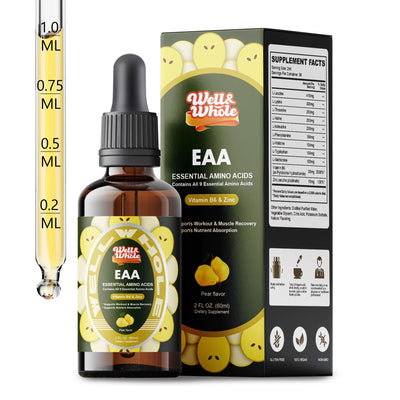
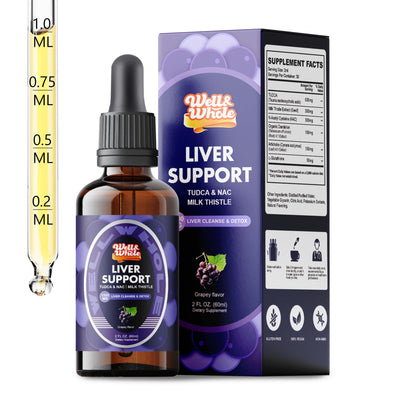
That's why my post-workout stack isn't just about protein — it's about supporting both muscle repair AND liver function simultaneously. For the past six months, I've been using well&whole EAA Liquid Drops & Liver Support and well&whole Liver Support Liquid Drops as the foundation of my recovery protocol. Here's exactly how I use them, when, and why.


Why Your Standard Post-Workout Routine Is Incomplete
The Muscle-Only Blind Spot
The standard post-workout protocol is: protein shake → maybe creatine → shower → done. This addresses muscle protein synthesis (MPS), which is critical, but it ignores everything else happening in your body after intense training:
| Post-Workout Process | What It Requires | Ignored by Protein Alone? |
| Muscle protein synthesis | EAAs (especially leucine) | Partially addressed (see below) |
| Glycogen replenishment | Carbohydrates | No (if your shake has carbs) |
| Cellular cleanup (autophagy) | Proper mTOR/autophagy balance | Yes |
| Inflammatory resolution | Antioxidants, glutathione | Yes |
| Ammonia detoxification | Urea cycle function (liver) | Yes |
| Cortisol clearance | Hepatic metabolism | Yes |
| Lactate clearance | Gluconeogenesis (liver) | Yes |
Your liver handles the "cleanup crew" functions — clearing metabolic waste, processing inflammation, and restoring metabolic homeostasis. When you only address the "build" side (protein synthesis) and ignore the "clean" side (liver function), you're only doing half the recovery job.
Why EAAs Beat Whole Protein for Immediate Recovery
A protein shake takes 60-90 minutes for digestion and absorption before amino acids appear in your bloodstream. Liquid EAAs, by contrast, are absorbed within 15-30 minutes. That means by the time your protein shake is just starting to release amino acids, the EAAs from your EAA Liquid Drops are already driving muscle protein synthesis and supporting liver metabolism.

The winning combination: EAA Liquid Drops provide IMMEDIATE amino acids for rapid MPS activation, while your protein shake provides SUSTAINED amino acid release over 2-4 hours. Together, they give you both the spike and the sustain.
---
The Complete Post-Workout Stack
Step 1: Minutes 0-5 — Immediate Post-Workout
What you do: As soon as your workout ends — literally before you leave the gym floor — take:
1. EAA Liquid Drops — 1 serving of well&whole EAA Liquid Drops & Liver Support
- Hold under your tongue for 15-20 seconds for rapid sublingual absorption of a fraction of the dose
- Swallow the remainder
- No water needed (though water is fine)
2. Water (if you have it) — 16-20 oz water to begin rehydration
Why immediately: The anabolic window is real — your muscles are insulin-sensitive and primed for nutrient uptake. Delivering EAAs within 5 minutes of your last rep maximizes the anabolic response. A 2017 study in the Journal of the International Society of Sports Nutrition found that immediate post-exercise EAA ingestion resulted in 36% greater muscle protein synthesis compared to ingestion delayed by 2 hours.
Step 2: Minutes 5-15 — Continue Hydration, Prepare Your Shake
What you do: This is the transition period. Drink more water. If you're having a protein shake, start preparing it now.
Why wait 10 minutes for protein: The EAAs are already in your system, activating mTORC1 and priming your muscles for protein synthesis. When your protein shake arrives 10-15 minutes later, the sustained amino acid release builds on the EAA foundation.
Step 3: Minutes 15-30 — Protein + Carbohydrates
What you consume:
| Component | Recommendation | Purpose |
| Protein | 25-40g (whey, plant, or whole food) | Sustained amino acid release for MPS |
| Carbohydrates | 40-60g fast-digesting carbs | Glycogen replenishment; insulin response supports amino acid uptake |
| Creatine (optional) | 5g | ATP regeneration; strength and recovery support |
Pro Tip: If you train fasted (morning workout before breakfast), make this your first real meal. The EAAs bridged the gap between training and eating.
Step 4: Minutes 30-60 — Liver Support Drops
What you take: 1 serving of well&whole Liver Support Liquid Drops (TUDCA + NAC + Milk Thistle + Dandelion + Artichoke + Glutathione).

Why NOT at the same time as EAAs: Separating EAAs and Liver Support Drops by 30-60 minutes ensures optimal absorption of both. This is a "nice to have" optimization — if your schedule demands taking both at once, that still works. The separation improves absorption but isn't a dealbreaker.
Why include liver support post-workout:
· TUDCA supports hepatocyte integrity during the metabolic stress of recovery
· NAC + Glutathione support antioxidant capacity and detoxification of exercise-induced metabolic byproducts
· Milk Thistle activates Nrf2, upregulating the body's endogenous antioxidant systems just when oxidative stress peaks
· Dandelion and Artichoke support bile flow and metabolic waste elimination
---
Sample Day: Training Day Nutrition Timeline
Morning Training (6:00 AM)
| Time | Action | Product |
| 5:45 AM | Wake up; drink 16 oz water | — |
| 6:00-7:00 AM | Training session | Sip water throughout |
| 7:00 AM | EAA Liquid Drops | EAA Liquid Drops & Liver Support |
| 7:10 AM | Continue hydration | Water |
| 7:30 AM | Post-workout shake or breakfast | 30g protein + 50g carbs |
| 7:45 AM | Liver Support Drops | Liver Support Liquid Drops |
Evening Training (6:00 PM)
| Time | Action | Product |
| 5:30 PM | Pre-workout meal (2-3 hours before) | Balanced meal with protein + carbs |
| 6:00-7:00 PM | Training session | Sip water throughout |
| 7:00 PM | EAA Liquid Drops | EAA Liquid Drops |
| 7:15 PM | Post-workout shake or dinner | 30g protein + 50g carbs |
| 7:45 PM | Liver Support Drops | Liver Support Liquid Drops |
| 9:00 PM | Evening wind-down | No screens; magnesium optional |
Rest Day Protocol
On rest days, you don't need the immediate post-workout EAA surge, but your body is still rebuilding:
| Time | Action | Product |
| Morning | Liver Support Drops with water, 15 minutes before breakfast | [iver Support Liquid Drops |
| Midday (optional) | EAA Liquid Drops between meals | EAA Liquid Drops |
On rest days, the Liver Support Drops take priority. Your liver is processing the metabolic byproducts from yesterday's training and supporting ongoing tissue repair. EAAs between meals can help maintain positive nitrogen balance throughout the day.
Pro Tips Box: Athlete's Recovery Edge
Tip 1: The Mouth-Swish Technique
When you take your EAA Liquid Drops, swish them around your mouth for 15-20 seconds before swallowing. This isn't weird — it's pharmacokinetics. The oral mucosa is highly vascularized, and 5-10% of amino acids can absorb directly into the bloodstream this way, bypassing first-pass liver metabolism and reaching muscle tissue faster.
Tip 2: Match Protein to Training Intensity
Hard training day (legs, heavy compounds, HIIT): Full protein shake (30-40g) + EAA Drops. Moderate training day (upper body isolation, steady-state cardio): EAA Drops + lighter protein (20-25g). The EAAs reduce your dependence on whole protein for the immediate post-workout signal — you don't always need 40g of whey.
Tip 3: The 48-Hour Recovery Test
If you're still sore 48 hours after a workout, your recovery nutrition needs work. Track your soreness on a 1-10 scale at 24 and 48 hours post-training. When you dial in your EAA + Liver Support stack, you should see 48-hour soreness scores decrease by 2-3 points.
Tip 4: Keep EAAs in Your Gym Bag
The EAA Liquid Drops are portable and don't require mixing. Keep a bottle in your gym bag. On days when you forget your protein powder or can't get home for a meal right away, EAAs are your emergency recovery insurance — they're always there, ready to use, no prep required.
Tip 5: Hydrate to Half Your Body Weight
Post-workout hydration goal: drink ounces of water equal to half your body weight (in pounds). If you weigh 180 lbs, drink 90 oz of water across the remainder of the day after your workout. Add more if you trained in heat or did extended cardio. The EAAs and liver support compounds all work better in a well-hydrated environment.
---
Common Mistakes Athletes Make
Mistake 1: Not Varying Protein Intake With Training Intensity
Your body doesn't need the same recovery nutrition after a 20-minute mobility session as it does after heavy squats. Scale your recovery stack to the demand: EAA Drops alone for light sessions, EAA Drops + protein shake for moderate sessions, full stack (EAAs + shake + Liver Support) for hard sessions.
Mistake 2: Only Focusing on Post-Workout
Recovery is 24 hours, not 60 minutes. Your liver is processing metabolic byproducts long after your post-workout shake is digested. Consistent use of Liver Support Drops throughout the day and on rest days supports ongoing metabolic recovery.
Mistake 3: Ignoring Sleep as a Recovery Tool
The biggest anabolic hormone release of the day (growth hormone) happens during deep sleep. If you're nailing your post-workout nutrition but sleeping 5 hours, you're leaving 50% of your recovery potential untapped. Prioritize 7-9 hours of sleep as part of your recovery stack.
Mistake 4: Not Adjusting for Age
A 22-year-old and a 45-year-old cannot follow the same recovery protocol and expect the same results. Older athletes need more protein per meal to stimulate the same MPS response and benefit more from anti-inflammatory support (liver drops, antioxidants). If you're over 40, lean toward the higher end of the EAA and protein recommendations.
Mistake 5: Fearing "Too Many" Supplements
Some athletes worry about supplement overload. But EAAs are food — they're the same amino acids in chicken, eggs, and whey, just faster and more targeted. Liver support ingredients (TUDCA, NAC, Milk Thistle) work through physiological pathways that are taxed by intense training. This isn't "too many supplements" — it's targeted nutritional support for a specific demand.
Frequently Asked Questions
Q1: Can I mix EAA Liquid Drops into my protein shake?
You can, but it's better to take them separately for optimal absorption. The liquid drops are designed for rapid uptake — mixing them into a protein shake delays their absorption until the shake leaves your stomach. Take the drops first, then your shake 10-15 minutes later for the best pharmacokinetic profile.
Q2: How does this stack compare to just taking BCAAs?
BCAAs provide only 3 of 9 EAAs — they can signal muscle protein synthesis but can't sustain it because the other 6 EAAs are missing. EAAs from the well&whole EAA Liquid Drops provide the full spectrum, supporting both the MPS signal (via leucine) and the actual building blocks (all 9 EAAs). Additionally, several of the liver-supportive amino acid functions require methionine, lysine, and other EAAs not found in BCAA products.
Q3: Will liver support supplements improve my athletic performance?
The primary benefit is recovery, not acute performance. Better recovery means you can train harder, more consistently, and with less accumulated fatigue. Indirectly, this improves performance over weeks and months. TUDCA and NAC won't give you an immediate strength boost like caffeine, but a better-functioning liver supports the metabolic foundation that sustained athletic performance depends on.
Q4: How do I know if this stack is working for me?
Track these metrics over 4 weeks: (1) DOMS (delayed onset muscle soreness) rating 24 and 48 hours post-training, (2) perceived energy during workouts, (3) sleep quality (rate 1-10), (4) training volume (sets × reps × weight). Improvements in any 2+ metrics suggest the stack is contributing to your recovery. For objective liver data, compare pre- and post-stack ALT/AST levels at 8-12 weeks.
Q5: Can I use this stack while cutting weight?
Absolutely — it's arguably MORE important during a cut. Caloric deficit increases muscle protein breakdown and places additional stress on the liver (which is processing mobilized fatty acids and ketones). EAAs provide muscle-sparing amino acids with minimal calories, and liver support helps manage the increased hepatic workload of fat metabolism.
Q6: Is there a risk of taking too many amino acids?
At standard supplemental doses (1-3 servings of EAA Liquid Drops daily), the risk is negligible for healthy individuals. EAAs are nutrients, not drugs. The primary concern with excessive amino acid intake is gastrointestinal discomfort (loose stools, nausea) rather than systemic toxicity. Stay within label recommendations.
Q7: What's the monthly cost of this stack?
Based on 30-day supply for training 5 days/week: EAA Liquid Drops + Liver Support Drops ($19.99 on heavy training days) = approximately $32-40/month (accounting for rest days). This is comparable to or less than many single-ingredient premium sports supplements and provides both muscle-specific and liver-supportive benefits.

Conclusion
The athlete's recovery stack I've described — EAA Liquid Drops & Liver Support for rapid amino acid delivery and anabolic signaling, followed by whole protein for sustained release, and Liver Support Liquid Drops for metabolic cleanup and cellular protection — addresses recovery from both the muscle and liver perspectives.
Most athletes focus exclusively on the "build" side of recovery — protein, protein, and more protein. But the "clean" side matters equally. Your liver is working overtime after intense training, processing metabolic waste, managing inflammation, and supporting the systemic environment that determines whether your training translates into gains or burnout.
Give your liver the support it deserves, and you'll recover faster, train harder, and feel better between sessions. That's the competitive advantage most athletes miss.
Related supplements
Should you decide to supplement, Liver Support Liquid Drops Supplement | TUDCA Drops Liver Cleanse & Detox with Milk Thistle, NAC, Dandelion, Artichoke & Glutathione for Detox and TUDCA 1000mg Gummies with Milk Thistle 500mg for Adults are our formulation for this purpose. For a broader comparison, see the Liver Support and Milk Thistle collections.
These statements have not been evaluated by the Food and Drug Administration. This product is not intended to diagnose, treat, cure, or prevent any disease.