The Anxious Professional's Guide: Magnesium for Stress Without Drowsiness
Practical guide for busy professionals to use magnesium bisglycinate gummies for daytime stress management—how to dose for anxiety relief without sedation, timing strategies, and workplace integration.

You're in a meeting, and your heart is beating faster than it should be. Your jaw is tight. Your shoulders are somewhere up near your ears. You're not having a panic attack—you're just... wired. On edge. This is the baseline stress level for millions of professionals: not crisis-level anxiety but persistent, low-grade tension that never fully resolves.
The standard advice for stress is usually some version of "just relax" or "try meditation." Good advice, genuinely. But when you're three hours into back-to-back meetings, "try meditation" isn't practical. You need something that works within the reality of your professional life—not instead of it.
Magnesium bisglycinate is that something. But here's the catch: most magnesium-for-sleep advice doesn't help you at 2 PM when stress peaks. This guide is about using magnesium during the day—supporting calm without sedation, stress resilience without drowsiness.
Why Professional Stress Depletes Magnesium
There's a cruel biochemical irony at work: stress depletes magnesium, and magnesium depletion makes you more vulnerable to stress. It's a feedback loop that keeps tightening.
The stress-magnesium connection:
When you're stressed, your body releases cortisol and catecholamines (adrenaline, noradrenaline). These stress hormones drive magnesium out of your cells and into your bloodstream, where it's ultimately excreted through your kidneys. A 2018 study by Sartori et al. in Magnesium Research demonstrated that acute psychological stress increased urinary magnesium excretion by 33% within 2 hours.
The magnesium-stress connection (the reverse loop):
Magnesium is nature's NMDA receptor blocker. NMDA receptors are one of the brain's primary excitatory switches. When magnesium levels are adequate, it sits in the NMDA receptor channel like a plug, preventing excessive calcium influx and neuronal excitation. When magnesium is low, that plug comes out, and your neurons become more excitable—more reactive to stress, more prone to anxiety, more likely to fire in the spiraling patterns we experience as rumination.
A 2017 systematic review by Boyle et al. in Nutrients examined 18 studies on magnesium and subjective anxiety and found that magnesium supplementation was associated with reductions in anxiety scores across multiple validated scales, with effect sizes ranging from small to moderate.
---
The Bisglycinate Advantage for Daytime Use
Not all magnesium forms are created equal for daytime stress. Here's why bisglycinate is the right choice for anxious professionals:
Bioavailability Without Diarrhea
Magnesium citrate and oxide are notorious for causing digestive urgency—not exactly ideal in a client meeting. Magnesium bisglycinate is a chelated form where magnesium is bound to the amino acid glycine. This chelation protects the magnesium through the digestive tract and enables absorption through amino acid transport channels rather than relying solely on passive paracellular absorption.
A 2019 comparative study by Schuchardt et al. in Nutrients found that magnesium bisglycinate had 20-30% higher bioavailability than inorganic magnesium salts, with significantly lower rates of gastrointestinal side effects (6% vs. 29% for magnesium oxide).
The Glycine Bonus
The glycine component isn't just a delivery vehicle—it's an active compound. Glycine functions as an inhibitory neurotransmitter through glycine receptors and as a co-agonist at NMDA receptors. The combined effect: magnesium blocks excitatory NMDA signaling while glycine supports inhibitory glycinergic signaling. Two mechanisms, one supplement.
Calming Without Sedation
This is the critical distinction for daytime use. Magnesium bisglycinate supports the parasympathetic nervous system—the "rest and digest" branch—but it doesn't force it. At appropriate daytime doses, it lowers the baseline stress activation without producing drowsiness. You feel less reactive, not less alert.
The Daytime Protocol
The Baseline Dose: Morning with Breakfast
Start with one Magnesium Bisglycinate Gummy with breakfast. The goal at this dose is background support—a subtle lowering of your baseline stress reactivity throughout the day. This isn't a dose you'll "feel" in the acute sense. You'll notice it by what doesn't happen: that colleague's comment doesn't trigger the same spike, the 2 PM deadline stress feels more manageable, your shoulders stay slightly lower.
Give the baseline morning dose 5-7 days before evaluating. This is nutritional support, not a drug—effects accumulate.
The Pre-Stress Dose: Before Known Stress Events
Take an additional gummy about 45 minutes before situations you know will be stressful:
· A difficult conversation or performance review
· A high-stakes presentation
· A packed afternoon of back-to-back meetings
· A networking event that drains your social battery
The pre-stress dose provides acute support above your baseline. The magnesium and glycine reach meaningful plasma levels within 30-60 minutes, coinciding with your stress window.
Pro Tip: Keep a small container of gummies in your desk drawer or work bag. They're shelf-stable and don't require water. A quick gummy before a stressful event is subtle, private, and effective.
The Post-Stress Reset: After the Storm
After a particularly intense stress period—a brutal day, a difficult conversation, a high-pressure deadline met—take one gummy as part of your intentional transition out of stress mode. Pair it with:
· 2 minutes of slow breathing (inhale 4 counts, exhale 6 counts)
· A glass of water (hydration supports magnesium function)
· Standing up and walking for 2-3 minutes
This three-part reset—biochemical (magnesium), autonomic (breathing), and physical (movement)—breaks the stress cycle more effectively than any single intervention alone.
---
The Evening Bridge
The same Magnesium Bisglycinate Gummies that support daytime stress resilience transition naturally to evening recovery. Here's the key: you're not taking a "different" supplement at night—you're taking two of the same gummies instead of one.

Your full-day protocol might look like:
· Morning: 1 gummy with breakfast (baseline stress support)
· Pre-stress event (as needed): 1 gummy 45 minutes before (acute support)
· Evening: 1-2 gummies 60 minutes before bed (full serving for recovery)
Total daily intake: 2-4 gummies, depending on stress load. This stays within safe magnesium intake ranges for most adults (the upper tolerable intake for supplemental magnesium is 350 mg/day).
Avoiding the Common Pitfalls
Pitfall 1: Expecting a sedative effect. Magnesium bisglycinate doesn't work like a tranquilizer. If you take it and feel "drugged," you've likely taken too much—especially for daytime. The goal is calm alertness, not sedation.
Pitfall 2: Inconsistent dosing. Stress management is cumulative. Taking magnesium only on high-stress days is like wearing a seatbelt only when you expect to crash. The protective benefit comes from consistent baseline support.
Pitfall 3: Using supplements instead of boundaries. Magnesium supports stress resilience but doesn't eliminate the need for healthy professional boundaries, reasonable workloads, and actual recovery time. The supplement amplifies good stress management practices; it doesn't replace them.
Pitfall 4: Hydration neglect. Magnesium and hydration are biochemically linked. Dehydration impairs cellular magnesium uptake. If you're supplementing magnesium but chronically dehydrated (common among professionals who live on coffee), you're undermining your own investment. Drink water.
FAQ
Q: Can I take Magnesium Bisglycinate Gummies with my morning coffee?
A: Yes. Caffeine and magnesium don't interact negatively. However, very high coffee intake can increase urinary magnesium excretion. If you're a heavy coffee drinker (4+ cups/day), you may benefit from slightly higher magnesium intake to compensate for increased losses.
Q: Will taking magnesium during the day make me too relaxed to work?
A: At the recommended daytime dose (1 gummy), magnesium bisglycinate supports stress resilience without sedation. You should feel less reactive, not less capable. If you feel drowsy, reduce the dose—your nervous system may be more sensitive to magnesium's calming effects.
Q: How quickly can I expect to notice a difference in my baseline anxiety levels?
A: Most people notice subtle effects within the first week of consistent use. The full effect on baseline anxiety typically takes 2-4 weeks, as magnesium status is gradually replenished at the cellular level.
Q: Can I combine this with my prescription anxiety medication?
A: Only with your prescriber's approval. Magnesium bisglycinate's calming mechanisms could theoretically have additive effects with anxiolytics (benzodiazepines, buspirone), antidepressants (SSRIs/SNRIs), or gabapentinoids. Your prescriber needs to know about all supplements you take.
Q: Is it possible to take too much magnesium?
A: Yes. Excessive supplemental magnesium can cause diarrhea, nausea, and abdominal cramping. At very high doses, magnesium toxicity can cause hypotension, lethargy, and cardiac conduction abnormalities. Stay within the recommended serving size and be aware of total magnesium intake from all supplements.
Q: How do I know if I'm magnesium-deficient?
A: Standard serum magnesium tests are not reliable indicators of total body magnesium status—only about 1% of body magnesium is in blood. Red blood cell (RBC) magnesium testing is more accurate but not routinely ordered. Clinical indicators of possible deficiency include: muscle tension/cramping, poor stress tolerance, irritability, fatigue, and difficulty relaxing.
Q: Will these gummies help with stress-induced jaw clenching and tension headaches?
A: Magnesium supports muscle relaxation, which may help reduce stress-related muscle tension including jaw clenching (bruxism) and tension headaches. A 2017 clinical trial by Yablon et al. found that magnesium supplementation reduced the frequency and severity of tension headaches in adults with low magnesium status.
Conclusion
Professional stress isn't going anywhere. The deadlines, the meetings, the performance pressure—these are structural features of most careers. What you can change is how your nervous system handles the load. Magnesium bisglycinate provides biochemical stress support that works within the reality of your professional life: a morning gummy for baseline resilience, a pre-stress gummy for acute support, and a full evening serving for recovery.
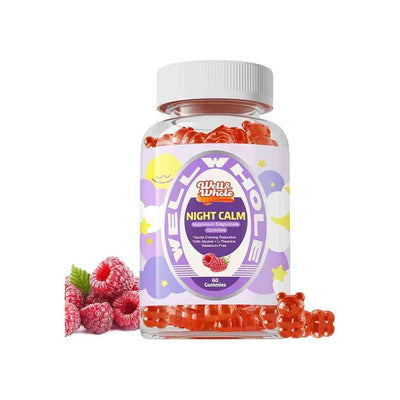
well&whole's Magnesium Bisglycinate Gummies with Apigenin & B6 deliver this support in a format that fits your life—no water required, no bathroom urgency, no sedation. Just calmer, more resilient stress physiology.
Support your professional edge with magnesium from wellwholeshop.com.
Related supplements
Should you decide to supplement, Magnesium Bisglycinate Gummies with Apigenin & B6, Melatonin Free, 60 Ct | Gentle on Stomach, Chelated with Glycine, Night Calm Routine and Sleep & Calm Support Bundle are our formulation for this purpose. For a broader comparison, see the Sleep Support and Magnesium collections.
These statements have not been evaluated by the Food and Drug Administration. This product is not intended to diagnose, treat, cure, or prevent any disease.