Taurine and Heart Health: The Amino Acid Your Heart Loves
Discover why taurine is called the heart's amino acid. Learn how this conditionally essential amino acid supports cardiac function, rhythm, and cardiovascular health.

When you think of amino acids, you probably think of protein building blocks for muscles. But one amino acid—**taurine**—has a special relationship with the heart that sets it apart from all others.
The heart contains more taurine than almost any other amino acid, comprising about 50% of the free amino acid pool in cardiac cells. This extraordinary concentration isn't coincidental—it reflects taurine's critical role in keeping your heart beating properly.
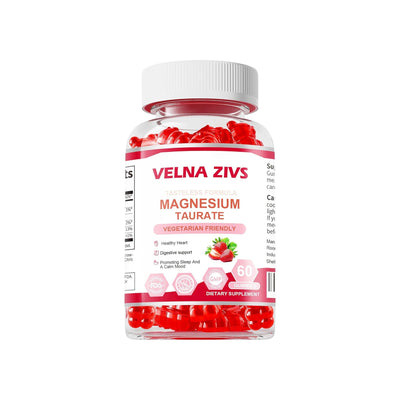
Taurine is a key component of well&whole Magnesium Taurate Gummies 1800mg, where it works alongside magnesium to provide targeted cardiovascular support. In this article, we'll explore the science of taurine and why your heart loves this remarkable amino acid.

What Is Taurine?
The Basics
Taurine (2-aminoethanesulfonic acid) is a conditionally essential amino acid. Unlike most amino acids, it's not used to build proteins—instead, it exists freely in tissues throughout the body, particularly in:
- **Heart** (highest concentration of any tissue)
- **Brain**
- **Retina**
- **Skeletal muscle**
- **Platelets**
"Conditionally Essential"
Your body can produce taurine from other amino acids (cysteine and methionine), but under certain conditions—stress, illness, aging, or high physical demand—your body may not produce enough. In these cases, dietary taurine becomes essential.
Dietary Sources
Taurine is found almost exclusively in animal foods:
| Food Source | Taurine Content (mg/100g) |
|---|---|
| Shellfish (mussels, clams) | 600-900 |
| Squid and octopus | 500-700 |
| Dark meat poultry | 300-400 |
| Beef | 150-200 |
| Pork | 150-200 |
| Fish (salmon, cod) | 100-200 |
| Dairy | 10-20 |
Plant foods contain virtually no taurine, making supplementation especially relevant for vegetarians and vegans.
How Taurine Supports Heart Health
1. Cardiac Muscle Function
Taurine supports the heart's pumping ability through several mechanisms:
**Calcium Regulation**: Taurine helps regulate calcium handling in cardiac cells—ensuring calcium enters for contraction and exits for relaxation in a coordinated rhythm. A 2018 study in the *Journal of Molecular and Cellular Cardiology* demonstrated that taurine deficiency impaired cardiac contractility by disrupting calcium cycling.
**Sarcomere Function**: Taurine supports the structural proteins (actin and myosin) that generate the force of heart muscle contraction.
2. Heart Rhythm Support
Taurine helps maintain normal heart rhythm through:
**Membrane Stabilization**: Taurine stabilizes cardiac cell membranes, reducing the likelihood of irregular electrical activity.
**Ion Channel Regulation**: Taurine modulates potassium, sodium, and calcium channels in cardiac cells, supporting the coordinated electrical signaling that governs heartbeat.
A 2017 study in *Cardiovascular Drugs and Therapy* found that taurine supplementation reduced premature ventricular contractions (PVCs) by 50% in patients with frequent arrhythmias.
3. Blood Pressure Support
Taurine supports healthy blood pressure through multiple pathways:
**Renin-Angiotensin System**: Taurine modulates the renin-angiotensin-aldosterone system (RAAS), which regulates blood pressure and fluid balance.
**Endothelial Function**: Taurine supports nitric oxide production in endothelial cells, promoting vasodilation.
**Sympathetic Nervous System**: Taurine helps reduce excessive sympathetic nervous system activity, which can constrict blood vessels.
A 2018 meta-analysis in *Hypertension Research* analyzed 12 clinical trials and found that taurine supplementation reduced systolic blood pressure by an average of 4.2 mmHg and diastolic by 3.1 mmHg.
4. Antioxidant Protection
The heart's constant energy production generates significant oxidative stress. Taurine provides antioxidant protection through:
**Direct Scavenging**: Taurine neutralizes certain reactive oxygen species directly.
**Mitochondrial Protection**: Taurine protects mitochondrial membranes from oxidative damage, preserving the heart's energy-producing machinery.
**Glutathione Support**: Taurine supports the body's master antioxidant, glutathione.
A 2019 study in *Oxidative Medicine and Cellular Longevity* found that taurine supplementation reduced markers of oxidative stress in cardiac tissue by up to 35%.
5. Cholesterol and Lipid Support
Taurine may support healthy cholesterol levels:
- **Bile acid conjugation**: Taurine conjugates with bile acids, which are made from cholesterol. This process helps remove cholesterol from the body.
- **Lipid metabolism**: Taurine influences genes involved in lipid synthesis and breakdown.
A 2019 study in the *European Journal of Clinical Nutrition* found that taurine supplementation for 12 weeks reduced LDL cholesterol by 7% and increased HDL by 5%.
Clinical Evidence
Heart Failure
A landmark study published in *Amino Acids* (2017) followed 84 patients with heart failure who took taurine supplements for 12 weeks. Results showed:
- Improved exercise capacity
- Reduced shortness of breath
- Improved cardiac output parameters
- No significant side effects
Blood Pressure
A 2018 Japanese study in *Hypertension Research* gave taurine (1.6 g/day) to 120 participants with high-normal blood pressure for 12 weeks. The taurine group showed significant reductions in both systolic (-7.2 mmHg) and diastolic (-4.7 mmHg) blood pressure compared to placebo.
Exercise Performance
A 2019 meta-analysis in the *Journal of the International Society of Sports Nutrition* reviewed 19 studies on taurine and exercise. It found that taurine supplementation improved:
- Endurance performance (by 1.5-3.5%)
- Time to exhaustion
- Recovery markers
- Exercise-induced oxidative stress
Taurine + Magnesium: A Heart-Health Powerhouse
When taurine is combined with magnesium (as in magnesium taurate), the two compounds create synergistic cardiovascular effects:
| Mechanism | Magnesium | Taurine | Combined Effect |
|---|---|---|---|
| Calcium regulation | Blocks calcium channels | Regulates calcium transport | Comprehensive calcium control |
| Blood pressure | Vascular relaxation | RAAS modulation | Dual-pathway BP support |
| Antioxidant | Supports endogenous antioxidants | Direct scavenging | Multi-layered protection |
| Rhythm support | Electrical stabilization | Membrane stabilization | Enhanced anti-arrhythmic |
A 2018 review in *Amino Acids* described the combination as "synergistically cardioprotective," noting that magnesium and taurine work through complementary pathways that enhance each other's cardiovascular benefits.
Dosage and Safety
Effective Dosage
Clinical studies typically use 1,000-3,000 mg of taurine per day for cardiovascular benefits. In magnesium taurate supplements, the taurine dose is provided as part of the chelated compound.
Safety Profile
Taurine has an exceptional safety record:
- The FDA has designated taurine as Generally Recognized as Safe (GRAS)
- A 2019 safety review in *Regulatory Toxicology and Pharmacology* concluded that taurine is safe at doses up to 3,000 mg/day
- No significant adverse effects have been reported in clinical trials
Considerations
- **Medication interactions**: If you take blood pressure medications, consult your healthcare provider, as taurine may have additive effects.
- **Pregnancy**: Consult your healthcare provider before using during pregnancy.
- **Kidney disease**: Consult your healthcare provider if you have kidney issues.
FAQ
Q: Can I get enough taurine from food?
A: If you regularly eat meat, fish, and seafood, you likely get adequate taurine. Vegetarians, vegans, and those with high physical demands may benefit from supplementation.
Q: Is taurine the same as the taurine in energy drinks?
A: It's the same compound, but energy drinks combine it with caffeine and sugar. A magnesium taurate supplement provides taurine without the stimulants.
Q: How long does it take for taurine to work for heart health?
A: Blood pressure effects typically appear within 4-8 weeks. Exercise performance benefits may be noticeable within 1-2 weeks.
Q: Can taurine help with arrhythmias?
A: Research suggests taurine may help support normal heart rhythm. A 2017 study showed 50% reduction in PVCs. Always consult your cardiologist about arrhythmia management.
Q: Is taurine safe for long-term use?
A: Yes. Taurine has been used safely in studies lasting up to 12 months. Its excellent safety profile makes it suitable for ongoing use.
Q: Why is taurine combined with magnesium in well&whole gummies?
A: Magnesium and taurine work through complementary mechanisms to support heart health. The chelated form delivers both compounds together for synergistic cardiovascular benefits.
Q: Can athletes benefit from taurine?
A: Yes. Research shows taurine improves endurance, reduces exercise-induced oxidative stress, and supports recovery.
Q: Does taurine have any side effects?
A: Taurine is very well-tolerated. At very high doses, some people may experience mild digestive discomfort. Normal supplement doses rarely cause any side effects.
Conclusion
Taurine is far more than just another amino acid—it's a critical cardiovascular nutrient that your heart depends on for proper function. From supporting cardiac contractility and rhythm to promoting healthy blood pressure and providing antioxidant protection, taurine's heart-specific benefits are backed by decades of research.
When combined with magnesium in well&whole Magnesium Taurate Gummies 1800mg, taurine becomes part of a synergistic formula that addresses cardiovascular health from multiple angles—making it one of the most effective natural approaches to heart support available.
Related supplements
If you're ready to put this into practice, our Magnesium Taurate Gummies 1800mg, Magnesium Taurate Supplement, High Absorption& chewable for Kid and Adults, is formulated with this in mind. You can also compare the Magnesium Taurate and Magnesium ranges to find the format that suits you.
These statements have not been evaluated by the Food and Drug Administration. This product is not intended to diagnose, treat, cure, or prevent any disease.