Taurine and Exercise Performance: What Research Shows

Taurine has a modest but consistently positive record in exercise performance research: studies testing roughly one to three grams before activity report small improvements in endurance performance and reduced markers of muscle damage, though effect sizes are smaller than marketing suggests and study groups are often tiny.
What taurine does in the body
Taurine is a conditionally essential amino acid-like compound — technically an amino sulfonic acid — that your body makes on its own and that concentrates in excitable tissues: muscle, heart, retina, and brain. It participates in electrolyte balance inside and outside cells, helps regulate calcium handling in muscle fibers, supports bile acid conjugation, and acts as a mild antioxidant. Unlike the branched-chain compounds, taurine is not a building block for muscle protein; its role is functional rather than structural, which is why researchers study it for endurance and recovery markers rather than raw muscle gain.
What the studies actually show
Most exercise trials give one to three grams of taurine, usually sixty to one hundred twenty minutes before activity. Findings across small trials include longer time to exhaustion in endurance performance tests, slightly lower markers of muscle damage after hard sessions, and reduced perceived exertion in some but not all studies. A recurring limitation is scale: many trials enroll fewer than twenty participants, often in narrow populations like runners or cyclists. Reviews of athletic performance research generally conclude the direction of effect is favorable but the evidence quality is moderate at best. Treat taurine as a marginal gain layered on training, sleep, and diet — not a replacement for any of them.
Food sources versus a taurine supplement
A mixed diet provides meaningful amounts: scallops and other shellfish are the richest food sources, followed by dark meat of chicken and turkey. A typical omnivorous diet supplies somewhere between forty and four hundred milligrams daily, while plant-forward diets provide little, since plants contribute almost none. Energy drinks popularized taurine but bring a large caffeine load along with it, which muddies any assessment of the taurine itself. A standalone taurine supplement separates the variables and allows the one-to-three-gram doses used in research, which no realistic plate of food reaches. Cooking method matters a little too: taurine is water-soluble, so boiling meats leaches some into the discarded liquid, while soups and stews keep what plain boiling throws away. Vegans and low-fish eaters have the widest gap between dietary intake and the amounts studied.
Where magnesium taurate fits
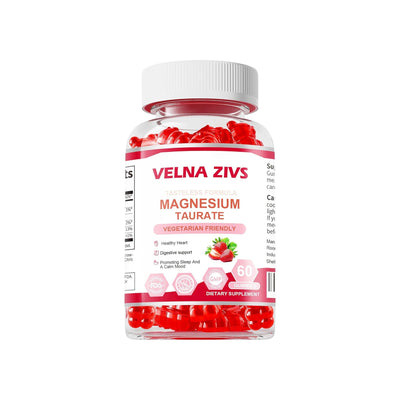
Taurine also appears bound to magnesium in the magnesium taurate salt form, chosen because the pairing is gentle on digestion. That product's logic is different: it delivers magnesium first, with taurine as the carrier. If your goal is the one-to-three-gram taurine doses used in physical performance studies, a dedicated taurine supplement gets you there more directly; if your goal is magnesium intake, the taurate form is a reasonable route. Confusing the two leads to under-dosing both.
Timing, stacking, and what to expect
If you test taurine, keep the protocol simple: one to two grams about an hour before training, consistently for two to three weeks, and log the same few markers each session — perceived effort, time to fatigue, next-day soreness. Stacking with caffeine is common in pre-workout products and the two do not obviously interfere; stacking with carbohydrates and electrolytes matches taurine's electrolyte balance role during long, sweaty sessions. Expect subtle movement in your numbers rather than a new athlete overnight. If nothing changes after a fair trial, the honest conclusion is that your baseline diet and training already cover what taurine would have added — which is useful information, not a failure of the product.
Key takeaways
- Taurine supports electrolyte balance and calcium handling in muscle rather than building muscle protein directly.
- Studies use one to three grams before exercise; reported benefits are small and consistent, not dramatic.
- Shellfish and dark poultry are the best food sources; most diets supply far less than studied doses.
- Energy drinks add caffeine to the mix, so they are a poor way to evaluate taurine itself.
- Magnesium taurate delivers magnesium with taurine as carrier — it is not an equivalent taurine dose.

Frequently asked questions
How much taurine do studies use for exercise performance?
Most trials test one to three grams, taken about one to two hours before activity. Doses up to three grams daily have been well tolerated in short studies, but there is no established athletic requirement — start at the low end and judge by your own response.
Does taurine work immediately?
Acute studies take a single pre-exercise dose and measure the same session, so some effects appear quickly. Other outcomes, like reduced next-day muscle soreness markers, are tracked over days to weeks. Consistent timing around training sessions is more informative than one experimental try.
Taurine or caffeine before a workout?
They do different jobs: caffeine reliably boosts alertness and perceived effort; taurine's effects are subtler and appear in endurance and recovery markers. Many pre-workout products combine both. If you are caffeine-sensitive, taurine alone is a reasonable, milder option to test.
Is taurine safe?
At one to three grams daily, short-term studies report good tolerance. Long-term data at high doses are thinner, and anyone with kidney conditions, or who is pregnant or taking prescription medication, should check with a clinician before adding any supplement to a routine.
Related supplements
Should you decide to supplement, Magnesium Taurate Gummies 1800mg, Magnesium Taurate Supplement, High Absorption& chewable for Kid and Adults, is our formulation for this purpose. For a broader comparison, see the Magnesium Taurate and Magnesium collections.
These statements have not been evaluated by the Food and Drug Administration. This product is not intended to diagnose, treat, cure, or prevent any disease. Talk to a healthcare professional before starting any new supplement, especially if you are pregnant, nursing, taking medication, or managing a health condition.
These statements have not been evaluated by the Food and Drug Administration. This product is not intended to diagnose, treat, cure, or prevent any disease.