Supplements for Trouble Falling Asleep

The supplement options with real evidence behind trouble falling asleep are magnesium glycinate or bisglycinate, low-dose melatonin for timing, L-theanine for a racing mind, and apigenin for a gentler wind-down effect. None of them sedates you — they lower friction at the threshold of sleep, and they work best once the obvious evening culprits are handled.
Bottom line: pick by your failure mode — restless body, busy mind, or shifted body clock — rather than grabbing the strongest-sounding product on the shelf.
First, work out which kind of "can't fall asleep" you have
Trouble falling asleep comes in three broad flavors, and each responds to different support. The restless body version — legs twitchy, jaw tight, physically wired — often traces to magnesium shortfall or late caffeine. The busy mind version is a cortisol and arousal problem, where the day never quite ends. The shifted-clock version feels like wide-awake-at-midnight: your body simply believes it is hours earlier.
Choosing by failure mode matters because a supplement aimed at the wrong mechanism will do nothing — melatonin will not quiet a racing mind, and theanine will not reset a shifted clock.
Magnesium: which form and why
Magnesium supports the calming side of the nervous system, and low intake is common in adults. For sleep purposes the chelated forms — magnesium bisglycinate and magnesium glycinate — are the usual picks because they are gentle on the stomach and well absorbed, unlike magnesium oxide, which is cheap, poorly absorbed and famous for its laxative effect.
The evidence is honest but modest: trials show small improvements in sleep quality and in subjective time to fall asleep, with the clearest benefit in people whose intake is low. For the restless-legs pattern in particular, many people notice the difference first. A typical evening dose is 200–400 milligrams of elemental magnesium, taken 60–90 minutes before bed.
Melatonin: a timing signal, not a sedative
Melatonin is the hormone your brain releases when darkness signals that night has arrived; supplemental melatonin mimics that signal. Its best-documented use is shifting the clock — delayed sleep phase, jet lag, night-shift recovery — rather than forcing drowsiness on an unchanged schedule.
Dosing is the most common mistake. Bigger is not stronger; trials consistently find 0.5–1 milligram about as effective as 5–10 milligrams with fewer groggy mornings, taken 1–2 hours before your target bedtime. If your problem is falling asleep at midnight when you need to sleep at ten, melatonin is the targeted tool.
L-theanine and apigenin: quieting the mind
L-theanine, the amino acid from green tea, promotes a relaxed-but-alert state and has small trial effects on pre-sleep heart rate and self-reported calm — typically 100–200 milligrams in the evening. It suits the busy-mind failure mode better than any hormone-based option.
Apigenin, the flavonoid concentrated in chamomile, binds benzodiazepine-type receptors weakly and has a long folk-history behind its modern supplement popularity — often paired with magnesium in evening formulas. The human trial base is thinner than for theanine, so treat it as a reasonable, low-risk addition rather than a proven primary.
What to check before adding anything
Three evening factors outperform every supplement on this list when they are wrong: caffeine after early afternoon (its half-life runs five to six hours), the last large meal sitting close to bedtime, and bright overhead light plus stimulating screens deep into the evening. Fix those and half of "I can't fall asleep" resolves without a capsule.
If trouble falling asleep persists most nights for more than a month despite these adjustments — or comes with loud snoring, gasping, or 3 am waking that will not resolve — that pattern deserves a clinician's evaluation rather than a stronger supplement stack.
Key takeaways
- Match the supplement to the failure mode: magnesium for the restless body, theanine for the busy mind, melatonin for the shifted clock.
- Magnesium bisglycinate or glycinate — chelated and gentle — beats magnesium oxide for evening use.
- Low-dose melatonin (0.5–1 mg, 1–2 hours before target bedtime) shifts timing; it does not sedate.
- L-theanine (100–200 mg) has the best support for pre-sleep calm; apigenin is a reasonable, thinner-evidence addition.
- Late caffeine, heavy late meals and bright screens out-supplement everything on this list when they are unhandled.

Frequently asked questions
What is the best supplement for falling asleep faster?
It depends on your pattern. For physical restlessness, magnesium bisglycinate at 200–400 milligrams in the evening has the best case. For a racing mind, L-theanine. For a shifted body clock — wide awake at midnight, exhausted at dawn — low-dose melatonin taken 1–2 hours before your target bedtime is the targeted tool.
Is magnesium glycinate good for sleep?
It is one of the better-supported evening options, especially for people with low magnesium intake. Evidence shows modest improvements in sleep quality and time to fall asleep rather than dramatic sedation, and the glycinate and bisglycinate forms are gentle on digestion compared with oxide.
How much melatonin should I take to fall asleep?
Less than most labels suggest: 0.5–1 milligram taken 1–2 hours before your intended bedtime matches the trials, and higher doses mainly add grogginess without improving the effect. Melatonin works best for timing problems, not as a general sedative.
Can I take magnesium and melatonin together?
Yes — they act on different mechanisms and are commonly combined in evening formulas. Start one at a time for a week each so you can tell which is actually doing anything, then combine if needed.
Related supplements
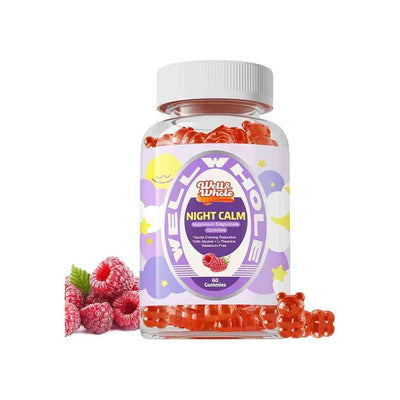
Putting it simply: if this is something you want to add to your routine, our Magnesium Bisglycinate Gummies with Apigenin & B6, Melatonin Free, 60 Ct | Gentle on Stomach, Chelated with Glycine, Night Calm Routine is a good place to start. The wider Sleep Support collection is worth a look, and the Magnesium range covers related formats.
These statements have not been evaluated by the Food and Drug Administration. This product is not intended to diagnose, treat, cure, or prevent any disease. Talk to a healthcare professional before starting any new supplement, especially if you are pregnant, nursing, taking medication, or managing a health condition.
These statements have not been evaluated by the Food and Drug Administration. This product is not intended to diagnose, treat, cure, or prevent any disease.