Supplements for Sore Muscles After Training

The best supported approach to sore muscles after training is not a single supplement. It is enough total protein, adequate energy, sleep and a gradual increase in load. Among supplements, essential amino acids and protein powder have the strongest rationale, with tart cherry, creatine and omega-3 fats showing smaller and less consistent benefits.
Bottom line: soreness is a normal adaptation signal, not a deficiency. Supplements can take the edge off, but none of them replaces protein intake, sleep and sensible progression.
What soreness actually is
Delayed onset muscle soreness shows up 12 to 24 hours after unfamiliar or intense work, peaks around 24 to 72 hours, and settles within a few days. It comes from mechanical stress on muscle fibres plus the inflammatory and repair response that follows — not from lactic acid, which clears within an hour. That distinction matters, because it means soreness responds to recovery inputs (protein, energy, sleep) far more than to anything that claims to flush acid out.
Key takeaways
- Total protein intake and enough calories do more for muscle recovery than any single supplement.
- Essential amino acids, especially leucine, drive protein synthesis; EAA blends and complete proteins both work.
- BCAAs alone are weaker, because they omit the other essential amino acids needed to build tissue.
- Tart cherry, creatine and omega-3 fats have supportive but smaller evidence for soreness and function.
- Soreness that keeps worsening, or that comes with dark urine, is a reason to seek medical advice rather than add supplements.
EAA vs BCAA vs protein powder
| Option | What it supplies | Evidence for soreness |
|---|---|---|
| Complete protein (whey, casein, soy, dairy, meat) | All nine essential amino acids plus calories | Strong for recovery when total intake is otherwise low |
| Essential amino acid blend | All nine essential amino acids, low calorie | Strong rationale; useful when appetite is low after training |
| BCAA | Leucine, isoleucine, valine only | Weak when protein intake is already enough |
| Tart cherry | Polyphenols | Small reductions in soreness in several small trials |
| Creatine monohydrate | Phosphocreatine substrate | Indirect: better work capacity and recovery over time |
Protein and amino acids first
Muscle repair is a building problem, and amino acids are the bricks. Leucine is the amino acid that triggers protein synthesis most strongly, but it cannot do the job without the rest of the essential amino acids present at the same time. That is the practical argument for a complete protein or an EAA blend over isolated BCAAs: you get the trigger and the raw material together.
A reasonable target is 1.6 to 2.2 g of protein per kilogram of body weight per day for people training regularly, spread across three or four meals rather than loaded into one. If you are already hitting that, adding more amino acids on top will not do much. If you are well below it — which is common in people who train hard and eat lightly — closing that gap is the highest-value change available.
Where the smaller levers help
Tart cherry has the most consistent soreness data among the food-based options. Several small trials report lower soreness ratings and slightly faster return of strength after damaging sessions. The effect is real but modest, and large doses of concentrated juice also bring sugar.
Creatine monohydrate is the best supported sports supplement overall, though it works indirectly: it raises work capacity, which means better adaptation over weeks. Any soreness benefit is a side effect of that, not a direct anti-soreness action.
Omega-3 fats from fish oil have been studied for soreness with mixed results. Some trials show reduced soreness, others show nothing. The broader case for omega-3 fats rests on other outcomes, so treat soreness as a bonus rather than the reason to take them.
Hydration and electrolytes matter more than their reputation suggests in hot conditions or long sessions, where sodium losses are large. They will not fix soreness, but they do affect how the session feels and how well the next one goes.
Timing and total intake
Timing is worth noting as well. Protein or amino acids taken in the hours after training support repair best when they arrive alongside enough total daily energy. If you are eating in a deficit while training hard, no supplement will stop soreness from climbing, because the body is being asked to repair more than the available fuel allows. Fix the energy and protein side of the equation first, then consider what else is worth adding.
What actually reduces soreness
Sleep is the intervention with the worst marketing and the best results. Light activity on a rest day, gentle mobility work, and progression that keeps weekly increases small all reduce how sore you get, because the body adapts to what it has already seen. If soreness is constant, the training plan is the first thing to examine, not the supplement shelf.

Frequently asked questions
What is the best supplement for sore muscles?
There is no single best one. Adequate total protein, enough calories and sleep have the strongest evidence. If you want a supplement, a complete protein or essential amino acid blend is the most sensible starting point.
Do BCAAs help with soreness?
They help less than marketed. BCAAs supply only three of the nine essential amino acids, so they cannot support protein synthesis on their own. Complete protein or an EAA blend covers the same ground better.
Is soreness a sign that a workout worked?
Not reliably. Soreness reflects unfamiliarity more than effectiveness, and it fades as you adapt even when progress continues. Progress in load, reps or skill is the better measure.
When should I worry about muscle soreness?
Seek medical advice for severe pain that keeps worsening, swelling, weakness, or dark cola-coloured urine after intense exercise, which can signal a serious muscle injury.
Related supplements
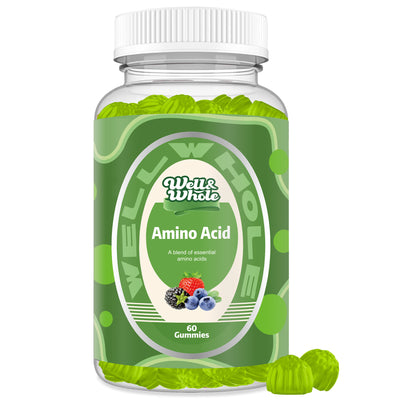
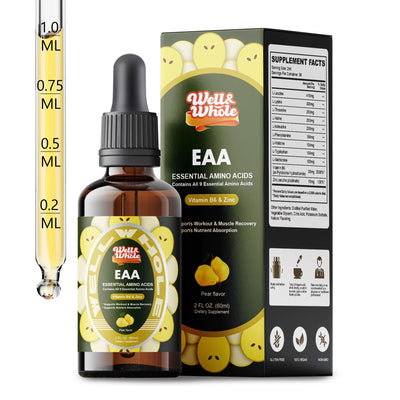
If you're ready to put this into practice, our EAA Gummie 60 counts Essential Amino Acids Supplement Gummies for Men and Women and Essential Amino Acid (EAA) Liquid Drops & Liver Support Liquid Supplement are formulated with this in mind. You can also compare the Amino Acids and Muscle Support ranges to find the format that suits you.
These statements have not been evaluated by the Food and Drug Administration. This product is not intended to diagnose, treat, cure, or prevent any disease. Talk to a healthcare professional before starting any new supplement, especially if you are pregnant, nursing, taking medication, or managing a health condition.
These statements have not been evaluated by the Food and Drug Administration. This product is not intended to diagnose, treat, cure, or prevent any disease.