Sulforaphane vs Curcumin: Which Anti-Inflammatory Is Better?
Sulforaphane vs curcumin — comparing two of nature's most powerful anti-inflammatory compounds. Mechanisms, evidence, dosing, and how to choose.

If you're looking for natural anti-inflammatory support, two compounds dominate the research: sulforaphane (from broccoli sprouts) and curcumin (from turmeric).
Key Takeaways
- Sulforaphane is a naturally occurring compound found in broccoli and broccoli sprouts, studied for its role in the body's normal antioxidant and detoxification pathways.
- Supplements often use broccoli sprout extract or stabilized glucoraphanin plus the enzyme myrosinase to support sulforaphane formation.
- It complements a diet rich in cruciferous vegetables rather than replacing it.
Both have decades of research. Both have powerful effects. Both work through different mechanisms. And increasingly, research is exploring what happens when you combine them.
This comparison breaks down the science, the evidence, the dosing, and the practical differences.
What Is Sulforaphane?
Sulforaphane is a sulfur-rich compound formed when you chop or chew cruciferous vegetables (broccoli, cauliflower, kale, cabbage). The enzyme myrosinase converts glucoraphanin into sulforaphane.
Primary mechanism: Activates the Nrf2 pathway — your body's master regulator of antioxidant response.
When Nrf2 is activated:
· Cellular antioxidant production increases (glutathione, SOD, catalase)
· Phase II detox enzymes are upregulated
· Inflammation is reduced
· Cells are protected from oxidative damage
Evidence areas:
· Cancer prevention
· Cardiovascular health
· Neuroprotection
· Detoxification support
· Blood sugar regulation
What Is Curcumin?
Curcumin is the primary bioactive compound in turmeric (*Curcuma longa*). It's been used in Ayurvedic medicine for thousands of years and has been the subject of intense modern research.
Primary mechanism: Inhibits NF-κB — the master regulator of inflammation.
When NF-κB is blocked:
· Pro-inflammatory cytokines (TNF-α, IL-6, IL-1β) decrease
· COX-2 and iNOS enzymes are suppressed
· Inflammatory cascades are dampened
· Pain signaling is reduced
Evidence areas:
· Osteoarthritis and joint pain
· Depression and mood
· Cardiovascular health
· Cancer prevention
· Cognitive decline
Head-to-Head Comparison
The Mechanism Difference (Nrf2 vs NF-κB)
This is the key distinction:
Nrf2 (sulforaphane's target):
· "Turns on" protective genes
· Increases cellular defense
· Long-term resilience building
NF-κB (curcumin's target):
· "Turns off" inflammatory signals
· Reduces active inflammation
· Acute symptom relief
Think of it this way:
· **Sulforaphane = building the immune system's training** (preventive)
· **Curcumin = calming the active response** (acute relief)
The Case for Combining Them
Here's the exciting part: sulforaphane and curcumin work through complementary pathways.
A 2018 paper in *Nutrients* specifically noted that "the combination of Nrf2 activators and NF-κB inhibitors may produce synergistic anti-inflammatory effects."
This is because:
· Chronic inflammation involves both oxidative stress AND inflammatory signaling
· Sulforaphane boosts cellular defense
· Curcumin blocks active inflammation
· Together, they cover both sides of the equation
Practical stacking:
· Morning: Sulforaphane (with food, ideally with myrosinase active)
· Evening: Curcumin (with fat, with piperine for absorption)
· Or: Combined supplement like our Sulforaphane drops
The Bioavailability Problem
Curcumin's Achilles heel: Curcumin is famously poorly absorbed. Without enhancement, less than 1% of oral curcumin reaches your bloodstream.
Solutions:
· **Piperine (black pepper extract)** — Increases absorption by 2,000%
· **Liposomal delivery** — Encapsulates in fat particles
· **Nanocurcumin** — Reduces particle size
· **Curcumin + phospholipids (Meriva)** — 29x better absorption
· **Combined with fat** — Curcumin is fat-soluble
Sulforaphane's challenges:
· Must have active **myrosinase** (heat destroys it)
· Or take glucoraphanin + separate myrosinase supplement
· Enteric coating protects from stomach acid
· Stomach acid can degrade sulforaphane before absorption
This is why our Sulforaphane drops use stabilized sulforaphane with the necessary cofactors for proper absorption.
When to Choose Sulforaphane
· Detoxification support (liver, environmental toxins)
· Cancer prevention focus
· Longevity and cellular health
· Cardiovascular protection
· Blood sugar regulation
· Hormone-related concerns (estrogen metabolism)
When to Choose Curcumin
· Active joint pain or arthritis
· Acute inflammation
· Depression or low mood
· Post-exercise soreness
· Cognitive decline concerns
· Cardiovascular inflammation
Side Effects and Safety
Sulforaphane:
· Generally very well tolerated
· Mild GI effects at high doses (gas, bloating)
· May affect thyroid function at very high doses (cruciferous vegetables contain goitrogens)
· Safe for long-term use
Curcumin:
· Generally well tolerated
· Mild GI upset at high doses
· May thin blood (caution before surgery, with blood thinners)
· May lower blood sugar (caution with diabetes meds)
· Safe for long-term use
FAQ
Can I take sulforaphane and curcumin together?
Yes — and this is increasingly recommended. They work through different mechanisms.
Which is better for arthritis?
Curcumin has more direct research on joint pain. Sulforaphane supports the underlying inflammation pathways.
Do I need to take them with food?
Both are better absorbed with food (especially fat). Curcumin is fat-soluble; sulforaphane is more bioavailable with a meal.
Which is better for the liver?
Sulforaphane has more direct research on liver detoxification and protection.
Are there any people who shouldn't take them?
Both are contraindicated pre-surgery (bleeding risk with curcumin; mild thyroid concern with sulforaphane at high doses). Curcumin caution with blood thinners.
How long until I see results?
· Curcumin: 2–4 weeks for inflammatory symptoms
· Sulforaphane: 4–8 weeks for cellular/detox benefits
Conclusion
Sulforaphane vs curcumin isn't really an either/or decision. They work through complementary mechanisms — sulforaphane activates cellular defense (Nrf2), while curcumin blocks active inflammation (NF-κB).
For most people interested in long-term inflammation management, combining both produces better results than choosing one.
If you want a convenient daily format, our [Sulforaphane + Curcumin Gummies](https://www.wellwholeshop.com/) combine both compounds in a bioavailable form, eliminating the need to source two separate supplements.
Related supplements
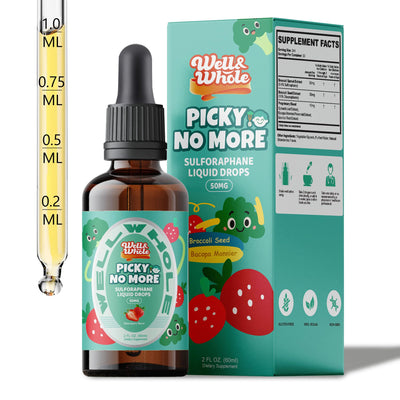
Should you decide to supplement, Sulforaphane Broccoli Supplement Liquid Drops for Kids with Sulforaphane, Glucoraphanin, Bacopa Monnieri is our formulation for this purpose. For a broader comparison, see the Antioxidant Support and Health Benefits collections.
What sulforaphane is
Sulforaphane forms when the compound glucoraphanin (abundant in broccoli and especially broccoli sprouts) comes into contact with the enzyme myrosinase. It has been widely studied for supporting the body's normal antioxidant and detoxification pathways.
Cooking can reduce myrosinase, which is why many supplements emphasize stabilized glucoraphanin plus added myrosinase.
How sulforaphane is commonly taken
Capsules and powders from broccoli sprout extract are typical. Some people pair them with raw cruciferous foods to support the natural enzyme activity.
A consistent daily serving is the common approach; exact timing is a personal preference.
Who might be interested
Adults focused on everyday cellular wellness and those who do not regularly eat cruciferous vegetables often explore sulforaphane.
It is a popular addition to a broad antioxidant routine.
How to choose a quality sulforaphane product
Look for a stated glucoraphanin amount and, ideally, myrosinase or sprout-based extract. Third-party testing and clear sourcing add confidence.
This article is for general wellness education and is not intended to diagnose, treat, cure, or prevent any condition. Individual needs vary—always review product labels and consult a qualified healthcare professional before starting any new supplement.
These statements have not been evaluated by the Food and Drug Administration. This product is not intended to diagnose, treat, cure, or prevent any disease.