Sulforaphane: The Broccoli Sprout Compound Explained

Sulforaphane is a sulfur-containing plant compound that forms when glucoraphanin — stored inside broccoli sprout cells — meets the enzyme myrosinase, which is released only when the plant is cut, chewed or crushed. Once formed, sulforaphane activates the Nrf2 pathway, the master switch your body uses to produce its own antioxidant and detoxification enzymes. That is why a tiny serving of broccoli sprouts delivers more measurable Nrf2 activity than a much larger serving of mature broccoli.
Sulforaphane is not an antioxidant itself. It is a signaling molecule that tells your cells to make more of their own protective enzymes, which is why the effects compound over hours rather than acting like a direct free-radical scavenger.
Where sulforaphane actually comes from
Cruciferous vegetables — broccoli, cauliflower, cabbage, kale, bok choy and Brussels sprouts — all contain glucoraphanin. The concentration varies by plant part and age. Three-day-old broccoli sprouts contain 10–100 times more glucoraphanin per gram than the mature head, which is why almost all sulforaphane research uses sprouts rather than full-grown broccoli.
The glucoraphanin-to-sulforaphane conversion
Glucoraphanin and the enzyme myrosinase sit in different compartments of the plant cell. Chewing or chopping ruptures the cell, lets the two meet, and the reaction produces sulforaphane within seconds. Heat destroys myrosinase, which is why overcooked broccoli delivers very little active sulforaphane even if it still contains glucoraphanin. The practical takeaway: chop, wait, then cook lightly — or eat the sprouts raw.
What Nrf2 actually does
Nrf2 (nuclear factor erythroid 2–related factor 2) is a transcription factor that, when activated, migrates into the cell nucleus and turns on a battery of protective genes. The downstream products include glutathione (your body's master antioxidant), phase II detoxification enzymes that help clear reactive metabolites, and enzymes that repair oxidized proteins and DNA. Nrf2 activation is sometimes described as "endogenous antioxidant upregulation" — the body generating its own protective chemistry rather than relying on dietary antioxidants alone.
What the research actually shows
- Phase II enzyme induction: Consistent across human and animal studies — sulforaphane reliably raises glutathione S-transferase and quinone reductase activity.
- Cell-line and animal cancer models: Reduced tumor formation in several models, particularly for prostate, breast and colon tissue. Human cancer-prevention trials are ongoing and the results so far are encouraging but not conclusive.
- Cardiovascular markers: Modest improvements in blood pressure, inflammation markers and LDL oxidation in small human trials.
- Neurodegeneration research: Early human work on autism spectrum disorder, schizophrenia and early cognitive decline suggests measurable behavioral and biochemical shifts, though larger trials are still needed.
- Blood-sugar control: Reductions in fasting glucose and HbA1c in several type 2 diabetes trials, with the most pronounced effects in patients with baseline dysregulation.
Dietary sources vs supplements
Eating 30–50 g of fresh broccoli sprouts daily is the most potent dietary approach, but it is impractical for many people. Cooked broccoli contributes some glucoraphanin, though myrosinase destruction limits conversion. Supplements fall into two categories: glucoraphanin-only extracts (relying on gut bacteria for conversion) and standardized sulforaphane-yielding extracts (which preserve myrosinase or supply stabilized sulforaphane). The second category is more reliable and shows greater bioavailability in head-to-head comparisons.
Dosing reality
Most successful human trials use sulforaphane yields between 10 mg and 30 mg per day, often split into two doses. Higher doses have not consistently produced larger effects, and some people report mild digestive discomfort above 50 mg per day. Look for products that specify "sulforaphane yield" rather than only "glucoraphanin content," because conversion efficiency varies dramatically.
Who might consider it (and who should pause)
Adults interested in long-term cellular protection, those with elevated oxidative stress markers, and people with relevant family histories represent the typical user base. People on medications metabolized by CYP450 enzymes should discuss sulforaphane with a clinician, because it can both induce and inhibit certain CYP isoforms in unpredictable ways.
Key takeaways
- Sulforaphane is formed when broccoli sprouts (or other crucifers) are cut or chewed.
- It activates Nrf2, the master switch for the body's own antioxidant and detox enzymes.
- Broccoli sprouts contain 10–100x more glucoraphanin per gram than mature broccoli.
- Standardized sulforaphane-yield extracts deliver more reliable dosing than glucoraphanin alone.
- Effective doses typically fall between 10–30 mg of sulforaphane per day in human studies.
Frequently asked questions
Is eating broccoli the same as taking a sulforaphane supplement?
Not really. Cooked broccoli loses most of its myrosinase activity, so conversion drops dramatically. Raw broccoli sprouts are the closest whole-food source, but achieving 10–30 mg of sulforaphane from sprouts alone requires eating 30–50 g daily.
How long does it take for effects to show?
Nrf2 activation occurs within hours of ingestion. Measurable changes in glutathione and inflammatory markers typically appear within 1–2 weeks of daily use. Longer-term outcomes like cancer prevention cannot be ethically measured in short trials and rely on biomarker studies.
Can I take sulforaphane with my other supplements?
Yes, for most people. The main concern is interactions with prescription drugs metabolized by cytochrome P450 enzymes. Review your medication list with a clinician if you take multiple prescriptions.
Is sulforaphane safe for kids?
Cruciferous vegetables are a normal part of a child's diet. Concentrated sulforaphane supplements have not been studied extensively in pediatric populations, so dietary sources are the conservative choice for children.
Stacking sulforaphane with other antioxidant nutrients
Sulforaphane works through a different mechanism than classic dietary antioxidants like vitamin C, vitamin E or carotenoids. Those compounds neutralize free radicals directly, while sulforaphane turns on the genes that produce the body's own protective enzymes. The two approaches are complementary rather than overlapping, and many practitioners suggest pairing them. A morning routine that includes a sulforaphane-yield supplement alongside vitamin C, a balanced breakfast with berries and leafy greens, and adequate sleep creates redundant layers of cellular protection that work through separate mechanisms. None of this is a substitute for the basics, but it is the kind of stack that makes biological sense rather than just marketing sense.
Related supplements
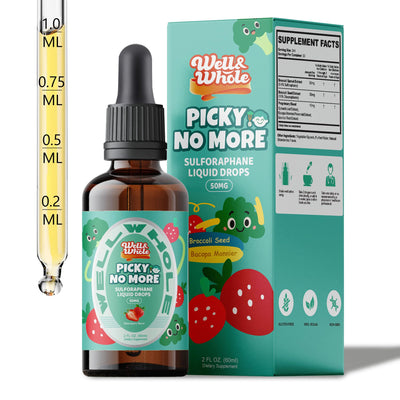
If you'd like to try it, Sulforaphane Broccoli Supplement Liquid Drops for Kids with Sulforaphane, Glucoraphanin, Bacopa Monnieri is the closest match to what we've covered here. Browse Antioxidant Support and Health Benefits to see how the alternatives compare.
These statements have not been evaluated by the Food and Drug Administration. This product is not intended to diagnose, treat, cure, or prevent any disease. Talk to a healthcare professional before starting any new supplement, especially if you are pregnant, nursing, taking medication, or managing a health condition.