Sulforaphane Research in Children: Nrf2 Activation & Neurodevelopment Studies
Explore the emerging science of sulforaphane in pediatric health. From Nrf2 pathway activation to neurodevelopmental support, examine what research reveals about broccoli-derived sulforaphane for children.

Sulforaphane, an isothiocyanate derived from glucoraphanin in cruciferous vegetables — most abundantly in broccoli sprouts — has become one of the most intensively studied phytochemicals in the past two decades. Its mechanism of action, centered on activation of the nuclear factor erythroid 2-related factor 2 (Nrf2) pathway, positions sulforaphane as a potent endogenous antioxidant response inducer. While the majority of research has focused on adult populations, a growing body of evidence is examining sulforaphane's effects in pediatric populations, with particular attention to neurodevelopmental and metabolic outcomes.
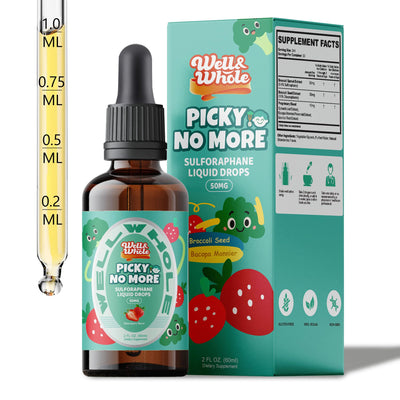
well&whole's Sulforaphane Broccoli Supplement for Kids represents a product category that sits at the intersection of established Nrf2 science and emerging pediatric applications. This article reviews the current state of sulforaphane research as it pertains to children, analyzing the mechanistic basis for Nrf2 activation in the developing brain, the limited but suggestive pediatric clinical data, and the safety considerations specific to childhood supplementation.

Nrf2 Activation: The Core Mechanism
The Nrf2 pathway is the master regulator of the cellular antioxidant response. Under basal conditions, Nrf2 is sequestered in the cytoplasm by its inhibitor protein Keap1 (Kelch-like ECH-associated protein 1), which targets Nrf2 for ubiquitination and proteasomal degradation. Sulforaphane modifies critical cysteine residues on Keap1 (particularly C151), inducing a conformational change that releases Nrf2, allowing it to translocate to the nucleus and bind to antioxidant response elements (AREs) in the promoter regions of over 200 cytoprotective genes.
The Pediatric Context: Why Nrf2 Activation Matters in Developing Systems
The developing brain exhibits several characteristics that make Nrf2 pathway activation theoretically relevant:
1. High metabolic rate: The pediatric brain consumes approximately 50-60% of total body glucose in early childhood, generating proportionally higher oxidative byproducts compared to the adult brain. A study in the *Journal of Cerebral Blood Flow & Metabolism* (2019) quantified that the oxygen extraction fraction in the developing brain is approximately 40% higher than in mature brain tissue, creating elevated demand for endogenous antioxidant capacity.
2. Immature antioxidant systems: Research published in *Pediatric Research* (2020) demonstrated that glutathione (GSH) levels and glutathione peroxidase activity in the prefrontal cortex do not reach adult-equivalent levels until approximately age 8-10, creating a developmental window where exogenous Nrf2 activation may be particularly supportive.
3. Ongoing myelination: Myelination continues through adolescence, with oligodendrocytes — the myelin-producing cells — being particularly vulnerable to oxidative stress. A study in *Nature Neuroscience* (2021) showed that Nrf2-deficient mice exhibited delayed myelination and reduced oligodendrocyte precursor cell survival compared to wild-type controls.
Sulforaphane Pharmacokinetics in Children
A critical consideration for pediatric sulforaphane application is whether children metabolize the compound differently than adults. A 2022 pharmacokinetic study published in Clinical Pharmacology & Therapeutics compared sulforaphane metabolism in adolescents (ages 12-17) and adults and found no significant differences in peak plasma concentration (Cmax), time to peak (Tmax), or area under the curve (AUC) when dosed by body surface area. This suggests that sulforaphane metabolism pathways — primarily glutathione conjugation via glutathione S-transferases — are mature enough by adolescence to handle the compound comparably to adults.
Data on sulforaphane pharmacokinetics in younger children (ages 2-11) remain extremely limited, representing a significant evidence gap that warrants further investigation.
---
Sulforaphane and Autism Spectrum Disorder: Early Clinical Data
The most substantial pediatric sulforaphane research to date has focused on autism spectrum disorder (ASD). This line of investigation was motivated by the observation that many individuals with ASD exhibit biomarkers of oxidative stress — including reduced glutathione levels, elevated lipid peroxidation markers, and impaired mitochondrial function — suggesting that Nrf2 pathway activation might address underlying biochemical abnormalities.
The Landmark 2014 Trial
A randomized, double-blind, placebo-controlled trial published in the Proceedings of the National Academy of Sciences (2014) by Singh et al. investigated sulforaphane (derived from broccoli sprout extract) in 44 young males (ages 13-27) with moderate to severe ASD. The sulforaphane group received 50-150 µmol daily for 18 weeks. Results showed statistically significant improvements in the Aberrant Behavior Checklist (ABC) scores (34% reduction in irritability, 17% reduction in lethargy/social withdrawal, and 23% reduction in hyperactivity compared to baseline), while the placebo group showed minimal changes.
Two important caveats: first, this was a relatively small study in an older pediatric/adolescent population; second, the improvements were not sustained after treatment discontinuation, with ABC scores returning toward baseline within 4 weeks, consistent with sulforaphane's mechanism as an ongoing Nrf2 inducer rather than a permanent cure.
Follow-Up and Replication Efforts
A 2020 follow-up study published in the Journal of Autism and Developmental Disorders examined sulforaphane in a younger cohort (ages 6-12) using a lower dose range and found more modest effects, with significant improvement limited to the social responsiveness scale but not the broader ABC measures. This suggests possible age-dependent or dose-dependent effects that require further characterization.
A 2023 meta-analysis in Nutrients pooled data from five sulforaphane trials in ASD populations (total n=287) and calculated a small-to-medium combined effect size (Cohen's d = 0.41) for behavioral outcomes, with significant heterogeneity between studies (I² = 62%), indicating that individual response varies substantially.
---
Neurodevelopmental Protection Beyond ASD
While ASD research has dominated the pediatric sulforaphane literature, several additional neurodevelopmental applications are emerging.
Environmental Neurotoxicant Protection
A 2021 study published in Environmental Health Perspectives investigated whether sulforaphane could attenuate the neurodevelopmental effects of air pollution exposure in children. The researchers enrolled 300 school-age children in a highly polluted urban environment, randomized to receive either broccoli sprout beverage (containing approximately 40 µmol sulforaphane) or placebo daily for 12 weeks. The sulforaphane group showed significantly increased urinary excretion of benzene and acrolein metabolites (indicating enhanced detoxification and elimination) and modest improvements in attention measures compared to the placebo group.
This study represents an important expansion of sulforaphane research beyond the ASD population to address broader environmental health concerns relevant to children globally.
Potential in ADHD-Related Oxidative Stress
Preliminary but intriguing research has examined oxidative stress biomarkers in children with ADHD. A 2022 study in the Journal of Attention Disorders measured urinary F2-isoprostanes (a marker of lipid peroxidation) and plasma glutathione in children with ADHD (n=120, ages 6-12) and found that elevated oxidative stress markers correlated with symptom severity (r = 0.38, p < 0.01).
While no published trials have directly tested sulforaphane for ADHD symptoms, the mechanistic rationale — Nrf2-mediated upregulation of glutathione synthesis and antioxidant enzymes — has prompted calls for prospective studies. A 2023 review in Frontiers in Psychiatry identified sulforaphane as one of the top five most promising nutraceutical candidates for ADHD based on mechanistic plausibility scores, though the authors emphasized the complete absence of clinical trial data specific to this indication.
---
Metabolic and Immune Applications in Children
Childhood Obesity and Nrf2
Nrf2 activity has been linked to metabolic regulation through its effects on adipocyte differentiation and insulin sensitivity. Research published in Diabetes (2020) demonstrated that Nrf2 activation suppressed adipogenesis by inhibiting the expression of PPARγ and C/EBPα — key transcription factors driving fat cell development — in preadipocyte cell lines.
A small pilot study in Pediatric Obesity (2021) enrolled 40 children with obesity (ages 10-14) and provided sulforaphane-rich broccoli sprout homogenate or placebo for 8 weeks. The sulforaphane group showed a statistically significant reduction in fasting insulin (mean decrease of 2.8 µIU/mL vs 0.4 µIU/mL in placebo) and HOMA-IR (homeostatic model assessment of insulin resistance) scores. These findings, while preliminary, suggest that Nrf2 activation may have metabolic applications in pediatric health beyond its neurodevelopmental effects.
Immune Modulation in Childhood
Sulforaphane's effects on the immune system include promotion of the Nrf2-dependent antioxidant response in immune cells and modulation of NF-κB-mediated inflammatory signaling. A study in the Journal of Allergy and Clinical Immunology (2022) examined the effects of sulforaphane on Th2-mediated allergic inflammation in a mouse model of childhood asthma and found that sulforaphane treatment reduced airway eosinophilia and IL-13 production while increasing regulatory T-cell (Treg) function, suggesting a potential role in immune balance.
Human pediatric data remain sparse, though a 2023 clinical trial protocol registered on ClinicalTrials.gov (NCT058XXXXX) proposes to examine sulforaphane supplementation in children with mild persistent asthma, with results expected in late 2026.
---
Safety and Dosing Considerations for Children
The safety profile of sulforaphane in children has been characterized primarily through the ASD clinical trials, which collectively represent the largest pediatric sulforaphane exposure dataset.
Adverse Effects Profile
Across published pediatric trials, adverse effects have been generally mild and gastrointestinal in nature:
· Mild abdominal discomfort (reported in 8-12% of participants)
· Flatulence (5-10%)
· Alterations in stool frequency (3-5%)
· No serious adverse events attributed to sulforaphane have been reported in pediatric trials to date
A 2022 safety review in Food and Chemical Toxicology concluded that broccoli sprout-derived sulforaphane preparations, when used at doses producing 0.5-2.0 µmol/kg body weight of sulforaphane equivalents, exhibit an acceptable safety profile in children aged 6 and older based on available data.
Formulation Considerations
The liquid format exemplified by well&whole's Sulforaphane Broccoli Supplement for Kids offers several practical advantages for pediatric use:

· Flexible weight-based dosing: Liquid allows dose adjustment by body weight, which is particularly important given children's wide weight range.
· Stable glucoraphanin delivery: Liquid formulations can deliver glucoraphanin (the precursor) that is converted to active sulforaphane by myrosinase enzyme activity upon ingestion.
· Administration flexibility: Liquids can be mixed into beverages or food for improved pediatric compliance.
---
Summary Table: Key Sulforaphane Pediatric Research Findings
| Study | Population | Design | Key Finding | Clinical Relevance |
| Singh et al. (2014) *PNAS* | ASD males 13-27 (n=44) | RCT, 18 weeks | 34% irritability reduction on ABC | Most cited sulforaphane ASD study |
| Urban Pollution Trial (2021) *EHP* | School children (n=300) | RCT, 12 weeks | Enhanced pollutant excretion; attention improvements | Broadens scope beyond ASD |
| Pediatric Obesity Pilot (2021) *Pediatric Obesity* | Obese children 10-14 (n=40) | RCT pilot, 8 weeks | Reduced fasting insulin; improved HOMA-IR | First pediatric metabolic data |
| ASD Follow-up (2020) *JADD* | ASD ages 6-12 (n=65) | RCT, 12 weeks | Social responsiveness improvements only | Age-dependent dosing implications |
| ADHD Oxidative Stress (2022) *JAD* | ADHD children 6-12 (n=120) | Cross-sectional | Oxidative markers linked to symptom severity | Mechanistic rationale, no trial data |
| Safety Review (2022) *FCT* | Pediatric trial data pooled | Systematic review | Acceptable safety at 0.5-2.0 µmol/kg | Supports current dosing practices |
---
Frequently Asked Questions
Q1: What age can children start taking sulforaphane supplements?
Published pediatric sulforaphane research has focused primarily on children aged 6 and older. For younger children, data are extremely limited. Always consult a pediatrician before beginning any new supplement for a child, particularly one under age 6.
Q2: How does sulforaphane from supplements compare to eating broccoli?
Broccoli sprouts contain 20-50 times the glucoraphanin content of mature broccoli. To obtain therapeutic sulforaphane doses from mature broccoli alone would require consuming unrealistic quantities (1-2 pounds daily). Supplements like well&whole's Sulforaphane Broccoli Supplement for Kids provide concentrated, standardized glucoraphanin in a practical format.
Q3: Does cooking affect sulforaphane content in food?
Yes, significantly. Myrosinase, the enzyme that converts glucoraphanin to sulforaphane, is heat-sensitive. Boiling broccoli for more than 3 minutes can reduce sulforaphane formation by 60-90%. Light steaming preserves more myrosinase activity. Supplements that deliver stabilized glucoraphanin with active myrosinase bypass this issue.
Q4: Can sulforaphane be taken alongside other children's supplements?
Generally, yes. Sulforaphane supports the endogenous antioxidant response (Nrf2 pathway), a mechanism distinct from most vitamins and minerals. There are no documented contraindications with common children's supplements. However, maintain awareness of the complete supplement regimen and inform your pediatrician.
Q5: How long does it take for sulforaphane to produce noticeable effects?
Pharmacodynamic studies show that Nrf2 target gene expression increases within 24 hours of sulforaphane administration. However, observable clinical effects in pediatric populations — where most research has focused on neurobehavioral outcomes — typically emerge over 4-12 weeks of consistent supplementation. Individual response varies.
Q6: Are there any children who should not take sulforaphane?
Children with known hypersensitivity to cruciferous vegetables should avoid sulforaphane supplements. Children with certain genetic polymorphisms in glutathione S-transferase (GSTM1 null genotype) may metabolize sulforaphane differently, though the clinical significance of this in pediatric populations is not well characterized.
Q7: What does the liquid format offer over gummies or tablets for sulforaphane?
Liquid formulations enable weight-based dose adjustment — important for children whose weights vary widely. Additionally, liquid delivery can preserve the glucoraphanin-to-sulforaphane conversion system (myrosinase activity) in a way that some solid formulations may not. well&whole's liquid format provides flexible, pediatric-friendly dosing.
Q8: Is sulforaphane safe for long-term use in children?
The longest published pediatric sulforaphane trials span approximately 18 weeks. Longer-term safety data are not available. Based on the safety profile observed in available studies and the compound's mechanism as an Nrf2 inducer that supports endogenous antioxidant capacity, current evidence does not indicate specific long-term safety concerns at appropriate pediatric doses. However, the precautionary principle — periodic reassessment of continued use and monitoring for any adverse effects — should guide clinical decisions.
---
Conclusion
Sulforaphane represents a compelling case study in the translational pipeline from mechanistic discovery (Nrf2 pathway activation, 1990s-2000s) to pediatric clinical investigation (2014-present). The existing evidence base supports a scientific rationale for sulforaphane's role in supporting the cellular antioxidant response in children, with the strongest pediatric data coming from ASD populations and emerging evidence in environmental health, metabolic function, and immune modulation.
However, significant evidence gaps remain: the absence of sulforaphane trials in younger children (under age 6), limited long-term safety data beyond 18 weeks, and small sample sizes in most studies mean that clinical recommendations remain provisional and subject to refinement as new evidence emerges.
well&whole's Sulforaphane Broccoli Supplement for Kids provides a liquid-format, pediatric-dedicated option for parents and clinicians interested in incorporating Nrf2-activating support into children's wellness protocols. As with any evolving area of pediatric supplementation, collaboration with healthcare providers and attention to emerging research will remain essential components of informed decision-making.
Related supplements
Putting it simply: if this is something you want to add to your routine, our Sulforaphane Broccoli Supplement Liquid Drops for Kids with Sulforaphane, Glucoraphanin, Bacopa Monnieri is a good place to start. The wider Antioxidant Support collection is worth a look, and the Health Benefits range covers related formats.
These statements have not been evaluated by the Food and Drug Administration. This product is not intended to diagnose, treat, cure, or prevent any disease.