Sulforaphane for Kids: The Broccoli Antioxidant Parents Should Know
Learn why sulforaphane from broccoli is a powerful antioxidant for kids' health. Discover its brain, immune, and detoxification benefits backed by research.

If you've ever struggled to get your child to eat broccoli—or any cruciferous vegetable—you're participating in one of parenting's most universal challenges. But beyond the dinner-table negotiations, there's a compelling scientific reason why broccoli deserves a place in your child's nutrition: sulforaphane.
Sulforaphane is the most potent naturally occurring inducer of Nrf2—a master regulator of antioxidant, detoxification, and anti-inflammatory gene expression. It's the compound that makes broccoli and other cruciferous vegetables so remarkably beneficial for cellular defense. And for children, whose developing immune systems, growing brains, and rapidly dividing cells face unique oxidative and environmental challenges, sulforaphane's protective properties are particularly relevant.
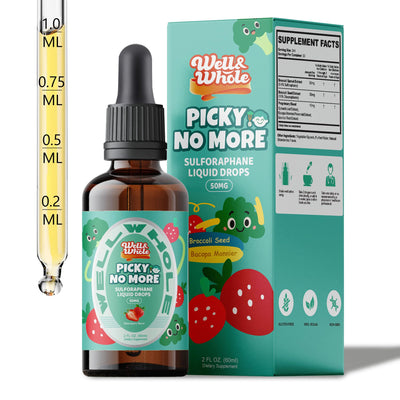
Sulforaphane Broccoli Supplement for Kids delivers sulforaphane alongside bacopa monnieri—a cognitive-supporting botanical that complements sulforaphane's protective properties with brain-focused benefits.
This ingredient science article explores what sulforaphane is, how it works, why it matters for children's health, and how the combination with bacopa creates a uniquely targeted kids' formula.
What Is Sulforaphane?
The Compound Behind Broccoli's Benefits
Sulforaphane (1-isothiocyanato-4-methylsulfinylbutane) is an isothiocyanate compound found in cruciferous vegetables—most abundantly in broccoli sprouts and broccoli florets. It's formed when the enzyme myrosinase converts glucoraphanin (a glucosinolate precursor) into sulforaphane upon chewing or crushing the vegetable.
The Conversion Process:
1. **Glucoraphanin** (stored in plant cells) → **Myrosinase** (stored separately) → **Sulforaphane** (formed when cells are damaged, e.g., by chewing)
2. This is why raw or lightly steamed broccoli produces more sulforaphane than thoroughly cooked broccoli—heat destroys myrosinase, preventing the conversion
The concentration of glucoraphanin in broccoli sprouts is 20-50 times higher than in mature broccoli florets, making sprouts the most concentrated natural source (1).
Why Sulforaphane Is Unique
Sulforaphane stands apart from other dietary antioxidants for several reasons:
- **It doesn't directly neutralize free radicals** (like vitamin C or E). Instead, it **activates the body's own antioxidant production systems**
- **Its effects last longer**—up to 72 hours after a single dose, compared to minutes for direct antioxidants
- **It activates over 200 protective genes** through the Nrf2 pathway
- **It's the most potent natural Nrf2 activator discovered**
This indirect antioxidant mechanism is far more efficient than direct antioxidant supplementation. Think of it as: rather than handing your child a single fire extinguisher (direct antioxidant), sulforaphane installs a fire suppression system throughout their cells that activates automatically when needed.
The Nrf2 Pathway: Sulforaphane's Master Switch
What Is Nrf2?
Nrf2 (Nuclear factor erythroid 2-related factor 2) is a transcription factor—a protein that controls the expression of multiple genes. When activated, Nrf2 moves into the cell nucleus and binds to antioxidant response elements (ARE) in DNA, triggering the production of a wide array of protective proteins:
| Nrf2-Activated System | Function | Relevance to Kids |
|------------------------|----------|--------------------|
| Glutathione system | Primary cellular antioxidant | Protects developing cells from oxidative damage |
| Phase II detoxification enzymes | Conjugate toxins for elimination | Supports body's natural detox pathways |
| HO-1 (heme oxygenase-1) | Anti-inflammatory; produces bilirubin (antioxidant) | Reduces inflammation in growing tissues |
| NAD(P)H:quinone oxidoreductase (NQO1) | Prevents toxic quinone formation | Protects cells from environmental toxins |
| Thioredoxin system | Redox regulation; protein repair | Maintains cellular balance during rapid growth |
Why Nrf2 Matters for Children
Children face unique oxidative and environmental challenges:
- **Rapid cell division**: Growing tissues have higher metabolic rates, producing more reactive oxygen species
- **Developing immune systems**: Still calibrating inflammatory responses; may be more vulnerable to oxidative stress
- **Environmental exposure**: Children breathe more air, drink more water, and eat more food per unit of body weight than adults, increasing relative exposure to environmental toxins
- **Brain development**: The developing brain is particularly susceptible to oxidative stress and inflammation
- **Mitochondrial development**: Children's mitochondria are still optimizing function; sulforaphane supports mitochondrial quality control
Research published in *Free Radical Biology and Medicine* demonstrated that sulforaphane activated Nrf2-dependent gene expression in multiple tissue types, providing broad cellular protection (2). A study in *PNAS* showed that sulforaphane protected against oxidative stress and inflammation in neural tissue specifically—relevant for children's brain development (3).
Sulforaphane's Benefits for Kids
1. Immune Support
Children's immune systems are constantly encountering new pathogens and calibrating their responses. Sulforaphane supports immune function through:
- **Anti-inflammatory action**: Nrf2-activated HO-1 helps modulate inflammatory responses, preventing excessive inflammation that can damage healthy tissue
- **Antioxidant protection**: Glutathione system activation protects immune cells from oxidative damage during immune responses
- **Phase II detoxification**: Helps the body efficiently process metabolic waste generated during immune activity
2. Brain Protection and Development
The developing brain is one of the most metabolically active organs in a child's body. This high metabolic rate generates significant oxidative stress, and the brain's lipid-rich composition makes it particularly vulnerable to free radical damage.
Sulforaphane's neuroprotective properties include:
- **Nrf2 activation in neural tissue**: Directly protects brain cells from oxidative stress
- **Anti-inflammatory action in the brain**: Reduces neuroinflammation that can impair cognitive development
- **Mitochondrial support**: Sulforaphane promotes mitophagy (clearing damaged mitochondria) and mitochondrial biogenesis, supporting efficient brain energy production
- **BDNF support**: Some research suggests sulforaphane may influence brain-derived neurotrophic factor (BDNF), a protein essential for neuron growth, survival, and synaptic plasticity
A study in *Neuroscience* demonstrated that sulforaphane protected against neuroinflammation and oxidative stress in the brain, supporting its potential as a neuroprotective compound for developing brains (4).
3. Detoxification Support
Children are exposed to environmental compounds through food, water, air, and household products. While their bodies have natural detoxification systems, sulforaphane enhances these systems through Phase II enzyme induction:
- **Glutathione S-transferases (GST)**: Conjugate toxins to glutathione for elimination
- **UDP-glucuronosyltransferases (UGT)**: Attach glucuronic acid to toxins for excretion
- **NQO1**: Prevents formation of toxic quinones from environmental compounds
This doesn't mean children need to "detox" in the trendy wellness sense—it means supporting the body's natural, efficient cellular defense systems that already operate continuously.
4. Respiratory Support
Sulforaphane has been studied for respiratory health, particularly in relation to environmental air quality. A study published in *Clinical Immunology* found that sulforaphane increased the production of Phase II enzymes in nasal epithelial cells, helping protect respiratory tissue from airborne pollutants (5). This may be relevant for children in urban environments or those with respiratory sensitivity.
The Bacopa Addition: Why Cognitive Support Complements Cellular Defense
What Is Bacopa Monnieri?
Bacopa monnieri (also called Brahmi or water hyssop) is an aquatic plant used in Ayurvedic medicine for over 3,000 years, primarily as a medhya rasayana—a category of herbs classified as "brain tonics" that support cognitive function, memory, and learning.
well&whole Sulforaphane Broccoli Supplement for Kids includes bacopa alongside sulforaphane, creating a formula that addresses both cellular defense (sulforaphane) and cognitive development (bacopa).
Bacopa's Cognitive Mechanisms
Bacopa supports cognitive function through:
- **Acetylcholine enhancement**: Bacopa may increase acetylcholine availability—a neurotransmitter critical for learning, memory, and attention
- **Bacosides A and B**: The primary active compounds, which support synaptic communication and neuron signaling
- **Antioxidant action**: Bacopa has direct antioxidant properties that complement sulforaphane's indirect antioxidant activation
- **BDNF influence**: Some research suggests bacopa may support BDNF expression, promoting neuron growth and synaptic plasticity
A study published in the *Journal of Ethnopharmacology* demonstrated that bacopa extract improved memory acquisition and retention in animal models (6). A randomized, double-blind, placebo-controlled trial in *Phytotherapy Research* found that bacopa supplementation improved memory, attention, and cognitive processing in healthy adults (7).
Why Combine Sulforaphane and Bacopa for Kids?
The combination addresses two complementary dimensions of children's health:
- **Sulforaphane**: Cellular defense—protecting developing cells from oxidative stress, inflammation, and environmental compounds
- **Bacopa**: Cognitive support—enhancing the neurotransmitter systems and neural plasticity that underlie learning and memory
This dual approach recognizes that protecting brain cells (sulforaphane) and optimizing brain function (bacopa) are both important for cognitive development, and that they work better together than alone.
How to Use Sulforaphane for Kids
Dosing Considerations
- Follow product label instructions for age-appropriate dosing
- well&whole Sulforaphane Broccoli Supplement for Kids is formulated specifically for children
- Consistency matters—Nrf2 activation benefits from regular, ongoing supplementation
- Best taken with a meal containing some fat, as sulforaphane absorption may be enhanced by lipid co-consumption
Supporting Practices
- **Encourage cruciferous vegetables**: Broccoli, cauliflower, Brussels sprouts, and kale in age-appropriate portions complement supplementation
- **Reduce environmental exposures**: Choose natural cleaning products, filter drinking water, minimize processed food intake
- **Support physical activity**: Exercise naturally activates some of the same antioxidant pathways that sulforaphane enhances
- **Ensure adequate sleep**: Sleep supports the cellular repair processes that sulforaphane helps protect
Precautions
- **Allergies**: Rare but possible; monitor for any reaction when first introducing the supplement
- **GI effects**: Some children may experience mild stomach discomfort initially; taking with food can help
- **Thyroid considerations**: Very high doses of cruciferous compounds may affect thyroid function; supplement doses are generally safe
- **Medication interactions**: Consult your pediatric healthcare provider if your child takes any medications
FAQ
Q1: What is sulforaphane and why is it important for kids?
Sulforaphane is a compound found in broccoli and other cruciferous vegetables that activates the Nrf2 pathway—the body's master switch for antioxidant, detoxification, and anti-inflammatory gene expression. For children with developing immune systems, growing brains, and rapid cell division, this cellular defense activation is particularly valuable.
Q2: Why can't kids just eat broccoli instead of taking a supplement?
They can, and they should! But most children don't eat enough broccoli to achieve therapeutic sulforaphane levels. Additionally, cooking destroys myrosinase (the enzyme needed for sulforaphane formation), and many kids prefer cooked broccoli over raw. Supplements provide consistent, standardized sulforaphane delivery regardless of dietary intake.
Q3: Is sulforaphane safe for children?
Sulforaphane at supplement doses is generally considered safe for children. well&whole Sulforaphane Broccoli Supplement for Kids is formulated with age-appropriate dosing. Always follow label instructions and consult your pediatric healthcare provider.
Q4: What does bacopa add to the formula?
Bacopa monnieri is an Ayurvedic brain tonic that supports memory, attention, and cognitive processing through acetylcholine enhancement and bacoside compounds. Combined with sulforaphane's cellular defense properties, it creates a formula that both protects developing brain cells and optimizes their function.
Q5: How does sulforaphane's Nrf2 activation differ from taking antioxidants?
Direct antioxidants (vitamin C, E) neutralize free radicals one at a time and are consumed in the process. Sulforaphane activates the body's own antioxidant production systems, creating a self-sustaining defense that lasts up to 72 hours per dose. It's like installing a fire suppression system rather than carrying a single fire extinguisher.
Q6: Can sulforaphane help with kids' immune challenges?
Sulforaphane supports immune function through anti-inflammatory modulation (preventing excessive inflammation) and antioxidant protection of immune cells. It's not an immune stimulant—it helps the immune system function more efficiently by protecting it from oxidative stress.
Q7: Does cooking broccoli destroy sulforaphane?
Cooking destroys myrosinase, the enzyme needed to convert glucoraphanin to sulforaphane. Lightly steaming (3-4 minutes) preserves more myrosinase than boiling. Supplements bypass this issue by providing pre-formed sulforaphane or stabilized glucoraphanin with active myrosinase.
Q8: How long before I notice effects in my child?
Cellular defense activation (Nrf2) begins within hours of sulforaphane consumption. However, subjective effects—improved energy, resilience, or cognitive changes—may take weeks to become noticeable. Bacopa's cognitive effects typically develop over 8-12 weeks of consistent use. Track changes over time rather than expecting immediate results.
Conclusion
Sulforaphane is one of the most remarkable compounds in nutritional science—a natural Nrf2 activator that turns on the body's master cellular defense switch, creating self-sustaining antioxidant, detoxification, and anti-inflammatory protection that lasts far longer than direct antioxidant supplements.
For children, whose developing immune systems, growing brains, and rapidly dividing cells face unique oxidative and environmental challenges, sulforaphane's protective properties are particularly relevant. Combined with bacopa monnieri's cognitive support in well&whole Sulforaphane Broccoli Supplement for Kids, the formula addresses both cellular defense and cognitive development—two pillars of children's health that complement each other perfectly.
If broccoli negotiations at the dinner table aren't producing the intake you'd like, a sulforaphane supplement can provide the cellular defense benefits in a format your child will actually take consistently. Because when it comes to kids' health, consistency is everything.
Ready to give your child broccoli's best compound? Try well&whole Sulforaphane Broccoli Supplement for Kids.
Related supplements
Should you decide to supplement, Sulforaphane Broccoli Supplement Liquid Drops for Kids with Sulforaphane, Glucoraphanin, Bacopa Monnieri is our formulation for this purpose. For a broader comparison, see the Antioxidant Support and Health Benefits collections.
These statements have not been evaluated by the Food and Drug Administration. This product is not intended to diagnose, treat, cure, or prevent any disease.