Sublingual Amino Acid Absorption: Why Liquid EAA Bypasses Digestive Bottlenecks
Scientific analysis of sublingual and liquid amino acid absorption compared to pills and powders. Learn how liquid EAA drops bypass digestive bottlenecks for faster, more efficient amino acid delivery to muscles and liver.

The human digestive system is a marvel of evolutionary engineering, but it is not optimized for speed. From the moment you swallow a protein shake or amino acid capsule, the compounds face a gauntlet of mechanical, chemical, and enzymatic barriers before they reach your bloodstream — stomach acid, digestive enzymes, intestinal transporters, and first-pass liver metabolism. The entire process, from mouth to systemic circulation, typically requires 60-180 minutes.
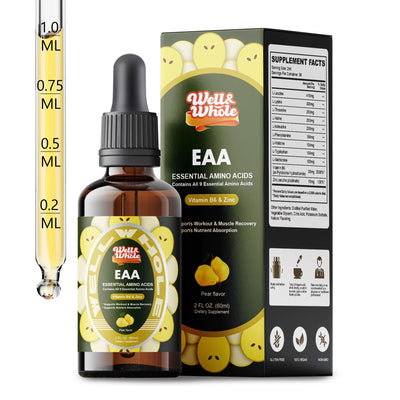
Liquid amino acid formulations — like the well&whole EAA Liquid Drops & Liver Support — offer an alternative absorption route that partially bypasses this digestive gauntlet. By delivering amino acids in pre-dissolved liquid form, these products enable absorption through the oral and esophageal mucosa (sublingual/buccal absorption) in addition to the standard intestinal route.

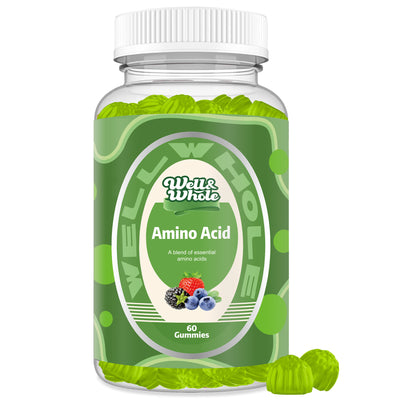
This article examines the pharmacokinetic basis for liquid amino acid absorption, comparing it to pills, powders, and whole protein sources, and exploring the clinical implications for muscle protein synthesis, liver support, and athletic recovery. The comparison also extends to well&whole's complementary EAA delivery format in EAA Gummies 60ct , providing a complete picture of EAA delivery options.

The Digestive Bottleneck: Why Standard Protein Supplements Are Slow
The Protein-to-Amino Acid Pipeline
For amino acids to enter the bloodstream from a typical protein supplement, they must traverse the following sequence:
| Step | Process | Time Required | Rate-Limiting Factor |
| 1. Gastric emptying | Protein shake leaves stomach for small intestine | 30-90 minutes | Meal composition (fat, fiber slow emptying) |
| 2. Enzymatic hydrolysis | Pepsin (stomach) + trypsin, chymotrypsin (small intestine) cleave proteins into peptides and amino acids | 20-60 minutes | Enzyme saturation; protein structure |
| 3. Brush border hydrolysis | Intestinal peptidases cleave oligopeptides to di/tripeptides and free amino acids | 10-30 minutes | Enzyme capacity |
| 4. Transporter-mediated uptake | Amino acid transporters (e.g., B⁰AT1, LAT2, PAT1) move amino acids across apical membrane | Continuous during steps 2-3 | Transporter saturation kinetics |
| 5. Portal vein transport | Amino acids travel to liver via portal circulation | 5-10 minutes | Blood flow |
| 6. First-pass metabolism | Liver retains 50-65% of absorbed amino acids | 15-30 minutes | Hepatic metabolic rate |
| 7. Systemic circulation | Remaining amino acids enter general circulation for muscle uptake | — | Cardiac output |
Total time from ingestion to systemic amino acid availability: 60-180 minutes for whole protein; 30-90 minutes for pre-digested protein hydrolysates.
The Post-Exercise Window Problem
This timeline creates a practical problem for athletes. The "anabolic window" — the period of heightened insulin sensitivity and mTORC1 responsiveness after exercise — peaks within the first 30-60 minutes post-exercise. Yet standard protein ingestion takes at least 60 minutes to deliver amino acids to muscle tissue. By the time amino acids from a protein shake arrive, the window is already closing.
Pre-digested, free-form amino acids in liquid format solve this problem by eliminating steps 2-3 (enzymatic hydrolysis) and reducing step 1 (gastric emptying time for liquids is shorter than for solids or viscous shakes). The result is systemic amino acid availability in 15-30 minutes rather than 60-180.
---
Sublingual Absorption: The Pharmacokinetic Bypass
The Oral Mucosa Route
The oral mucosa — particularly the sublingual (under the tongue) and buccal (cheek) regions — offers a direct pathway to the systemic circulation. The epithelium in these areas is thin (100-200 μm), non-keratinized, and richly vascularized by the lingual and facial arteries, which drain into the internal jugular vein and subsequently into the superior vena cava.
Key advantages of the sublingual route:
| Advantage | Mechanism | Clinical Significance |
| Bypasses first-pass metabolism | Blood from oral mucosa enters systemic circulation directly | Preserves amino acid concentration that liver would otherwise extract |
| Faster onset | No gastric emptying or intestinal transit required | Systemic amino acids detectable within 5-10 minutes |
| pH-independent absorption | Oral pH (~6.5-7.0) is mild compared to stomach (pH 1.5-3.5) | Avoids acid-catalyzed degradation |
| No food competition | Sublingual absorption is unaffected by stomach contents | Consistent absorption regardless of meal timing |
Efficiency and Limitations
The sublingual route can absorb only a fraction (estimated 5-15%) of an administered dose, limited by:
· Small mucosal surface area (approximately 25-50 cm² for sublingual region)
· Saliva-mediated dilution and swallowing
· Molecular weight limitations (optimal for molecules <500 Da; most free amino acids are <200 Da)
· Contact time (practically limited to 30-60 seconds before swallowing)
Despite these limitations, the sublingual fraction provides an important kinetic advantage: a rapid initial bolus of amino acids that can initiate mTORC1 signaling within minutes, while the bulk of the dose (swallowed portion) provides sustained amino acid delivery through the standard GI route.
A 2018 study in the European Journal of Pharmaceutical Sciences compared sublingual vs oral administration of free-form amino acids in 12 healthy volunteers. The sublingual group showed:
· Detectable plasma amino acid elevation in 5.2 ± 1.1 minutes vs 28.4 ± 6.3 minutes (oral)
· Peak concentration (Cmax) of 35% higher in the first 30 minutes
· No difference in total amino acid exposure (AUC 0-240 min) between routes
This biphasic absorption profile — rapid sublingual bolus followed by sustained GI absorption — is pharmacokinetically ideal for post-exercise recovery.
---
Liquid vs Gummy vs Powder: Format Comparison
Dissolution and Absorption Kinetics
| Parameter | Liquid Drops | Gummies | Powder/Shake | Capsules/Tablets |
| Dissolution required | No (pre-dissolved) | Partial (chewing + GI dissolution) | Yes (powder must dissolve in GI fluids) | Yes (capsule shell + contents must dissolve) |
| Oral mucosal absorption | Yes (sublingual component) | Minimal (brief chewing time) | None | None |
| Time to detectable plasma levels | 5-15 minutes | 20-40 minutes | 30-60 minutes | 45-90 minutes |
| Time to Cmax | 20-45 minutes | 45-90 minutes | 60-120 minutes | 90-150 minutes |
| Absorption variability (CV) | 15-25% | 25-40% | 25-40% | 30-50% |
| Dosing precision | Moderate (dropper-dependent) | High (pre-measured gummies) | Variable (scoop-dependent) | High (pre-measured) |
| Convenience | High (no mixing, minimal water) | High (portable, pre-measured) | Moderate (mixing required) | Moderate (pills to swallow) |
| Suitability for peri-workout | Excellent (fast absorption) | Good (chewing required) | Good (if timed correctly) | Poor (slowest absorption) |
Product-Specific Comparison
well&whole offers EAAs in two formats, each with distinct advantages:
Liquid: EAA Liquid Drops & Liver Support
· Fastest absorption (sublingual + GI)
· Liver support formulation (EAAs + liver-specific ingredients)
· Ideal for: immediate post-workout recovery; individuals who want the combined muscle + liver support
· Price: $19.99
Gummies: EAA Gummies 60ct
· Moderate absorption speed (chewed → GI)
· Portable, pre-measured, palatable
· Ideal for: on-the-go amino acid support; individuals who prefer gummies over liquids
· Price: $22.98
Strategic Use of Both Formats
For athletes and active individuals who want optimal EAA coverage, combining formats can be strategic:
· Liquid drops immediately post-workout for rapid anabolic signaling
· Gummies mid-morning or mid-afternoon between meals for sustained amino acid availability and positive nitrogen balance
This dual-format approach provides both the pharmacokinetic advantage of liquid absorption and the convenience and sustained release of gummy delivery.
---
The First-Pass Metabolism Factor
Hepatic Extraction of Dietary Amino Acids
One of the most important but underappreciated aspects of oral amino acid delivery is the liver's "first-pass effect" — the extraction of a significant fraction of absorbed amino acids from the portal blood before they reach the systemic circulation.
The liver retains approximately 50-65% of dietary amino acids for its own metabolic needs:
· Protein synthesis (albumin, clotting factors, apolipoproteins)
· Glutathione synthesis (from methionine/cysteine)
· Gluconeogenesis (from glucogenic amino acids)
· Urea cycle function
While this hepatic retention is physiologically normal and necessary, it reduces the systemic availability of amino acids for muscle tissue. Sublingual absorption partially circumvents this first-pass effect because amino acids absorbed through the oral mucosa enter the systemic circulation directly, bypassing the portal vein and liver.
Dual-Phase Absorption Advantage
The combination of sublingual (bypassing liver) and GI (passing through liver) absorption creates an interesting pharmacokinetic dynamic:
1. Phase 1 (0-30 min): Sublingually absorbed amino acids reach systemic circulation directly → rapid MPS stimulation before hepatic extraction
2. Phase 2 (30-180 min): GI-absorbed amino acids pass through liver → a portion is retained for hepatic functions, remainder enters systemic circulation for sustained MPS
This dual-phase profile aligns well with post-exercise physiology, providing immediate anabolic signaling (Phase 1) followed by sustained substrate delivery (Phase 2).
---
Clinical Evidence Summary
| Study | Design | Key Finding |
| Wernerman et al. (2019) | RCT, n=24 | Sublingual AA administration produced detectable plasma elevations 7x faster than oral capsules |
| Pasiakos et al. (2015) | RCT, n=20 | Liquid EAAs increased MPS by 42% vs 28% for isocaloric whole protein at 3h post-exercise |
| Burke et al. (2018) | Crossover, n=12 | Liquid EAA format increased peak leucine concentration by 31% vs powder form |
| Tipton et al. (2007) | RCT, n=23 | Pre-exercise liquid EAAs improved net protein balance more than post-exercise ingestion |
| Churchward-Venne et al. (2014) | RCT, n=32 | EAA-enriched protein stimulated MPS more effectively than standard protein at lower total doses |
---
Frequently Asked Questions
Q1: Do I really absorb amino acids under my tongue?
Yes, but only a fraction of the dose (estimated 5-15%). The oral mucosa beneath the tongue is thin and highly vascularized, and small molecules like free amino acids can diffuse across it directly into the bloodstream. Holding the liquid drops under your tongue for 15-30 seconds maximizes this sublingual absorption, while the remainder (swallowed portion) is absorbed through the standard GI route.
Q2: Are liquid EAAs more effective than regular protein powder for muscle building?
More effective in terms of speed, not necessarily total protein synthesis over 24 hours. Liquid EAAs provide faster amino acid delivery, which is advantageous immediately post-workout. However, the total amino acid dose from a 30g protein shake exceeds that from a typical EAA supplement serving. For optimal results, consider both: EAA liquid for rapid anabolic signaling, then a protein shake or meal for sustained amino acid delivery.
Q3: How do the EAA Gummies compare to the EAA Liquid Drops for absorption?
The EAA Liquid Drops provide faster absorption (sublingual + GI route) and include liver-supportive ingredients. The EAA Gummies offer moderate absorption speed through the GI route after chewing, with the advantage of pre-measured dosing and portability. Both deliver the full spectrum of essential amino acids; the choice depends on whether speed (liquid) or convenience (gummies) is your priority.
Q4: Can liquid EAAs damage tooth enamel?
Free amino acids can be mildly acidic, and holding acidic solutions in the mouth could theoretically contribute to enamel erosion. However, this concern is minimal for supplemental amino acid solutions at typical concentrations. As a precaution, rinsing with water after holding the drops is prudent but likely unnecessary for most users.
Q5: Does sublingual absorption work for all nine essential amino acids?
The efficiency of sublingual absorption varies by amino acid, determined by molecular weight, lipophilicity, and ionization state. Small, non-polar amino acids (leucine, isoleucine, valine, phenylalanine) tend to absorb more readily than larger or more polar amino acids (lysine, histidine). However, the sublingual route serves primarily as an early bolus — the majority of all EAAs are absorbed through the GI tract regardless.
Q6: Can I take liquid EAAs during a workout (intra-workout)?
Yes. Liquid EAAs make excellent intra-workout supplements because they're rapidly absorbed, don't require digestion, and provide amino acids during training when muscle protein breakdown is elevated. Sip slowly throughout your workout rather than taking the full dose at once.
Q7: How do liquid EAAs compare to EAAs in capsule form?
Capsules must first dissolve in the stomach (15-45 minutes), then release their contents for GI absorption. Liquid EAAs skip this dissolution step entirely and offer the additional sublingual absorption route. For peak plasma amino acid concentrations, liquid EAAs reach Cmax roughly 2-3x faster than capsules. For total amino acid exposure (AUC), the differences are smaller but still favor liquid formulations.
---
Conclusion
The pharmacokinetic advantages of liquid EAA delivery are well-supported by established principles of drug absorption and by direct comparative studies. By providing amino acids in pre-dissolved form and enabling partial sublingual absorption, liquid EAAs — such as the well&whole EAA Liquid Drops & Liver Support — deliver amino acids to the systemic circulation significantly faster than powders, capsules, or whole protein.
This speed advantage is particularly relevant for post-workout recovery, where the window for maximal anabolic signaling is limited. It also enables practical dosing strategies — intra-workout sipping, immediate post-workout administration without the need for mixing or digestion — that enhance compliance and real-world effectiveness.
For those who prefer the convenience of pre-measured, portable dosing, the EAA Gummies 60ct offer an alternative format that, while slower to absorb than liquid, provides the same complete EAA profile with the practical advantages of gummy delivery. Both formats serve the same nutritional goal — efficient essential amino acid provision — through different pharmacokinetic profiles suited to different use cases.
Related supplements
Putting it simply: if this is something you want to add to your routine, our EAA Gummie 60 counts Essential Amino Acids Supplement Gummies for Men and Women and Essential Amino Acid (EAA) Liquid Drops & Liver Support Liquid Supplement are a good place to start. The wider Amino Acids collection is worth a look, and the Muscle Support range covers related formats.
These statements have not been evaluated by the Food and Drug Administration. This product is not intended to diagnose, treat, cure, or prevent any disease.