Slippery Elm Safety: Can You Take It Long-Term?
Is slippery elm safe for long-term use? Learn about safety considerations, potential interactions, duration guidelines, and best practices for daily supplementation.

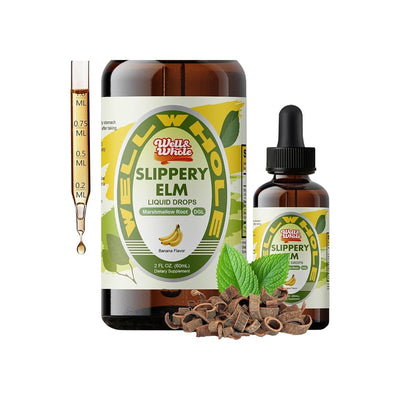
Slippery elm has earned its reputation as one of the gentlest, most soothing herbs in the botanical repertoire. Its mucilaginous inner bark has been used for centuries to calm irritated throats, settle upset stomachs, and support digestive comfort. But as more people incorporate [well&whole Slippery Elm Liquid Drops into their daily wellness routines, a common question arises: can you take slippery elm long-term?

This safety-focused article examines the evidence, traditional practices, and practical considerations around long-term slippery elm use. We'll cover potential side effects, medication interactions, appropriate duration of use, and best practices for incorporating slippery elm safely into an ongoing gut-support protocol.
Slippery Elm's Safety Profile
A Long History of Traditional Use
Slippery elm (Ulmus rubra) has been used continuously in North American herbal medicine for hundreds of years. Native American tribes—including the Iroquois, Mohegan, and Cherokee—used the inner bark as a staple remedy for digestive complaints, wound healing, and respiratory discomfort. This long history of traditional use provides a foundation of safety data, even though formal clinical trials are limited.
Generally Recognized as Safe
The FDA classifies slippery elm bark as "Generally Recognized as Safe" (GRAS) when used in food amounts. This designation means that slippery elm has a long history of common use in food with no documented adverse effects at typical consumption levels.
The American Herbal Products Association (AHPA) classifies slippery elm as a Class 1 herb—"herbs that, when used appropriately, can be consumed on a daily basis for extended periods of time without risk." This is the highest safety classification in the AHPA system.
What Makes Slippery Elm So Gentle?
Slippery elm's gentleness stems from its mechanism of action. Rather than stimulating, suppressing, or altering physiological processes, slippery elm primarily acts through physical mechanisms:
- **Mucilage coating**: Forms a protective gel layer over irritated tissue
- **Demulcent action**: Soothes without pharmacologically active compounds entering systemic circulation
- **Local effect**: Most of the mucilage's action occurs in the gastrointestinal tract rather than being absorbed systemically
This local, physical mechanism of action is inherently less risky than herbs that alter hormone levels, stimulate organ function, or modulate neurotransmitters.
Potential Side Effects
Common Side Effects (Rare)
At typical supplement doses, side effects from slippery elm are uncommon. When they do occur, they tend to be mild:
| Side Effect | Frequency | Severity | Management |
|-------------|-----------|----------|------------|
| Mild nausea | Rare | Low | Take with food; reduce dose |
| Skin rash | Very rare | Low | Discontinue; may indicate allergy |
| Constipation (with inadequate water) | Possible | Low | Increase water intake |
| Throat irritation (from powder form) | Rare | Low | Use liquid drops instead |
Allergic Reactions
True allergic reactions to slippery elm are rare but possible. Individuals with allergies to elm trees or other plants in the Ulmaceae family should exercise caution. Signs of allergic reaction include:
- Skin rash or hives
- Difficulty breathing
- Swelling of the face, lips, or throat
- Rapid heartbeat
If any of these symptoms occur, discontinue use immediately and seek medical attention.
No Documented Toxicity
Published literature does not document toxicity from slippery elm at typical supplement doses. A review in the *Journal of Alternative and Complementary Medicine* noted that slippery elm has an excellent safety profile with no reports of serious adverse effects at standard doses (1).
Medication Interactions
The Absorption Concern
The primary safety consideration for long-term slippery elm use is its potential to reduce the absorption of oral medications. Because slippery elm mucilage forms a gel-like coating in the gastrointestinal tract, it can create a physical barrier that may interfere with the absorption of concurrently administered drugs and nutrients.
**Recommendation**: Take medications at least **2 hours before or after** slippery elm supplementation. This timing allows medications to be absorbed before the mucilage coating forms, or allows the coating to pass before the next medication dose.
Specific Medication Considerations
| Medication Category | Interaction Risk | Recommendation |
|--------------------|-----------------|----------------|
| Oral medications (general) | Moderate (reduced absorption) | 2-hour separation |
| Iron supplements | Moderate | 2-hour separation |
| Fat-soluble vitamins (A, D, E, K) | Low | 1-hour separation |
| Thyroid medications | Moderate | 2-hour separation; consult doctor |
| Blood thinners | Low (theoretical) | Consult healthcare provider |
| Diabetes medications | Low (theoretical) | Monitor blood sugar; consult doctor |
No Cytochrome P450 Interactions
Unlike many herbs that interact with medications through the cytochrome P450 enzyme system in the liver, slippery elm's primary interaction mechanism is physical (absorption interference) rather than metabolic. This means it does not alter how medications are metabolized—only potentially how they're absorbed. Proper timing separation effectively manages this concern.
Long-Term Use Considerations
Duration of Use
Traditional practice and modern herbalists differ in their recommendations for duration:
**Short-term protocol (4-8 weeks)**:
- Most commonly recommended for acute digestive discomfort
- Allows the mucilage to support gut lining during a healing phase
- Followed by a reassessment of whether continued use is needed
**Long-term maintenance (months to years)**:
- Practiced by many people with chronic digestive sensitivity
- Supported by slippery elm's Class 1 AHPA classification
- Requires periodic evaluation of ongoing need
Monitoring During Long-Term Use
If you take slippery elm for extended periods, consider these monitoring practices:
1. **Regular check-ins**: Every 3-6 months, reassess whether you still need daily slippery elm support
2. **Nutrient absorption**: Since mucilage can reduce nutrient absorption, ensure your diet is nutrient-dense and consider timing supplements away from slippery elm
3. **Medication reviews**: If you start any new medications, review timing considerations with your pharmacist
4. **Digestive progress**: Track whether your digestive symptoms are improving—if they resolve, you may be able to reduce or discontinue slippery elm
Potential Concerns with Extended Use
While no specific concerns have been documented, theoretical considerations include:
- **Nutrient interference**: Chronic mucilage presence in the GI tract could theoretically reduce absorption of certain nutrients over time, though this has not been documented clinically
- **Gut microbiome effects**: Mucilage is a form of soluble fiber that could influence gut microbiome composition—this could be beneficial (prebiotic effect) or require adaptation
- **Dependence pattern**: Some herbalists caution against relying on any single supplement indefinitely, recommending periodic breaks to reassess
Special Populations
Pregnancy and Nursing
Slippery elm has traditionally been used during pregnancy for digestive support and has no documented adverse effects in pregnancy. However, formal clinical safety studies in pregnant populations are lacking. The standard recommendation is to consult your healthcare provider before using any supplement during pregnancy or nursing.
Children
Slippery elm is traditionally used for children, particularly for soothing digestive discomfort. Dosing for children should be determined by a pediatric healthcare provider based on age, weight, and specific needs. Do not give adult-dose supplements to children.
Elderly
Elderly individuals may benefit from slippery elm's gentle digestive support but should be particularly mindful of medication timing, as older adults often take multiple medications that could be affected by mucilage absorption interference.
Best Practices for Long-Term Slippery Elm Use
A Responsible Approach
If you choose to use well&whole Slippery Elm Liquid Drops long-term, follow these best practices:
1. **Start with the recommended dose**: Don't increase beyond label recommendations without healthcare guidance
2. **Take with adequate water**: Hydration activates the mucilage and prevents constipation
3. **Separate from medications**: Maintain a 2-hour window between slippery elm and any oral medications
4. **Periodic reassessment**: Every few months, evaluate whether you still need daily supplementation
5. **Consider cycling**: Take a 1-2 week break every 3-4 months to reassess your baseline
6. **Maintain a nutrient-dense diet**: Counter any theoretical absorption concerns with a rich, varied diet
7. **Stay in communication with your healthcare provider**: Regular check-ups ensure your supplement protocol aligns with your overall health plan
FAQ
Q1: Is slippery elm safe to take every day?
Yes, slippery elm is classified as a Class 1 herb by the AHPA, meaning it can generally be consumed daily for extended periods when used appropriately. Follow product label instructions and separate from medications by 2 hours.
Q2: Can slippery elm interact with my medications?
Slippery elm mucilage may reduce the absorption of oral medications. Take medications at least 2 hours before or after slippery elm. This is a physical interaction (absorption timing), not a metabolic interaction.
Q3: What are the side effects of long-term slippery elm use?
Side effects are rare at typical doses and generally mild. They may include mild nausea or skin rash in sensitive individuals. No serious adverse effects have been documented in the literature.
Q4: Should I cycle slippery elm?
While not strictly required, cycling slippery elm (taking a 1-2 week break every 3-4 months) is a reasonable approach that allows you to reassess whether continued daily use is needed. Many people find their digestive symptoms improve over time, potentially reducing the need for ongoing supplementation.
Q5: Can I take slippery elm while pregnant?
Slippery elm has a history of traditional use during pregnancy without documented adverse effects. However, clinical safety studies are limited. Consult your healthcare provider before using any supplement during pregnancy.
Q6: Does slippery elm cause constipation?
Slippery elm itself doesn't cause constipation. However, if taken without adequate water, the mucilage can become thick and potentially slow bowel movements. Always take slippery elm with a full glass of water.
Q7: Can children take slippery elm?
Slippery elm has traditional use for children, but dosing should be determined by a pediatric healthcare provider. Do not give adult-dose supplements to children without professional guidance.
Q8: How long should I take slippery elm for gut support?
For acute digestive discomfort, 4-8 weeks of consistent use may be sufficient. For chronic digestive sensitivity, longer-term use is common and generally considered safe. Periodic reassessment is recommended.
Conclusion
Slippery elm is one of the safest herbs in the botanical pharmacopeia, with a centuries-long history of use, a Class 1 AHPA safety classification, and a gentle, physical mechanism of action. While long-term use is generally considered safe, responsible supplementation includes medication timing separation, adequate hydration, periodic reassessment, and regular communication with your healthcare provider.
well&whole Slippery Elm Liquid Drops—formulated with slippery elm, marshmallow root, and DGL licorice—offer a convenient, well-sourced option for daily gut lining support. Use them consistently, stay hydrated, and give your digestive system the gentle, sustained support it may need.
Related supplements
If you're ready to put this into practice, our Slippery Elm Liquid Drops, Marshmallow Root, Slippery Elm Bark Drops for Women, DGL Licorice Extract, Digestive Health, and Kids’ Black Walnut Digestive Support Drops, 14-in-1 Herbal Formula, Mixed Berry, Ages 1+, 2 fl oz are formulated with this in mind. You can also compare the Digestive Support and Health Benefits ranges to find the format that suits you.
These statements have not been evaluated by the Food and Drug Administration. This product is not intended to diagnose, treat, cure, or prevent any disease.