Slippery Elm for Digestive Health: Mucilage and Gut Lining

For centuries, traditional herbalists have turned to the inner bark of the slippery elm tree (*Ulmus rubra*) to address a wide range of digestive concerns. What makes this North American native tree so uniquely suited for gut health isn't just folklore—it's biochemistry. The answer lies in a gel-like compound called mucilage, which gives slippery elm its characteristic "slippery" texture when mixed with water.
In this comprehensive guide, we'll explore the science behind slippery elm's digestive benefits, how its mucilage works to protect and soothe the gut lining, what clinical research reveals, and how to incorporate this gentle yet powerful herb into your wellness routine. Whether you're dealing with occasional digestive discomfort or looking to support long-term gut integrity, understanding slippery elm's mechanisms can help you make informed choices about your digestive health.
What Is Slippery Elm?
Slippery elm (*Ulmus rubra*), also known as red elm or Indian elm, is a deciduous tree native to eastern North America. The part used medicinally is the inner bark (phloem), which is harvested in spring when the bark is easiest to separate from the wood.
Historical Use
Native American tribes, including the Iroquois, Ojibwa, and Mohawk, used slippery elm for:
- Soothing sore throats and coughs
- Supporting digestive comfort
- Nutritive food during winter months
- Topical poultices for minor skin irritations
European settlers adopted these uses, and by the 19th century, slippery elm was a standard entry in the U.S. Pharmacopeia. Today, it remains one of the most well-tolerated digestive herbs in the natural health tradition.
The Plant Profile
| Attribute | Details |
| Botanical Name | *Ulmus rubra* (formerly *Ulmus fulva*) |
| Plant Family | Ulmaceae |
| Used Part | Inner bark (phloem) |
| Active Compounds | Mucilage (polysaccharides), tannins, flavonoids |
| Primary Action | Demulcent (soothing to mucous membranes) |
| Onset of Action | Usually within 30-60 minutes |
| Duration | 2-4 hours per dose |
The Science of Mucilage: How Slippery Elm Works
What Is Mucilage?
Mucilage is a complex mixture of polysaccharides (long-chain carbohydrates) that becomes gel-like when exposed to water. In slippery elm, this mucilage makes up approximately 10-20% of the inner bark by weight.
When you consume slippery elm—whether as a powder, liquid extract, or lozenge—the mucilage absorbs water in the digestive tract and forms a slippery, viscous gel. This gel coating has several important effects:
1. Physical Barrier Protection
The mucilage gel physically coats the mucous membranes of the mouth, throat, esophagus, stomach, and intestines. This creates a temporary protective barrier that:
- Shields irritated tissues from further contact with stomach acid
- Reduces friction against sensitive gut lining
- Provides a soothing sensation that can ease the discomfort of occasional heartburn or acid reflux
- May help protect against minor mechanical irritation from food particles
2. Stimulating Mucus Production
Research suggests that demulcent herbs like slippery elm may stimulate the body's own mucus production. A 2008 study published in *BMC Complementary and Alternative Medicine* found that certain herbal demulcents increased mucus secretion in animal models, providing an additional layer of natural protection for the gut lining.
3. Antioxidant Activity
Slippery elm contains flavonoids and other polyphenolic compounds that exhibit antioxidant properties. A 2016 analysis in the *Journal of Ethnopharmacology* identified several antioxidant constituents in *Ulmus rubra* bark, which may help protect gut cells from oxidative stress.
4. Prebiotic Potential
Emerging research suggests that the polysaccharides in slippery elm may act as prebiotics—nourishing beneficial gut bacteria. While more human research is needed, this potential adds another layer to slippery elm's gut-supporting profile.
Slippery Elm and Gut Lining Health
Understanding the Gut Lining
The gut lining is a remarkable structure—a single layer of epithelial cells spanning approximately 4,000 square feet in surface area when including the folds and villi. This lining serves as the primary barrier between the contents of your digestive tract and your bloodstream.
A healthy gut lining:
- Absorbs nutrients efficiently
- Keeps out pathogens and undigested food particles
- Communicates with the immune system
- Produces certain hormones and signaling molecules
When the gut lining becomes compromised—whether from occasional dietary indiscretions, stress, or other factors—you may experience digestive discomfort, changes in bowel habits, or a general sense that your digestion isn't functioning optimally.
How Slippery Elm Supports Gut Lining Integrity
While slippery elm doesn't "heal" the gut in a medical sense, it supports the body's natural maintenance of healthy gut tissues in several ways:
Soothing Occasional Irritation
The demulcent action of slippery elm's mucilage provides symptomatic relief from occasional irritation of the mucous membranes. Users commonly report a soothing sensation that can ease the discomfort associated with occasional heartburn, mild gastritis, or general digestive unease.
Supporting Comfortable Bowel Movements
Slippery elm has a long traditional use for supporting normal bowel function. The mucilage acts as a gentle bulk-forming agent that can:
- Soften stools when hydration is adequate
- Support regular bowel movements
- Provide comfort during occasional constipation or mild diarrhea
Traditional Use for Heartburn and Reflux
One of the most common modern uses of slippery elm is for occasional heartburn and acid reflux. The mucilage coating may help create a temporary barrier between stomach contents and the esophageal lining, providing soothing relief. Anecdotal reports and traditional use strongly support this application, though robust clinical trials are limited.
Clinical Research and Evidence
What the Studies Say
While high-quality human clinical trials on slippery elm specifically are limited (as is common with many traditional herbs), several areas of research provide insight:
Inflammatory Bowel Disease (IBD) Research
A notable 2002 study published in *Alternative Medicine Review* examined a multi-herb formulation that included slippery elm as part of an herbal protocol for inflammatory bowel conditions. The researchers observed that patients reported improved quality of life and reduced symptoms. However, because this was a multi-herb formula, the specific contribution of slippery elm cannot be isolated.
Irritable Bowel Syndrome (IBS)
A 2010 pilot study published in *Complementary Therapies in Medicine* investigated a herbal preparation containing slippery elm among other herbs for IBS symptoms. Participants reported improvements in bloating and overall symptom relief, though again, the multi-herb nature of the intervention limits conclusions about slippery elm alone.
General Demulcent Research
The demulcent action of mucilage-containing herbs is well-established in pharmacological literature. Texts such as the *Encyclopedia of Herbal Medicine* (Chevallier, 2016) and *Herbal Medicine: Biomolecular and Clinical Aspects* (Bennett and Brown, 2014) document the soothing effects of mucilage on mucous membranes.
Limitations of Current Research
It's important to acknowledge that:
- Large-scale, randomized controlled trials on slippery elm alone are limited
- Much of the evidence comes from traditional use and smaller studies
- Individual responses to herbal supplements can vary
- Slippery elm is often studied in combination formulas, making it difficult to isolate its specific effects
Forms and Dosage
Slippery elm is available in several forms, each with distinct advantages:
Liquid Extracts (Drops/Tinctures)
**Advantages**:
- Rapid absorption
- Easy to adjust dosage
- Convenient for travel
- Can be mixed into water or tea
**Typical Dosage**: 1-2 mL (approximately 30-60 drops), 2-3 times daily
Powders
**Advantages**:
- Versatile—can be mixed into water, smoothies, or oatmeal
- Often more economical
- Traditional form of preparation
**Typical Dosage**: 1-2 teaspoons mixed with water to form a gel, 2-3 times daily
Lozenges
**Advantages**:
- Convenient for throat soothing
- Provide sustained contact with oral and esophageal tissues
- Portable
**Typical Dosage**: 1-2 lozenges as needed, up to 4-6 daily
Capsules/Tablets
**Advantages**:
- Tasteless and odorless
- Precise dosing
- Convenient for those who dislike the taste of slippery elm
**Typical Dosage**: 400-500 mg, 3-4 times daily
Slippery Elm in Combination Formulas
Slippery elm is frequently combined with other soothing herbs for enhanced digestive support. Well-known combinations include:
Slippery Elm + Marshmallow Root
Marshmallow root (*Althaea officinalis*) is another mucilage-rich herb. When combined with slippery elm, the two herbs provide complementary demulcent actions. Marshmallow root's mucilage is more soluble in cold water, while slippery elm's mucilage is released with warm water—making them an excellent pair.
Slippery Elm + DGL Licorice
Deglycyrrhizinated licorice (DGL) is licorice root with the glycyrrhizin compound removed, making it safer for long-term use. DGL supports the integrity of the gut lining through different mechanisms than slippery elm, and the two are frequently paired in digestive health formulas.
Slippery Elm + Marshmallow + DGL Trio
This three-herb combination represents a comprehensive approach to digestive soothing. Each herb contributes unique properties:
- **Slippery Elm**: Immediate mucilage coating
- **Marshmallow Root**: Additional mucilage plus anti-inflammatory support
- **DGL Licorice**: Supports the body's natural mucus production and gut lining integrity
Safety and Considerations
Generally Recognized as Safe
Slippery elm has a long history of use and is generally well-tolerated by most individuals. However, there are several important considerations:
Medication Interactions
Slippery elm's mucilage can potentially slow the absorption of oral medications by coating the digestive tract. To avoid this:
- Take slippery elm at least 2 hours apart from other medications
- Consult your healthcare provider if you take prescription medications regularly
Pregnancy and Breastfeeding
Slippery elm has traditionally been used to support comfort during pregnancy (including occasional nausea), but pregnant or breastfeeding women should consult their healthcare provider before use.
Allergies
Individuals with known allergies to elm trees should avoid slippery elm.
Surgical Procedures
Because slippery elm may affect blood sugar levels and interact with anesthetic medications, discontinue use at least 2 weeks before scheduled surgery.
How to Incorporate Slippery Elm Into Your Routine
Morning Routine
Many people find that taking slippery elm in the morning helps support digestive comfort throughout the day. Try mixing powdered slippery elm with warm water to create a soothing gel, then add honey and cinnamon for flavor.
Before Meals
Taking slippery elm 30-60 minutes before meals can provide a protective coating that may help ease occasional post-meal discomfort.
Evening Wind-Down
Slippery elm tea or liquid extract can be part of an evening routine to support overnight digestive comfort.
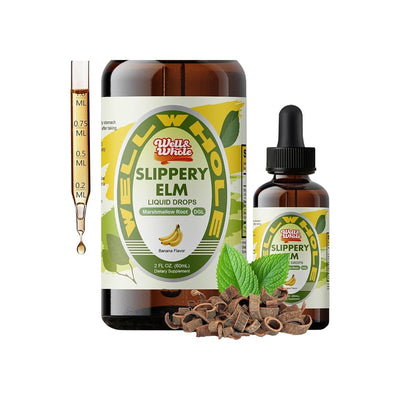
well&whole Slippery Elm Liquid Drops
For convenient, precise dosing, consider well&whole Slippery Elm Liquid Drops. This formula combines slippery elm with marshmallow root and DGL licorice—creating a comprehensive digestive support trio in an easy-to-use liquid format. The liquid form allows for flexible dosing and rapid absorption, making it an excellent choice for those seeking targeted digestive support.
Comparing Slippery Elm to Other Digestive Supplements
| Supplement | Primary Mechanism | Best For | Onset | Duration |
| Slippery Elm | Mucilage coating (demulcent) | Soothing irritated tissues, occasional heartburn | 30-60 min | 2-4 hours |
| Marshmallow Root | Mucilage coating | Similar to slippery elm, slightly milder taste | 30-60 min | 2-4 hours |
| DGL Licorice | Supports mucus production | Occasional acid discomfort, gut lining support | 1-2 hours | 4-6 hours |
| Probiotics | Supports gut microbiome | Long-term digestive health, regularity | 1-2 weeks | Ongoing with continued use |
| Digestive Enzymes | Breaks down food | Occasional bloating after meals | 15-30 min | Duration of digestion |
| L-Glutamine | Supports gut lining integrity | Intensive gut lining support | 1-3 days | Cumulative |
Frequently Asked Questions
1. How long does it take for slippery elm to work?
Most people notice a soothing effect within 30-60 minutes of taking slippery elm. The mucilage coating provides relatively rapid symptomatic relief. However, individual responses vary, and some people may need to take it consistently for several days to experience optimal benefits.
2. Can I take slippery elm every day?
Slippery elm is generally considered safe for daily use in recommended amounts. Many people use it daily for extended periods. However, it's always wise to periodically reassess your supplement regimen and consult with a healthcare provider about long-term use.
3. Does slippery elm interact with medications?
Yes, slippery elm's mucilage can slow the absorption of orally taken medications. To avoid this interaction, take slippery elm at least 2 hours before or after other medications. This is particularly important for medications with narrow therapeutic windows.
4. Is slippery elm safe during pregnancy?
Slippery elm has a traditional use for supporting comfort during pregnancy. However, pregnant women should always consult their healthcare provider before starting any new supplement, including slippery elm.
5. Can children take slippery elm?
Slippery elm is generally considered gentle enough for children. However, dosage should be adjusted appropriately for age and weight, and parents should consult a pediatrician before giving any supplement to children.
6. What does slippery elm taste like?
Slippery elm has a mild, slightly sweet, and earthy taste. When mixed with water, it develops a slippery, gel-like texture. Many people find the taste pleasant or neutral, especially when mixed with honey, maple syrup, or added to smoothies.
7. Can slippery elm help with acid reflux?
Slippery elm is commonly used to support comfort during occasional acid reflux. The mucilage coating may help create a temporary barrier between stomach contents and the esophageal lining. However, persistent or severe acid reflux should be evaluated by a healthcare provider.
8. Is there a difference between slippery elm powder and liquid extract?
Yes. Powder is the ground inner bark and contains the full spectrum of compounds, including all the mucilage. Liquid extracts may be standardized to specific compounds and offer convenience, but some liquid extracts may have lower mucilage content depending on the extraction method. Glycerin-based extracts tend to preserve more mucilage than alcohol-based tinctures.
9. Can slippery elm cause constipation?
Slippery elm is more likely to support regular bowel movements than cause constipation. However, if you increase fiber-like substances (including mucilage) without adequate hydration, you may experience constipation. Be sure to drink plenty of water when taking slippery elm.
10. Where does well&whole source its slippery elm?
well&whole is committed to quality sourcing and transparency. The slippery elm in Slippery Elm Liquid Drops is carefully sourced and tested for purity. The formula also includes marshmallow root and DGL licorice for comprehensive digestive support.
Conclusion
Slippery elm stands as one of nature's most gentle yet effective digestive supporters. Its unique mucilage compound provides a soothing, protective coating to the gut lining—offering comfort for occasional digestive discomfort and supporting the body's natural maintenance of healthy gastrointestinal tissues.
While modern research on slippery elm continues to evolve, centuries of traditional use and the well-understood pharmacology of mucilage-containing herbs provide a strong foundation for its place in digestive wellness routines. When choosing a slippery elm supplement, consider quality, form, and whether a combination formula might better serve your needs.
For those seeking a convenient, high-quality slippery elm supplement, Slippery Elm Liquid Drops offer a thoughtfully formulated option that pairs slippery elm with complementary herbs marshmallow root and DGL licorice. This trio approach addresses digestive comfort from multiple angles, providing comprehensive support for your gut health journey.
Remember: digestive wellness is highly individual. What works beautifully for one person may not be the right fit for another. Listen to your body, start with recommended dosages, and consult with a healthcare provider to determine the best approach for your unique needs.
Related supplements
Should you decide to supplement, Slippery Elm Liquid Drops, Marshmallow Root, Slippery Elm Bark Drops for Women, DGL Licorice Extract, Digestive Health, and Kids’ Black Walnut Digestive Support Drops, 14-in-1 Herbal Formula, Mixed Berry, Ages 1+, 2 fl oz are our formulation for this purpose. For a broader comparison, see the Digestive Support and Health Benefits collections.
These statements have not been evaluated by the Food and Drug Administration. This product is not intended to diagnose, treat, cure, or prevent any disease.