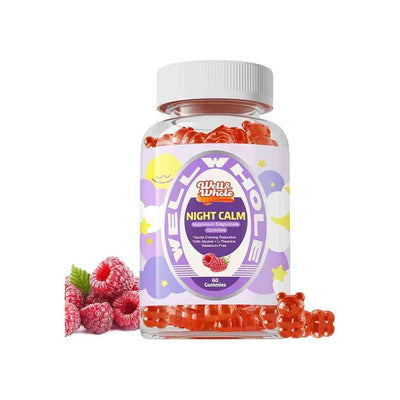
Sleep Supplements: What Actually Works — An Evidence-Based Review
Struggling with sleep? We review the evidence for melatonin, magnesium, L-theanine, GABA, valerian root, and other popular sleep supplements so you know what actually works.

Sleep is not a luxury — it is a biological necessity. During sleep, your brain clears metabolic waste, consolidates memories, regulates hormones, and repairs cellular damage. Yet according to the CDC, approximately one-third of American adults consistently get fewer than the recommended 7 hours of sleep per night, and an estimated 50–70 million Americans suffer from a chronic sleep disorder.
This prevalence has fueled a massive sleep supplement industry, with products ranging from familiar melatonin to lesser-known compounds like apigenin and glycine. But the gap between marketing and evidence in this category is substantial. Many products with compelling names and labels offer little more than a placebo effect, while genuinely effective compounds are often underdosed in commercial formulations.
This evidence-based review examines the most popular sleep supplements — what works, what might work, and what you can safely skip.
Before Supplements: Sleep Hygiene Fundamentals
No supplement can compensate for fundamentally broken sleep habits. Before (or alongside) supplementation, the following basics should be addressed:
The Evidence-Based Winners
1. Melatonin: The Circadian Rhythm Regulator
What It Is: Melatonin is a hormone produced by the pineal gland in response to darkness. It does not initiate sleep directly — it signals the body that it is nighttime, regulating the circadian rhythm and reducing the time it takes to fall asleep.
What the Evidence Says:
A 2013 meta-analysis in *PLOS ONE* reviewed 19 randomized controlled trials and found that melatonin:
· Reduced sleep onset latency (time to fall asleep) by an average of 7 minutes
· Increased total sleep time by approximately 8 minutes
· Improved overall sleep quality scores
These are modest effects. The meta-analysis specifically noted that melatonin is most effective for circadian rhythm disorders — jet lag, shift work, and delayed sleep phase syndrome — rather than general insomnia.
A 2017 clinical practice guideline from the American Academy of Sleep Medicine recommended against melatonin for chronic insomnia due to insufficient evidence, but supported its use for circadian rhythm sleep-wake disorders.
Dosing: Contrary to common practice, melatonin does not follow a "more is better" pattern. The most effective dose range for sleep onset is 0.3–1.0 mg — significantly lower than the 3 mg, 5 mg, and 10 mg products that dominate retail shelves. Higher doses may elevate daytime melatonin levels and produce next-day grogginess.
A 2001 study in the *Journal of Clinical Endocrinology & Metabolism* demonstrated that 0.3 mg of melatonin was as effective as 3 mg for sleep onset, producing physiological (nighttime-level) rather than supraphysiological blood concentrations.
Verdict: Effective, but primarily for circadian rhythm issues (jet lag, shift work, delayed sleep phase). The optimal dose (0.3–1.0 mg) is much lower than most commercial products. Less effective for general insomnia than commonly believed.
2. Magnesium: The Relaxation Mineral
What It Is: Magnesium is an essential mineral involved in over 300 enzymatic reactions, including those related to neurotransmitter regulation and muscle relaxation. It acts as a natural NMDA receptor antagonist and supports GABA receptor function — both mechanisms that promote neural calm.
What the Evidence Says:
A 2017 randomized controlled trial in the *Journal of Research in Medical Sciences* studied 46 elderly adults with insomnia. Those receiving 500 mg of magnesium daily for 8 weeks showed:
· Significant improvements in sleep time (+36 minutes)
· Reduced sleep onset latency
· Improved sleep efficiency
· Elevated serum melatonin and reduced serum cortisol
A 2012 study in the *Journal of Research in Medical Sciences* found similar results with magnesium supplementation improving sleep quality in adults with primary insomnia.
Forms Matter:
Verdict: Effective, particularly for those with inadequate magnesium intake (common in Western diets). Magnesium glycinate is the preferred form due to the synergistic sleep effects of glycine and magnesium. Magnesium deficiency — affecting an estimated 50% of Americans per NHANES data — makes this intervention especially relevant.
3. L-Theanine: The Calm Focus Amino Acid
What It Is: L-theanine is an amino acid found almost exclusively in tea leaves (Camellia sinensis). It promotes relaxation without sedation by increasing alpha brain wave activity — the brain state associated with relaxed alertness and meditative calm.
What the Evidence Says:
L-theanine does not directly induce sleep — it reduces stress and anxiety, which in turn facilitates sleep onset. A 2019 randomized controlled trial in *Nutrients* found that 200 mg of L-theanine before bed:
· Reduced sleep latency
· Improved sleep efficiency
· Decreased nighttime awakenings
· Did not cause morning grogginess (unlike sedatives)
A 2016 systematic review in *Nutrition Reviews* concluded that L-theanine consistently improves subjective stress and anxiety measures, indirectly supporting sleep quality.
Verdict: Effective as a stress-reduction agent that facilitates sleep onset. Unlike sedatives, L-theanine promotes relaxation without impairing alertness — making it unique among sleep supplements. Dose: 100–400 mg, taken approximately 30–60 minutes before bed.
The Mixed Evidence
Valerian Root
Valerian is one of the most historically used herbal sedatives, but modern clinical trial evidence is inconsistent:
· A 2006 systematic review in *Sleep Medicine* found 9 of 16 randomized trials reported positive effects on sleep quality, but methodological quality was generally poor.
· A 2015 systematic review in *Sleep Medicine Reviews* concluded that the evidence does not support valerian for insomnia, though some studies showed subjective improvement.
The variability may reflect differences in valerian preparations. Valerian's active compounds degrade rapidly after harvest, and supplement quality is inconsistent.
Verdict: Mixed evidence. Some individuals report benefit; clinical trial data is not consistently supportive. The lack of standardization across products means that one valerian product may work while another does not.
GABA (Gamma-Aminobutyric Acid)
GABA is your brain's primary inhibitory neurotransmitter — essentially the brain's "brake pedal." The issue with oral GABA supplementation is whether it crosses the blood-brain barrier in meaningful amounts.
The scientific consensus has traditionally held that GABA does not meaningfully cross the blood-brain barrier, but this view is being challenged by more recent research. A 2015 study in *Frontiers in Psychology* found that 100 mg of GABA reduced stress markers and improved relaxation within 30–60 minutes of ingestion, suggesting some central effect.
Verdict: Mechanism uncertain but some evidence of effect. Less well-studied than the top-tier options.
Glycine
Glycine is a simple amino acid that acts as an inhibitory neurotransmitter and also lowers core body temperature — an important signal for sleep initiation.
A 2012 study in *Sleep and Biological Rhythms* found that 3g of glycine before bed reduced sleep onset latency and improved subjective sleep quality. The mechanism may involve both CNS effects and the body temperature drop that glycine induces.
Verdict: Promising with a plausible mechanism, but fewer studies than melatonin or magnesium. Dose: 3g.
What Probably Doesn't Work
Sleep Supplement Comparison Table
FAQ
Q1: Can I combine sleep supplements?
Yes, and combination products are common. Melatonin + magnesium + L-theanine is a particularly sensible combination because each compound works through a different mechanism: circadian signaling (melatonin), muscle relaxation and GABA support (magnesium), and alpha-wave stress reduction (L-theanine). Start with individual compounds before using combinations to identify what works for you.
Q2: Is it safe to take sleep supplements every night?
Melatonin at appropriate doses (0.3–1.0 mg) appears safe for nightly use over periods of months to years, though definitive long-term studies are lacking. Magnesium and L-theanine are nutrients with favorable long-term safety profiles. Valerian and other herbs have less long-term safety data. All sleep supplements should ideally be used as part of a comprehensive sleep strategy that includes behavioral and environmental modifications.
Q3: Why do I feel groggy the next morning?
Melatonin-induced grogginess is typically a dose issue — consuming 5 mg or 10 mg of melatonin produces supraphysiological levels that persist into the morning. Reducing to 0.3–1.0 mg often resolves next-day grogginess. Magnesium-related grogginess is less common but may occur at high doses.
Q4: Can sleep supplements be addictive?
None of the supplements discussed in this article produce dependence in the way that benzodiazepines or Z-drugs do. However, psychological reliance is possible with any sleep aid — the belief that one cannot sleep without it. This is mitigated by using supplements as a bridge while building behavioral sleep skills.
Q5: What works best for waking up in the middle of the night?
Magnesium and glycine are less useful for middle-of-night awakening (they help with sleep onset and architecture). Extended-release melatonin may help maintain sleep through the night. For many people, middle-of-night awakening is driven by blood sugar fluctuations (cortisol response to hypoglycemia) or sleep apnea rather than a need for sleep supplements.
Q6: Are children's sleep supplements safe?
Melatonin is the most studied sleep supplement in children, with short-term studies suggesting safety at age-appropriate doses (typically 0.5–3 mg for children, under medical guidance). Other sleep supplements lack adequate pediatric safety data. Sleep supplements for children should only be used under healthcare provider supervision.
Q7: How long before bed should I take sleep supplements?
Melatonin: 30–60 minutes before bed. Magnesium: 30–60 minutes before bed. L-Theanine: 30–60 minutes before bed. Valerian: 30–60 minutes before bed. Glycine: 30–60 minutes before bed. Most sleep supplements have rapid onset and are best taken close to the target bedtime.
Q8: Can I build tolerance to melatonin?
Unlike sedative-hypnotic medications, true pharmacological tolerance to melatonin has not been demonstrated. Some individuals experience reduced effectiveness over time, but this may reflect changes in sleep behavior or the underlying sleep issue rather than tolerance per se. Periodic reassessment of whether melatonin remains necessary is good practice.
Conclusion
Effective sleep supplementation is not about finding the strongest sedative — it is about matching the right compound to the specific sleep issue. The most common sleep challenges — circadian disruption, stress-driven hyperarousal, and magnesium deficiency — each respond to different supplements, and the best results often come from combining complementary mechanisms.
Melatonin, at much lower doses than commonly sold, addresses circadian timing. Magnesium glycinate addresses the muscle tension and neurotransmitter balance that interfere with sleep onset. L-theanine quiets the racing mind without sedation. Together — alongside the non-negotiable foundation of sleep hygiene — these compounds offer real, evidence-supported assistance for the millions of Americans who struggle with sleep.
At well&whole, we believe better sleep should not require a prescription. Our Sleep Support Collection features evidence-backed formulations at appropriate doses — because your sleep deserves science, not sedatives.
These statements have not been evaluated by the Food and Drug Administration. This product is not intended to diagnose, treat, cure, or prevent any disease.