Red Yeast Rice Safety: CoQ10 Depletion, Liver Enzyme Monitoring & Medication Interactions
Comprehensive safety analysis of red yeast rice supplementation. CoQ10 depletion risks, liver enzyme monitoring protocols, medication interactions including statin cross-reactivity, and contraindications for safe use.

Red yeast rice (RYR) occupies a pharmacologically ambiguous position: it is a dietary supplement whose primary active compound (monacolin K) is chemically identical to the prescription drug lovastatin. This chemical identity means that RYR carries a safety profile that is fundamentally similar to low-dose statin therapy rather than to typical dietary supplements—a reality that is insufficiently communicated to consumers.
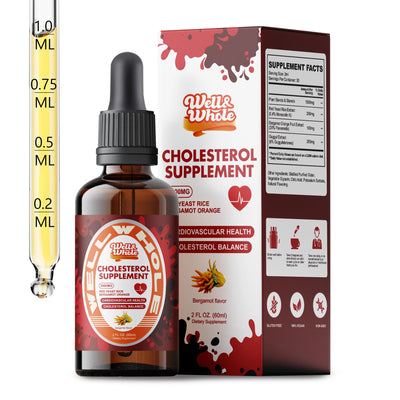
This article provides a systematic analysis of red yeast rice safety considerations, with specific attention to three domains: Coenzyme Q10 depletion, liver enzyme monitoring, and medication interactions. The analysis is relevant to consumers of well&whole's Cholesterol Support Liquid Drops , which combine red yeast rice with plant sterols.

The Safety Profile of Red Yeast Rice: An Overview
Red yeast rice safety data derives from clinical trials (predominantly short to medium-term, 8-24 weeks) and observational studies (extending to 24 months). The adverse event profile mirrors low-intensity statin therapy:
| Adverse Effect | RYR Incidence | Low-Dose Statin Incidence | Mechanism |
| Muscle symptoms (myalgia) | ~5% (observational) | 5-10% | CoQ10 depletion, mitochondrial dysfunction |
| Liver enzyme elevation (ALT >3x ULN) | <1% in trials | <1-3% | Hepatocellular effect of HMG-CoA inhibition |
| Gastrointestinal symptoms | 2-5% | 2-5% | Mild GI intolerance |
| Rhabdomyolysis | Extremely rare (case reports) | ~0.1/1,000 patient-years | Severe muscle breakdown |
| New-onset diabetes (glucose elevation) | Unknown (not studied) | ~9-12% increased risk with statins | Mechanism debated (pleiotropic) |
Sources: Becker et al. (2009); Cicero et al. (2017); Li et al. (2014) meta-analysis; Sattar et al. (2010) for statin diabetes risk.
---
Safety Domain 1: Coenzyme Q10 Depletion
The Biochemical Pathway
The mevalonate pathway—inhibited by monacolin K at the HMG-CoA reductase step—is a biosynthetic pathway shared by cholesterol AND Coenzyme Q10 (ubiquinone). The pathway branches after farnesyl pyrophosphate: one branch produces cholesterol; the other produces CoQ10, dolichols, and prenylated proteins.
When HMG-CoA reductase is inhibited by monacolin K, the downstream production of BOTH cholesterol and CoQ10 is reduced. This is not a "side effect" in the traditional sense—it is a direct, expected consequence of the drug/supplement's mechanism of action.
Clinical Evidence for CoQ10 Depletion
Rundek et al. (2004) – *Archives of Neurology*:
A prospective study of 34 patients initiating statin therapy demonstrated that plasma CoQ10 levels decreased by 16-54% (mean 25%) after 30 days of treatment, with dose-dependent effects. The CoQ10 reduction correlated with mitochondrial dysfunction markers in peripheral blood mononuclear cells.
Banach et al. (2015) – *Mayo Clinic Proceedings*:
A comprehensive review concluded that statin-induced CoQ10 depletion is a well-established phenomenon, and that the magnitude of CoQ10 reduction correlates with the dose and potency of the statin. The review noted that RYR, providing lower monacolin K doses than most pharmaceutical statins, would be expected to produce proportionally lower CoQ10 depletion—but the depletion still occurs.
Clinical Significance and Management
The clinical significance of CoQ10 depletion is debated. For some individuals, reduced CoQ10 produces no symptoms. For others—particularly those with pre-existing borderline CoQ10 status (common in older adults, those on multiple medications, and individuals with mitochondrial disorders)—the depletion may contribute to muscle symptoms through impaired mitochondrial energy production in skeletal muscle.
Management Recommendations:
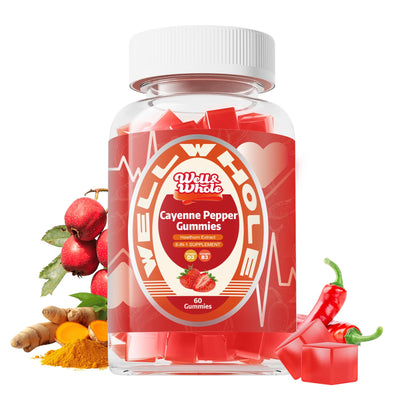
1. Supplement CoQ10 concurrently: 100-200 mg/day of CoQ10 (ubiquinone or ubiquinol) may mitigate RYR-associated CoQ10 depletion. The well&whole Cayenne Pepper Heart Health Gummies (P02) contain CoQ10 and can be paired with Cholesterol Drops for this purpose.
2. Monitor muscle symptoms: Myalgia (muscle pain, tenderness, or weakness not attributable to exercise or injury) should prompt consideration of CoQ10 supplementation or RYR dose reduction.
3. Consider risk factors: Older age, polypharmacy, pre-existing muscle conditions, and high physical activity levels may increase sensitivity to CoQ10 depletion.
---
Safety Domain 2: Liver Enzyme Monitoring
Mechanism of Hepatotoxicity
HMG-CoA reductase inhibition can cause asymptomatic elevations in serum transaminases (ALT, AST) through hepatocellular effects that are not fully understood but are generally reversible upon discontinuation. Serious hepatotoxicity (ALT >10x ULN, clinical hepatitis) is rare with statins (estimated incidence ~0.5-2% for mild elevations, <0.1% for serious) and presumably rarer with the lower monacolin K doses in RYR.
Clinical Evidence
Cicero et al. (2017) – 24-month observational study (n=1,308):
In this long-term study of RYR users (providing 3-10 mg monacolin K/day), no cases of ALT elevation >3x the upper limit of normal were reported. Mild ALT elevations (1-2x ULN) occurred in approximately 1.2% of patients, all of which resolved without intervention.
Li et al. (2014) – Meta-analysis (20 RCTs, n=6,663):
The meta-analysis did not find statistically significant increases in liver enzymes with RYR compared to placebo across pooled trial data. However, the trials were predominantly short-term (8-24 weeks), limiting conclusions about long-term hepatic safety.
Monitoring Protocol
The American College of Cardiology/American Heart Association guidelines for statin therapy recommend baseline liver function tests (ALT) before initiating therapy and repeat testing if symptoms develop. These guidelines, while written for pharmaceutical statins, provide a reasonable framework for RYR use:
| Monitoring Phase | Recommendation | Rationale |
| Baseline (pre-RYR) | ALT, AST | Establish pre-supplementation liver enzyme baseline |
| 4-8 weeks after start | Repeat ALT if risk factors present | Verify no early enzyme elevation |
| 12 weeks after start | ALT (optional, if baseline normal) | Confirm sustained normal liver function |
| Ongoing (annual) | ALT as part of routine labs | Annual monitoring for long-term users |
| Any symptoms (fatigue, nausea, jaundice) | ALT, AST, bilirubin immediately | Exclude hepatotoxicity |
High-Risk Groups Requiring More Intensive Monitoring:
· Pre-existing liver disease (NAFLD, viral hepatitis, alcoholic liver disease)
· Alcohol consumption >2 drinks/day (men) or >1 drink/day (women)
· Concurrent use of potentially hepatotoxic medications (acetaminophen >3g/day, certain antiepileptics, amiodarone)
· Baseline ALT >2x ULN (relative contraindication—discuss with hepatologist)
---
Safety Domain 3: Medication Interactions
Red yeast rice's monacolin K shares the pharmacokinetic and pharmacodynamic interaction profile of lovastatin. This is the domain where RYR most clearly "behaves like a drug" and requires the most careful attention.
CYP3A4-Mediated Interactions
Monacolin K (lovastatin lactone) is metabolized by cytochrome P450 3A4 (CYP3A4) in the liver and intestinal wall. Drugs that inhibit CYP3A4 can increase monacolin K blood levels, potentially increasing both LDL-lowering efficacy and the risk of adverse effects (myopathy, hepatotoxicity).
Strong CYP3A4 Inhibitors (CONTRAINDICATED with RYR):
| Drug/Substance | Use | Risk |
| Clarithromycin, erythromycin | Antibiotics | Significant RYR level increase |
| Itraconazole, ketoconazole, posaconazole | Antifungals | Significant RYR level increase |
| Ritonavir, cobicistat | HIV antivirals | Significant RYR level increase |
| Nefazodone | Antidepressant | Significant RYR level increase |
Moderate CYP3A4 Inhibitors (Use RYR with Caution and Medical Supervision):
| Drug/Substance | Use | Recommendation |
| Verapamil, diltiazem | Calcium channel blockers | Monitor; consider RYR dose reduction |
| Amiodarone | Antiarrhythmic | Monitor LFTs and CK; long half-life |
| Grapefruit juice (>1 quart/day) | Dietary | Avoid large quantities; small amounts likely okay |
| Fluconazole | Antifungal | Interaction risk increases with dose |
| Cimetidine | H2 blocker (OTC) | Modest interaction; separate dosing times |
Pharmacodynamic Interactions (Additive Muscle Toxicity Risk)
Drugs that independently increase the risk of myopathy or rhabdomyolysis can have additive effects with RYR:
| Drug/Substance | Mechanism | Recommendation |
| Gemfibrozil (fibrate) | Inhibits RYR glucuronidation + independent myopathy risk | Avoid combination; fenofibrate is safer alternative if fibrate needed |
| Cyclosporine | Inhibits OATP1B1 transporter (reduces hepatic RYR uptake) + CYP3A4 inhibition | Contraindicated without specialist supervision |
| Niacin (>1 g/day) | Independent myopathy risk at high doses | Caution; low-dose niacin may be safe |
| Colchicine | Independent myopathy risk | Monitor muscle symptoms; case reports of interaction |
Warfarin (Coumadin) Interaction
Statins (and presumably RYR) can modestly potentiate warfarin's anticoagulant effect through displacement from protein binding and/or reduced warfarin metabolism. A 2005 study by Schelleman et al. found that statin initiation was associated with a small but statistically significant increase in INR (~0.08-0.15 units). While small, this effect is potentially clinically relevant in patients with tightly controlled INR targets.
Recommendation: INR should be monitored within 1-2 weeks of starting or stopping RYR in patients taking warfarin. Any INR changes should be managed through warfarin dose adjustment, not RYR cessation (unless specifically instructed by the prescribing physician).
Other Potential Interactions
| Interaction | Mechanism | Significance |
| St. John's Wort | CYP3A4 INDUCTION (decreases RYR levels) | Reduces LDL-lowering efficacy |
| CoQ10 supplementation | Reverses monacolin K-induced CoQ10 depletion | Beneficial adjunct, not an interaction |
| Plant sterols (Cholesterol Support Liquid Drops combination) | No pharmacokinetic interaction | Complementary mechanisms (absorption + synthesis) |
| Fiber supplements (psyllium) | May reduce RYR absorption if taken simultaneously | Separate dosing by 2 hours |
---
Special Populations: Contraindications and Cautions
Absolute Contraindications
| Population | Reason |
| Pregnancy and breastfeeding | Cholesterol is essential for fetal development; statins are Pregnancy Category X |
| Active liver disease or unexplained persistent ALT elevation | Impaired RYR metabolism and hepatotoxicity risk |
| Concomitant strong CYP3A4 inhibitors (see list above) | Risk of RYR accumulation and toxicity |
| Known hypersensitivity to red yeast rice products | Allergic reaction risk |
Relative Contraindications (Require Medical Supervision)
| Population | Precaution |
| Age >70 years | Higher risk of myopathy; start at low dose |
| Pre-existing muscle disease (myopathy, myositis, muscular dystrophy) | Increased sensitivity to statin-related muscle effects |
| History of statin intolerance | RYR may be tolerated at low doses (Becker 2009) but requires monitoring |
| Moderate alcohol consumption | Increased hepatotoxicity risk; limit alcohol |
| Hypothyroidism (untreated) | Untreated hypothyroidism is an independent cause of myopathy and hypercholesterolemia |
| Renal impairment (GFR <30 mL/min) | Reduced drug clearance; use only if recommended by nephrologist |
---
Summary Table: Red Yeast Rice Safety Protocol
| Safety Domain | Pre-RYR | During RYR Use | Action if Abnormal |
| Liver function | Baseline ALT, AST | Annual ALT; more frequent if risk factors present | ALT >3x ULN: discontinue RYR, evaluate cause |
| Muscle symptoms | Document baseline muscle status | Report new muscle pain, tenderness, weakness | Check CK; if CK >10x ULN, discontinue RYR |
| CoQ10 status | Not routinely measured | Supplement 100-200 mg/day or as clinically indicated | If muscle symptoms develop: add/titrate CoQ10 |
| Drug interactions | Screen for CYP3A4 inhibitors and interacting medications | Avoid addition of contraindicated medications | Consult pharmacist for interaction management |
| Lipid panel | Baseline LDL, HDL, TG | Repeat at 8-12 weeks, then every 6-12 months | Verify LDL response and adjust protocol as needed |
| Kidney function | Baseline creatinine, eGFR | Annual if risk factors present | Dose adjustment if GFR <30 |
---
Frequently Asked Questions
Q1: Is red yeast rice safer than prescription statins?
A: "Safer" is not the right framing—RYR has a DIFFERENT safety profile, not necessarily a safer one. At the low monacolin K doses in supplements (3-10 mg), the incidence of adverse effects is lower than with moderate-to-high-intensity statins but similar to low-intensity statins. RYR has the additional concerns of inconsistent product quality (monacolin K content variability, potential citrinin contamination) that pharmaceutical statins do not. The choice between RYR and a prescription statin should account for LDL reduction goals, risk profile, product quality, and medical supervision.
Q2: Should I take CoQ10 automatically when using red yeast rice?
A: Routine CoQ10 supplementation alongside RYR is not universally recommended by guidelines but is practiced by many clinicians and is supported by mechanistic plausibility. If you are: (a) over 60, (b) have muscle-related symptoms on RYR, (c) are highly physically active, or (d) take RYR long-term, CoQ10 supplementation (100-200 mg/day) is a reasonable precaution. In younger, asymptomatic individuals with good dietary CoQ10 intake, routine supplementation is optional. The well&whole Cayenne Gummies contain CoQ10 and can be used in combination.
Q3: Can I drink alcohol while taking Cholesterol Support Liquid Drops with red yeast rice?

A: Moderate alcohol consumption (≤1 drink/day for women, ≤2 for men) is generally acceptable with RYR use in individuals with normal liver function. However, alcohol above these limits compounds the hepatotoxic potential of statin-class compounds. If you drink regularly, baseline and periodic liver enzyme monitoring is particularly important. If you have any elevation in liver enzymes, alcohol should be strictly limited or eliminated.
Q4: What should I do if I miss a dose of Cholesterol Support Liquid Drops?
A: Take the missed dose as soon as you remember, unless it's close to your next scheduled dose. Do not double the dose to "catch up." The cholesterol-lowering effect of plant sterols and red yeast rice is based on consistent, daily use—missing an occasional dose has minimal impact, but frequent missed doses reduce effectiveness.
Q5: How do I know if muscle pain is from RYR or from my workout/exercise?
A: Statin/red yeast rice-related muscle symptoms are typically symmetrical (both sides of the body), affect large muscle groups (thighs, shoulders, lower back), and are NOT clearly linked to a specific exercise session (unlike DOMS, which peaks 24-48 hours after a specific workout). If muscle pain is unexplained by your activity level, symmetrical, and persistent, it warrants investigation (CK measurement, RYR cessation trial to see if symptoms resolve).
Q6: Can I take red yeast rice if I have fatty liver disease (NAFLD)?
A: NAFLD is not an absolute contraindication to RYR, and statins are actually recommended for cardiovascular risk reduction in NAFLD patients with elevated LDL. However, RYR should not be used in NASH with elevated liver enzymes (>2x ULN) or advanced fibrosis without hepatologist guidance. Baseline liver imaging, liver enzymes, and specialist consultation are recommended before initiating RYR in the setting of known liver disease.
Q7: Does taking Cholesterol Support Liquid Drops with food affect the safety profile?
A: Taking RYR with food—particularly with a meal containing some fat—reduces the peak plasma concentration of monacolin K while maintaining the LDL-lowering effect, compared to taking it on an empty stomach. Lower peak concentrations may reduce the risk of muscle-related side effects. This is another reason to take Cholesterol Support Liquid Drops with meals rather than between meals.
Q8: What are the signs of a serious adverse reaction to red yeast rice that require immediate medical attention?
A: The following symptoms warrant immediate medical evaluation: (1) severe muscle pain, tenderness, or weakness, especially if accompanied by dark (cola-colored) urine (signs of rhabdomyolysis), (2) jaundice (yellowing of skin or eyes), dark urine, severe fatigue, or right upper abdominal pain (signs of hepatotoxicity), (3) unexplained severe fatigue, fever, or malaise (could indicate either muscle or liver involvement). These are rare but require prompt medical assessment.
---
Conclusion: Respect the Drug-Like Safety Profile
Red yeast rice is not "just a supplement" in terms of safety—it carries the mechanistic risks of low-dose statin therapy because its active compound is identical to a prescription statin. The safety domains of CoQ10 depletion, liver enzyme monitoring, and medication interactions are well-characterized from decades of statin research and should be managed with the same diligence that a physician would apply to a prescription statin.
For consumers of well&whole's Cholesterol Support Liquid Drops, the safety protocol is straightforward: know your baseline liver enzymes before starting, consider CoQ10 supplementation as an adjunct, screen all current medications for CYP3A4 interactions, and report unexplained muscle symptoms to your healthcare provider. When used with appropriate safety awareness, red yeast rice provides LDL reduction comparable to low-intensity statin therapy with a correspondingly low side effect profile.
Related supplements
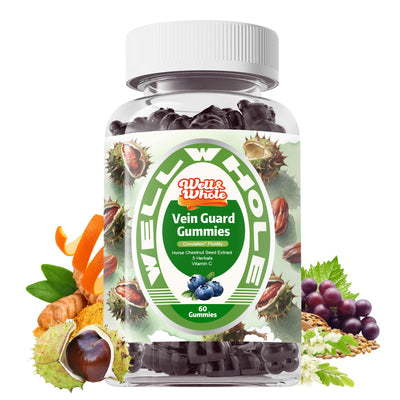
Should you decide to supplement, well&whole Horse Chestnut Extract Gummies, Circulation Supplements for Legs and Cayenne Pepper Heart Health Gummies with Hawthorn & CoQ10 & Turmeric are our formulation for this purpose. For a broader comparison, see the Heart Health and CoQ10 collections.
These statements have not been evaluated by the Food and Drug Administration. This product is not intended to diagnose, treat, cure, or prevent any disease.