Red Yeast Rice & Monacolin K: Clinical Equivalence to Low-Dose Statins
Scientific analysis comparing red yeast rice (monacolin K) to low-dose statin medications. Clinical trial data on LDL reduction, HMG-CoA reductase inhibition, and equivalence evidence for cholesterol support.

Red yeast rice (RYR) occupies a unique category in the supplement-pharmaceutical continuum: it is a food-derived dietary supplement whose primary active compound—monacolin K—is chemically identical to lovastatin (Mevacor), a prescription HMG-CoA reductase inhibitor (statin). This chemical identity creates both the therapeutic potential and the regulatory complexity of red yeast rice as a cholesterol support agent.
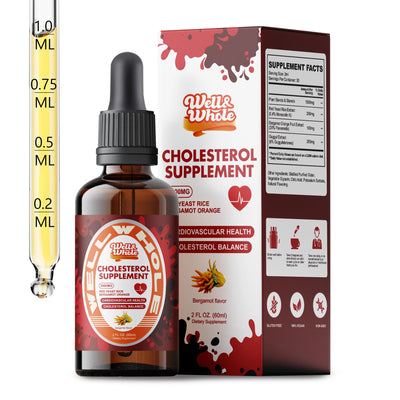
well&whole's Cholesterol Support Liquid Drops combine red yeast rice with plant sterols, with the RYR component providing hepatic cholesterol synthesis inhibition that complements the intestinal absorption blockade from plant sterols. This article examines the clinical evidence for red yeast rice's LDL-lowering efficacy and its relationship to low-dose pharmaceutical statin therapy.

The Biochemistry of Monacolin K
Red yeast rice is produced by fermenting rice (Oryza sativa) with the mold Monascus purpureus. During fermentation, the mold synthesizes a family of polyketide compounds called monacolins, of which monacolin K is the most abundant and pharmacologically active.
Monacolin K exists in two forms:
· Lactone form (closed ring): Identical to lovastatin; requires in vivo hydrolysis to the active hydroxy acid form
· Hydroxy acid form (open ring): The active HMG-CoA reductase inhibitor; does not require metabolic activation
The presence of the hydroxy acid form—the active inhibitor—in properly fermented red yeast rice means that RYR provides direct enzyme inhibition without relying entirely on hepatic conversion, unlike lovastatin lactone (which must be hydrolyzed to become active). This has implications for bioavailability and interindividual variability.
Mechanism: HMG-CoA Reductase Inhibition
Monacolin K competitively inhibits HMG-CoA reductase, the rate-limiting enzyme in the mevalonate pathway that produces cholesterol. The inhibition occurs because the hydroxy acid moiety of monacolin K structurally resembles the enzyme's natural substrate, HMG-CoA, and occupies the active site with higher affinity (K_i ≈ 0.1-2.3 nM for the hydroxy acid form).
The downstream consequences of HMG-CoA reductase inhibition are:
1. Reduced hepatic cholesterol synthesis: Less cholesterol produced in the liver
2. SREBP-2 activation: The sterol regulatory element-binding protein 2 senses reduced intracellular cholesterol and upregulates LDL receptor gene transcription
3. Increased LDL receptor expression: More LDL receptors on hepatocyte surfaces extract more LDL particles from the circulation
4. Reduced circulating LDL cholesterol: The clinical endpoint—lower measured LDL levels
This is the same mechanism by which lovastatin and other statins lower LDL, with the quantitative difference being the dose of the active inhibitor.
---
Clinical Trial Evidence: LDL Reduction with Red Yeast Rice
Pivotal Studies
Heber et al. (1999) – *American Journal of Clinical Nutrition*:
A landmark RCT (n=83) randomized adults with hypercholesterolemia (LDL 160-220 mg/dL) to red yeast rice (2.4 g/day, providing ~10 mg total monacolins) or placebo for 12 weeks. The RYR group achieved a 22% reduction in total cholesterol and a 27% reduction in LDL cholesterol compared to 5% and 6% respectively in the placebo group (p < 0.001). Notably, this 27% LDL reduction is comparable to the 25-30% reduction typically seen with lovastatin 20 mg—a low-to-moderate-intensity statin dose.
Becker et al. (2009) – *Annals of Internal Medicine*:
This RCT (n=62) addressed a specific clinical question: can red yeast rice be used in patients with statin intolerance (statin-associated myalgia)? Patients with documented statin-associated muscle symptoms were randomized to red yeast rice (providing ~7.5 mg monacolin K/day) or placebo for 24 weeks. Results demonstrated:
· LDL reduction: -27.6% in RYR group vs. -6.4% in placebo (p < 0.001)
· Mean LDL decreased from 152 to 110 mg/dL in the RYR group
· Muscle pain discontinuation: 7% in RYR group vs. 7% in placebo group (no significant difference)
· 93% of RYR patients completed the trial, suggesting tolerability in a statin-intolerant population
Cicero et al. (2017) – *Pharmacological Research*:
A large observational study (n=1,308) followed patients with moderate hypercholesterolemia taking red yeast rice (providing 3-10 mg monacolin K/day) for 24 months in a primary care setting. Mean LDL reduction at 12 months was -18.3% (p < 0.001 vs. baseline), with 82% of patients maintaining the LDL reduction at 24 months. Mild muscle symptoms occurred in 5.2% of patients, and no cases of rhabdomyolysis or significant liver enzyme elevation (ALT > 3x ULN) were reported.
Meta-Analytic Evidence
Li et al. (2014) – *European Journal of Preventive Cardiology*:
A systematic review and meta-analysis of 20 RCTs (6,663 patients) examining red yeast rice preparations:
· Mean LDL reduction: -1.02 mmol/L (-39.4 mg/dL), representing approximately 20-25% reduction from typical baseline
· Mean total cholesterol reduction: -0.97 mmol/L (-37.5 mg/dL)
· Mean triglyceride reduction: -0.23 mmol/L (-20.3 mg/dL)
· HDL cholesterol: +0.09 mmol/L (+3.5 mg/dL)
· All reductions were statistically significant (p < 0.001)
The authors noted that the LDL reduction was comparable to low-intensity statins (pravastatin 10-20 mg, lovastatin 20 mg, simvastatin 10 mg), which typically produce 20-30% LDL reduction.
---
Direct Comparison: Red Yeast Rice vs. Low-Dose Pharmaceutical Statins
| Parameter | RYR (3-10 mg monacolin K) | Pravastatin 10 mg | Lovastatin 20 mg | Simvastatin 10 mg | Atorvastatin 10 mg |
| LDL Reduction | 18-27% | 19% | 24% | 28% | 37% |
| Statin Intensity | Low (supplement) | Low | Low-Moderate | Moderate | Moderate |
| Active Compound | Monacolin K (natural) | Pravastatin (synthetic) | Lovastatin (natural) | Simvastatin (semi-synthetic) | Atorvastatin (synthetic) |
| CYP450 Metabolism | CYP3A4 (monacolin K) | Not CYP450 | CYP3A4 | CYP3A4 | CYP3A4 |
| CoQ10 Depletion Risk | Similar to low-dose statins | Similar | Similar | Similar | Similar |
| Muscle Symptom Risk | ~5% (observational) | ~5-10% | ~5-10% | ~5-10% | ~5-10% |
| Evidence Grade | Moderate (multiple RCTs) | High (multiple large RCTs) | High | High | High |
| Regulatory Status | Dietary supplement (US) | Prescription drug | Prescription drug | Prescription drug | Prescription drug |
---
Key Distinctions: Red Yeast Rice Is Not Simply "Natural Lovastatin"
While monacolin K is chemically identical to lovastatin, red yeast rice differs from pharmaceutical lovastatin in several important respects:
1. Multi-Compound Matrix
Red yeast rice contains not only monacolin K but also:
· Other monacolins (J, L, M, X): Structurally related compounds with varying HMG-CoA reductase inhibitory potency
· Phytosterols: Beta-sitosterol, campesterol, stigmasterol—adding an absorption-blockade component to the synthesis-inhibition mechanism
· Isoflavones and pigments: Including monascin and ankaflavin, which have independent lipid-modulating effects demonstrated in animal models
· Unsaturated fatty acids: Present in the rice matrix
This multi-compound profile means that red yeast rice's LDL-lowering effect likely results from the combined activity of multiple compounds, not monacolin K alone—a "poly-pill" effect from a single natural product.
2. Lower and Variable Monacolin K Content
Pharmaceutical lovastatin is manufactured to precise specifications (10, 20, 40 mg tablets). Red yeast rice monacolin K content varies across products and batches, typically providing 3-10 mg per daily serving. This lower dose places RYR firmly in the "low-intensity" statin equivalence category—comparable to pravastatin 10 mg or lovastatin 10 mg—and below the doses used for moderate or high-intensity statin therapy.
3. The Hydroxy Acid Advantage
As noted above, properly fermented RYR contains monacolin K in both lactone and hydroxy acid forms. Pharmaceutical lovastatin is exclusively the lactone prodrug, requiring hepatic hydrolysis to become active. The hydroxy acid in RYR provides direct enzyme inhibition without metabolic conversion, potentially reducing the interindividual variability in response related to differences in hepatic esterase activity.
4. Historical Context: Mevacor's Origin
Mevacor (lovastatin) was originally discovered in the fermentation broth of Aspergillus terreus in 1979—it is itself a fermented natural product. The first statin was, in essence, a purified and standardized fungal metabolite. Red yeast rice is the original, whole-fermentation product from which the pharmaceutical industry isolated, purified, and standardized the active compound. In biochemical terms, RYR is the "whole food" equivalent of what became lovastatin.
---
Clinical Equivalence: Defining the Term
"Clinical equivalence" in the context of red yeast rice means that the magnitude of LDL reduction achieved with standard RYR doses (providing 3-10 mg monacolin K/day) is comparable to the LDL reduction achieved with low-intensity statin doses, based on the available clinical trial data.
This is NOT the same as "therapeutic equivalence"—a regulatory designation requiring bioequivalence demonstrated through pharmacokinetic studies. Red yeast rice has not undergone this regulatory pathway and is marketed as a dietary supplement, not as a generic equivalent to lovastatin.
Comparison: RYR vs. Low-Dose Statins in Clinical Trials
| Outcome | RYR (Li et al. Meta-Analysis, 2014) | Low-Dose Statins (Law et al., 2003 Meta-Analysis) |
| LDL Reduction | -20 to -27% | -20 to -28% (low-intensity statins) |
| Total Cholesterol | -18 to -22% | -17 to -23% |
| Triglycerides | -10 to -15% | -8 to -14% |
| HDL Increase | +3 to +5% | +2 to +4% |
The comparable effect sizes support the clinical equivalence of RYR to low-dose statins for LDL reduction, with the important caveats that RYR has not been studied in large cardiovascular outcomes trials (unlike statins) and RYR monacolin K content is less reliably standardized than pharmaceutical statins.
---
Summary Table: Red Yeast Rice Evidence Profile
| Evidence Parameter | Finding | Strength |
| Mechanism (HMG-CoA reductase inhibition) | Identical to lovastatin | Established (biochemistry) |
| LDL reduction (RCTs) | 18-27% from baseline | Moderate-Strong (multiple RCTs) |
| LDL reduction (meta-analysis) | -39 mg/dL weighted mean | Moderate (20 RCTs, heterogeneity present) |
| Statin-intolerant population | Effective and well-tolerated | Moderate (Becker 2009, Halbert 2010) |
| Long-term safety (24 months) | Favorable risk/benefit profile | Moderate (observational data) |
| Cardiovascular outcomes (MI, stroke, death) | NOT studied in outcomes trials | Absent (all evidence is LDL-lowering, not event reduction) |
| Product standardization (monacolin K content) | Highly variable across products | Weak (supplement market variability) |
---
Frequently Asked Questions
Q1: Does red yeast rice have the same side effects as prescription statins?
A: The side effect profile of red yeast rice mirrors that of low-dose statins—muscle symptoms (myalgia) are the most common complaint, reported in approximately 5% of users in observational studies, compared to 7-29% for various statins (depending on dose and definition). The lower monacolin K dose in RYR (3-10 mg vs. 10-80 mg for pharmaceutical statins) likely contributes to the lower reported side effect rates. Liver enzyme elevation and CoQ10 depletion are possible but less common than with moderate-to-high-intensity statins. RYR does not eliminate statin-class side effects—it potentially reduces their frequency and severity through lower dosing.
Q2: If monacolin K is identical to lovastatin, why isn't red yeast rice regulated as a drug?
A: This is an active regulatory debate. In the United States, red yeast rice is regulated as a dietary supplement under DSHEA (1994). The FDA has taken enforcement action against RYR products that are standardized to high monacolin K concentrations or that make drug-like claims, viewing these as unapproved new drugs. The European Union has set a maximum limit of 3 mg monacolins per daily serving for RYR supplements, above which the product is considered medicinal. The regulatory status reflects the ambiguous position of RYR on the food-drug spectrum.
Q3: Can I take red yeast rice instead of my prescribed statin?
A: This decision must be made with your prescribing physician. RYR provides a lower dose of the same class of active compound as statins. For patients on high-intensity statin therapy (atorvastatin 40-80 mg, rosuvastatin 20-40 mg), RYR does not provide equivalent LDL reduction and is not an appropriate substitute. For patients on low-intensity statins or those with statin intolerance, RYR may be discussed as an alternative, but this requires medical supervision with lipid panel monitoring.
Q4: Does red yeast rice deplete CoQ10 like statins do?
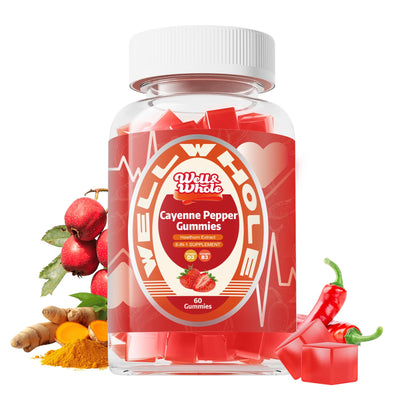
A: Yes, because the mevalonate pathway inhibited by monacolin K produces both cholesterol and CoQ10 (via the same synthetic pathway upstream of farnesyl pyrophosphate). The CoQ10 depletion from RYR is dose-dependent and at low RYR doses (3-10 mg monacolin K) is generally less pronounced than with high-dose statins but can still occur, especially with prolonged use. The well&whole Cayenne Gummies (P02) contain CoQ10 and could be considered as complementary supplementation.
Q5: Are all red yeast rice products equally effective?
A: No, and this is a critical issue. A 2017 study by Cohen et al. tested 28 commercial RYR products and found that monacolin K content ranged from 0.09 to 10.6 mg per daily serving—a 118-fold variation. Some products contained citrinin (a nephrotoxic mycotoxin) at levels exceeding European safety limits. Product selection matters enormously. well&whole products undergo third-party testing for purity and potency.
Q6: Can I take RYR with grapefruit or grapefruit juice?
A: Grapefruit inhibits CYP3A4, the enzyme that metabolizes monacolin K/lovastatin. Co-consumption can increase monacolin K blood levels, theoretically increasing both efficacy and side effect risk—the same interaction that occurs with lovastatin, simvastatin, and atorvastatin. It's prudent to avoid grapefruit consumption within 2-4 hours of taking RYR or to discuss with your healthcare provider.
Q7: Is red yeast rice safe to take long-term?
A: The longest published follow-up data for RYR is 24 months (Cicero et al., 2017), which demonstrated sustained LDL reduction and a favorable safety profile. The mechanism (HMG-CoA reductase inhibition) is the same as statins, for which decades of long-term safety data exist, providing indirect reassurance. However, direct long-term safety data for RYR itself is limited to two years. Annual lipid panels and liver function tests are recommended for ongoing monitoring.
Q8: Does the liquid format of Cholesterol Support Liquid Drops affect red yeast rice absorption or efficacy?
A: Liquid delivery may improve the dispersion of red yeast rice compounds in the gastrointestinal tract compared to dry capsules, but no comparative bioavailability studies have been conducted. The theoretical advantage is faster dissolution and potentially more consistent absorption, though the clinical significance of this is unknown. The liquid format primarily improves compliance through ease of administration.

Conclusion: A Validated, Lower-Intensity Option
Red yeast rice's clinical profile is well-characterized: it provides LDL reduction comparable to low-intensity statin therapy (18-27% LDL lowering) through the same HMG-CoA reductase inhibition mechanism, with a side effect profile that mirrors low-dose statins. The well&whole Cholesterol Support Liquid Drops combine this hepatic synthesis inhibition with plant sterols' intestinal absorption blockade, creating a dual-mechanism approach to cholesterol support.
Red yeast rice is not a replacement for high or moderate-intensity statin therapy in patients who require aggressive LDL lowering based on cardiovascular risk. It is a validated option for individuals with moderate LDL elevation who seek nutritional support within an overall cholesterol management strategy—ideally under medical supervision with lipid panel monitoring to confirm effectiveness and safety.
Related supplements
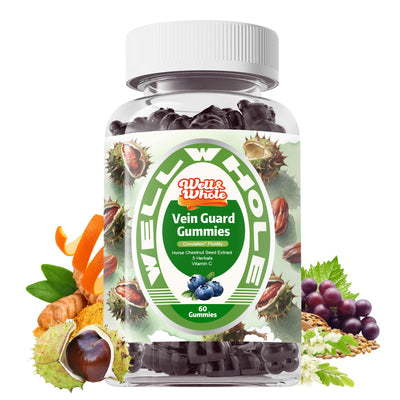
If you're ready to put this into practice, our well&whole Horse Chestnut Extract Gummies, Circulation Supplements for Legs and Cayenne Pepper Heart Health Gummies with Hawthorn & CoQ10 & Turmeric are formulated with this in mind. You can also compare the Heart Health and CoQ10 ranges to find the format that suits you.
These statements have not been evaluated by the Food and Drug Administration. This product is not intended to diagnose, treat, cure, or prevent any disease.